


GENERIC
Low stock (20 units)Regular price LE 40.00 EGPUnit price /Unavailable
GENERIC
In stock (43 units)Regular price LE 28.00 EGPUnit price /Unavailable


Choosing the Right Amalgam Instruments for Your Practice
- Amalgam Condensers for Proper Packing — Condensers compress amalgam into cavity preparations to eliminate voids. Choose various nib sizes and shapes to adapt to different cavity sizes and access requirements in posterior teeth.
- Amalgam Carriers for Precise Placement — Carriers transport amalgam mix directly into the prepared cavity. Single and double-ended designs allow controlled dispensing of amalgam increments for efficient restorative procedures.
- Burnishers for Marginal Adaptation — Burnishers smooth and adapt amalgam margins to cavity walls. Ball, egg and anatomical burnisher shapes serve different purposes from initial adaptation to final marginal finishing.
- Carvers for Anatomical Contouring — Carvers shape occlusal anatomy and remove excess material. Hollenback, interproximal and anatomical carvers create proper tooth morphology and contact areas.
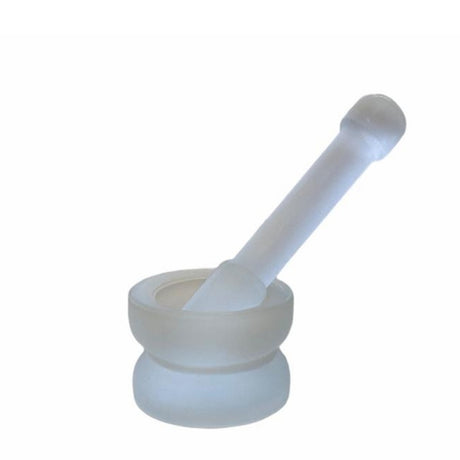
- Mortar and Pestle for Trituration — Traditional mixing vessels for hand trituration of amalgam alloy. Useful as backup equipment or for practices preferring manual mixing methods over mechanical amalgamators.
- Instrument Sets for Complete Workflows — Combined instrument kits provide all tools for amalgam procedures. Sets include essential condensers, carriers, burnishers and carvers for efficient tray setup and consistent results.
Amalgam Instrument Types at a Glance
| Instrument Type | Primary Function | Common Variants | Clinical Use |
|---|---|---|---|
| Amalgam Condenser | Packing amalgam | Round, serrated nibs | Cavity filling |
| Amalgam Carrier | Material transport | Single/double ended | Placement |
| Burnisher | Surface adaptation | Ball, egg, anatomical | Margin finishing |
| Carver | Anatomy shaping | Hollenback, interproximal | Occlusal contouring |
| Mortar & Pestle | Manual mixing | Glass, ceramic | Trituration |
How to Select Amalgam Instruments
- Assess your daily amalgam restoration caseload to determine instrument quantity needs.
- Select condenser nib sizes matching your typical cavity preparation dimensions.
- Choose carrier designs that suit your preferred placement technique and access requirements.
- Include multiple burnisher shapes for different adaptation and finishing tasks.
- Add carver varieties for occlusal anatomy and interproximal contouring needs.
Availability & Delivery in Egypt
All amalgam instruments at MedSTA are priced in EGP with nationwide delivery across Egypt. Stainless steel instruments should be stored in dry conditions to maintain longevity in varying Egyptian climate conditions.
Frequently Asked Questions
What amalgam instruments are essential for basic restorations?
What amalgam instruments are essential for basic restorations?
At minimum, you need a carrier, condenser, burnisher and carver for complete amalgam procedures.
How do I choose the right condenser nib size?
How do I choose the right condenser nib size?
Select nib diameters slightly smaller than your cavity preparation width for effective condensation.
What is the difference between ball and anatomical burnishers?
What is the difference between ball and anatomical burnishers?
Ball burnishers adapt margins generally while anatomical burnishers contour specific tooth surfaces.
Can amalgam instruments be autoclaved?
Can amalgam instruments be autoclaved?
Yes, stainless steel amalgam instruments are designed for repeated autoclave sterilisation cycles.
Why are serrated condenser nibs used?
Why are serrated condenser nibs used?
Serrations increase grip on amalgam during condensation, preventing material displacement.
When should I use a Hollenback carver?
When should I use a Hollenback carver?
Hollenback carvers excel at carving occlusal grooves and removing flash at restoration margins.
How often should amalgam instruments be replaced?
How often should amalgam instruments be replaced?
Replace instruments when tips become worn, bent or corroded, affecting clinical performance.