
RTD DENTAL
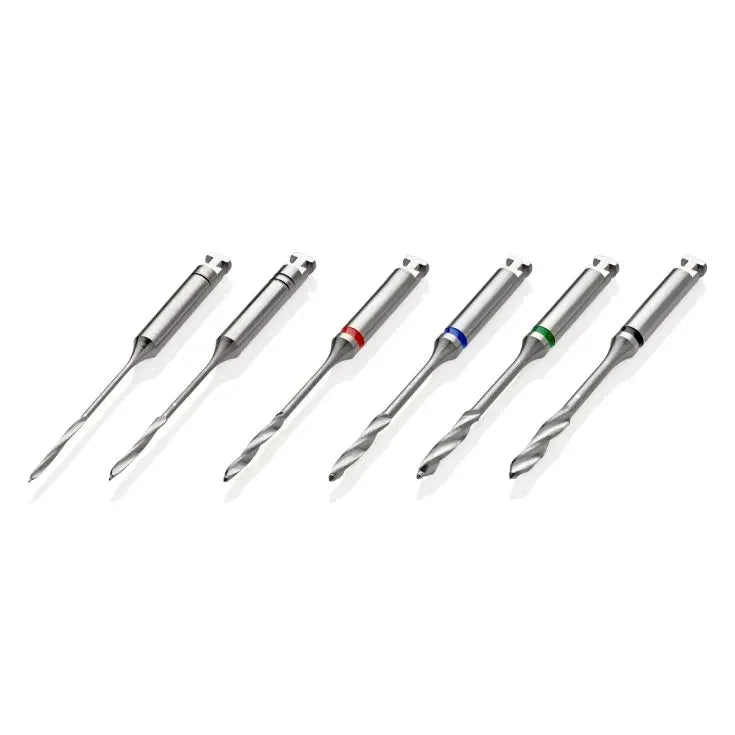
RTD MATCH POST FINISHING DRILL
In stock (31 units)Regular price LE 325.00 EGPUnit price /Unavailable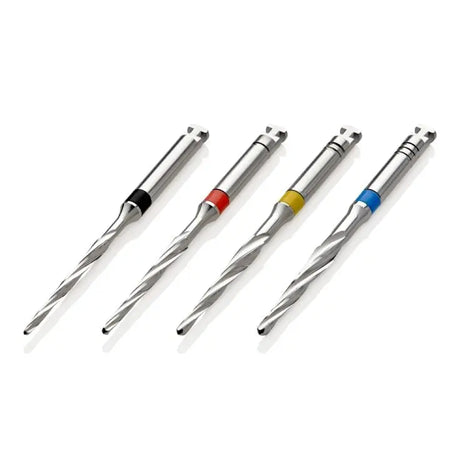
RTD DENTAL
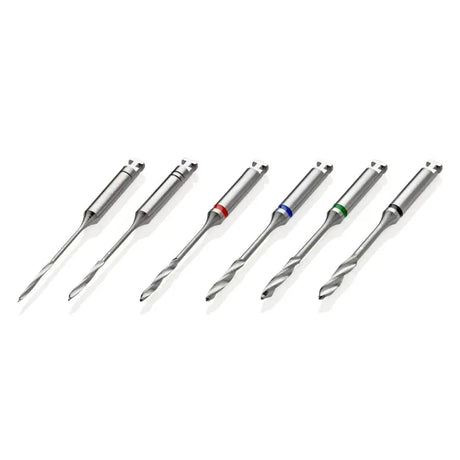
RTD Light POST FINISHING DRILL
Very low stock (7 units)Regular price LE 350.00 EGPUnit price /Unavailableoverfibers
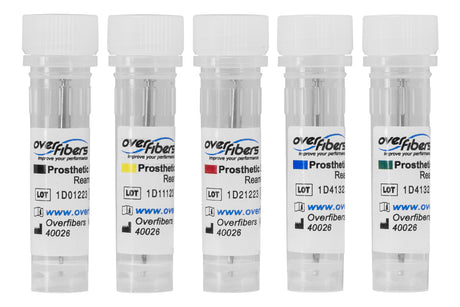
Over Post Fiber Post Drills Refill
Low stock (20 units)Regular price LE 335.00 EGPUnit price /Unavailable-
 Up to 15% off
Pentron
Pentron FibreKleer 4x Tapered Drill
In stock (300 units)Sale price LE 4,650.00 EGP Regular price LE 5,500.00Unit price /Unavailable
Bioloren
Bioloren Avant translucent fiber post Drill
In stock (49 units)Regular price LE 290.00 EGPUnit price /UnavailableBioloren
Bioloren Avant translucent fiber post 20 Posts + Drill Kit
In stock (50 units)Regular price LE 1,580.00 EGPUnit price /Unavailable-
Bioloren
Bioloren Avant translucent fiber post 10 Posts
In stock (49 units)Regular price LE 795.00 EGPUnit price /Unavailable-

I Lumi
Low stock (20 units)Regular price LE 555.00 EGPUnit price /Unavailable
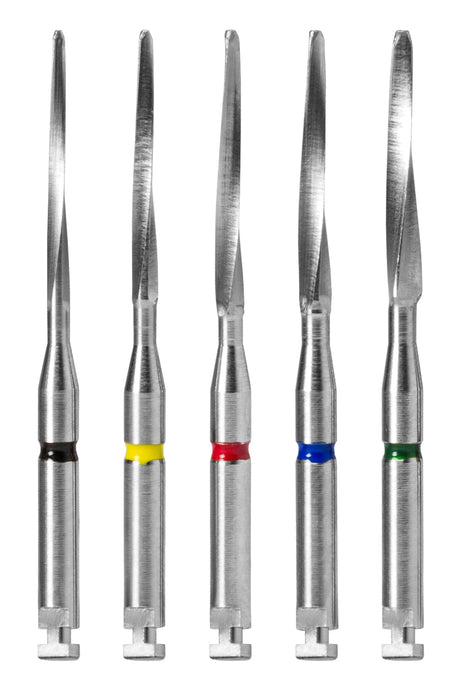


How to Choose the Right Fiber Post Drill for Post Space Preparation
- Manufacturer-Matched vs Generic Drills — Each fiber post manufacturer designs their post space drills to match the exact taper and tip diameter of their post. Using a generic drill with a different system's post risks dimensional mismatch — either the post cannot be fully seated (loose fit) or is forced in with excess cement, increasing the risk of root fracture. Always use the drill supplied by or matched to your specific post brand.
- Drill Diameter and Taper — Fiber post drills are available in diameters from 0.9–1.8 mm tip diameter with tapers of 0.04–0.08. The drill creates a post space whose taper precisely mirrors the post geometry, producing a uniform cement film thickness of approximately 25–50 µm around the entire post length — the ideal range for resin cement bond strength.
- Rotational Speed and Torque — Fiber post drills should be used at low speed (800–2000 rpm) with gentle irrigation. High-speed rotation or excessive apical pressure generates heat that can damage the periodontal ligament and potentially desiccate root dentine, weakening the post space walls.
- Post Space Depth Markings — Standard drills carry depth markings at 12 mm and 16 mm from the drill tip. Post space depth is determined by the clinical crown height; mark the target depth with a rubber stopper on the drill shank before insertion to avoid inadvertent over-preparation into the apical seal.
- Residual Gutta-Percha Removal — Post space drills remove gutta-percha and sealer from the coronal and mid-root canal while the apical GP seal remains. Irrigate with NaOCl after drilling to remove debris before drying and cementing; residual GP flakes contaminate the resin cement interface and reduce bond strength.
- Retreatability — Post spaces prepared with manufacturer-matched drills allow retrieval of the fiber post using ultrasonic tips or dedicated post removal systems if retreatment is required — the uniform cement layer and known post taper make retrieval more predictable than when generic oversize drills are used.
Fiber Post Drill Systems at a Glance
| Brand System | Drill Taper | Speed (rpm) | Available at MedSTA |
|---|---|---|---|
| RTD Match Post drills | 0.08 taper | 800–1200 rpm | Yes |
| RTD Light Post drills | 0.05 taper | 800–1200 rpm | Yes |
| overfibers matched drills | System-matched | 800–2000 rpm | Yes |
Availability & Delivery in Egypt
MedSTA supplies RTD and overfibers matched fiber post drills, priced in EGP from 325 EGP per drill. Cairo and Giza delivery within 1–3 business days; nationwide Egypt within 3–5 business days.
Frequently Asked Questions
Must I use the manufacturer's matched drill for fiber post preparation?
Must I use the manufacturer's matched drill for fiber post preparation?
Yes — using the matched drill is essential. Each fiber post manufacturer designs their drills to produce a post space whose taper and diameter exactly mirror the corresponding post geometry. Using a generic drill risks dimensional mismatch: an undersize drill leaves the post unable to fully seat; an oversize drill creates excess cement film thickness that weakens the bond. A poorly fitting post-to-space relationship is one of the leading causes of fiber post displacement after cementation.
At what speed and torque should fiber post drills be operated?
At what speed and torque should fiber post drills be operated?
Fiber post drills should be operated at low speed (800–2000 rpm) with gentle steady apical pressure and continuous saline irrigation. High rotational speed generates frictional heat that can damage the periodontal ligament and desiccate root dentine. Torque should be minimised — if significant resistance is felt, withdraw and re-irrigate before continuing. Never force the drill apically; resistance at depth indicates residual obturation material that should be removed with Gates Glidden burs or a heated instrument before restarting the post drill.
How do I match the drill diameter to my chosen fiber post size?
How do I match the drill diameter to my chosen fiber post size?
Each fiber post system uses colour-coded drills and posts matched by size number. For example, RTD Match Post size 3 uses the RTD size 3 drill; overfibers size 2 uses the overfibers size 2 drill. Never mix components between brands — the colour coding systems are not standardised across manufacturers. If you are unsure of the correct drill size, the post should passively seat in the drill-prepared space without forcing; if resistance exists at full seating depth, the post space diameter is insufficient.
How deep should the post space be drilled for a fiber post?
How deep should the post space be drilled for a fiber post?
Post space depth should equal the planned post length, which ideally matches the clinical crown height. A minimum of 4–5 mm of apical gutta-percha must remain below the drill tip to preserve the apical seal. Mark the target depth with a silicone rubber stopper on the drill shank before insertion. For a typical anterior tooth with 10 mm clinical crown, the post space would be drilled 10 mm deep leaving 4–5 mm of apical obturation untouched.
Does MedSTA supply RTD and overfibers matched fiber post drills in Egypt?
Does MedSTA supply RTD and overfibers matched fiber post drills in Egypt?
Yes — MedSTA supplies RTD Match Post finishing drills and RTD Light Post finishing drills, plus overfibers matched drills, all priced in EGP from 325 EGP per drill. These are sold individually as replacement drills without needing to purchase a complete kit. Cairo and Giza delivery within 1–3 business days; nationwide Egypt within 3–5 business days.