

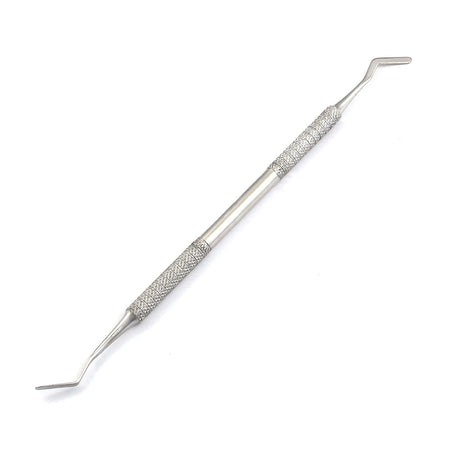
GENERIC
In stock (28 units)Regular price LE 32.00 EGPUnit price /Unavailable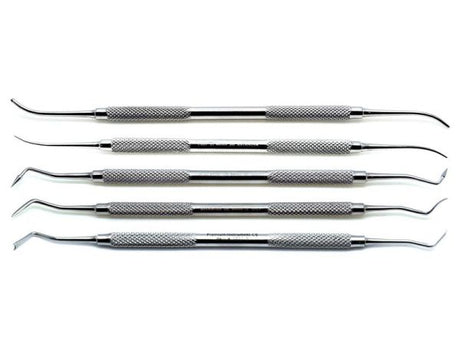
GENERIC
Very low stock (5 units)Regular price LE 195.00 EGPUnit price /UnavailableAsnanco
Dentoform Composite contouring instrument
Low stock (19 units)Regular price From LE 150.00 EGPUnit price /Unavailable-
GENERIC
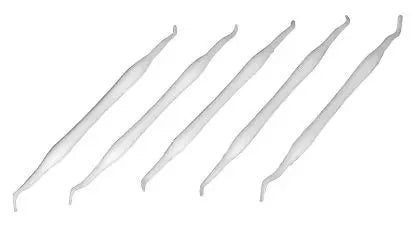
PLASTIC FILLING INSTRUMENTS kit 5pcs
Low stock (12 units)Regular price LE 185.00 EGPUnit price /Unavailable-
- 8% off
A.S
Low stock (14 units)Sale price LE 3,700.00 EGP Regular price LE 4,000.00Unit price /Unavailable -
Asnanco
Very low stock (6 units)Regular price LE 1,500.00 EGPUnit price /Unavailable-

Premia
Premia OptiForm Composite Instruments
Low stock (17 units)Regular price LE 850.00 EGPUnit price /Unavailable
Premia
Premia Modella Composite Instruments
In stock (47 units)Regular price LE 550.00 EGPUnit price /Unavailable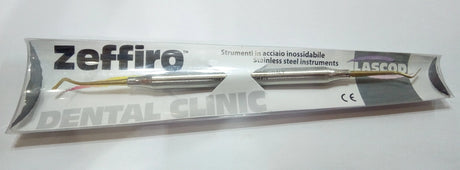
Lascod
LASCOD Zeffiro instrument Gold Plated
Low stock (10 units)Regular price LE 1,050.00 EGPUnit price /Unavailable
Sedra dent
Sedra gold plated Composite Applicator
In stock (24 units)Regular price LE 480.00 EGPUnit price /UnavailableA.S
A.S Composite Instruments single instrument
In stock (157 units)Regular price LE 450.00 EGPUnit price /Unavailable-

Premia
Premia Posterior Misura Composite Instruments
Low stock (18 units)Regular price LE 550.00 EGPUnit price /Unavailable
Miltex
Miltex Gold Composite Instruments
In stock (89 units)Regular price LE 420.00 EGPUnit price /Unavailable
Premia
Premia Replica Posterior Composite Instruments
Low stock (19 units)Regular price LE 550.00 EGPUnit price /Unavailable
Premia
Premia New Composite Instruments Kit 5 pieces
In stock (28 units)Regular price LE 2,750.00 EGPUnit price /Unavailable
Premia
Premia- Solo Posterior composite Instrument
Low stock (20 units)Regular price LE 550.00 EGPUnit price /Unavailable




Composite Instruments by Stage of Use
- Placement Pluggers — Composite pluggers (condensers) push and seat incremental layers of packable composite into the cavity preparation. Choose flat-ended pluggers for horizontal increments and ball-ended or curved pluggers for adapting into the pulpal floor and axial walls.
- Contouring and Shaping Instruments — Composite spatulas and flat plastic instruments shape the occlusal anatomy and proximal contours before light-curing. Gold-tipped composite instruments prevent composite from sticking to the instrument surface -- the titanium nitride coating allows clean composite lift without smearing.
- Burnishers — Ball burnishers and smooth-ended burnishers smooth the composite surface and adapt marginal ridges before curing. Burnishing after each increment -- not after final cure -- gives the best surface smoothness and reduces finishing time.
- Carvers — Composite carvers define final cusp anatomy, embrasures and interproximal contours after the final cured increment. Use composite carvers before final light cure for best results -- carving fully cured composite risks creating subsurface voids at the margins.
- Finishing Instruments — Composite finishing instruments (Sof-Lex strips, composite knives) refine occlusal contacts and interproximal margins. Composite knives and interproximal strips remove excess composite overhangs at the gingival margin before rotary finishing with discs or points.
- Instrument Coating and Anti-Stick — Gold-tipped or PTFE-coated composite instruments dramatically reduce composite adhesion and dragging during placement. Avoid chrome-plated instruments with composite -- chrome plating is prone to micro-scratching that allows composite adhesion even after thorough cleaning.
Composite Instruments by Function
| Instrument | Stage | Shape | Anti-Stick Coating |
|---|---|---|---|
| Composite Plugger (Flat) | Placement | Flat end, various widths | Gold-tip or PTFE |
| Composite Spatula / Flat Plastic | Contouring | Flat, thin blade | Gold-tip or PTFE |
| Ball Burnisher | Smoothing before cure | Ball end | Stainless steel |
| Composite Carver (PKT) | Anatomy definition | Angled blade | Gold-tip preferred |
| Composite Knife | Margin finishing | Thin scalpel-like blade | Stainless steel |
| Interproximal Strip | Finishing overhangs | Flexible abrasive strip | N/A (disposable) |
How to Select a Composite Instrument Set
- Identify the restoration types performed -- anterior cosmetic, posterior Class II, or both.
- Start with a flat plugger and a curved spatula as the core two-instrument placement set.
- Add a ball burnisher for smoothing increments before light-cure.
- Include a carver for defining occlusal anatomy and a composite knife for marginal finishing.
- Choose gold-tipped or PTFE-coated instruments to minimise composite adhesion and dragging.
Availability & Delivery in Egypt
MedSTA stocks composite instrument sets for Egyptian dental clinics with EGP pricing and nationwide delivery. Gold-tipped and PTFE-coated instruments available for anti-stick composite placement.
Frequently Asked Questions
What are composite instruments used for?
What are composite instruments used for?
Placing, adapting, contouring, burnishing and carving composite resin during direct restorations.
What is a composite plugger?
What is a composite plugger?
A flat or ball-ended instrument used to seat and condense incremental composite layers into the cavity.
Why are gold-tipped composite instruments better?
Why are gold-tipped composite instruments better?
Gold-tip or PTFE coating prevents composite from sticking to the instrument, reducing dragging and smearing.
When do I carve composite?
When do I carve composite?
Carve before final light cure for best results -- carving fully cured composite risks void formation at margins.
What is a composite spatula used for?
What is a composite spatula used for?
Shaping and contouring composite increment form -- labial surface, proximal boxes and occlusal anatomy.
Can composite instruments be autoclaved?
Can composite instruments be autoclaved?
Yes -- all stainless steel and gold-tipped composite instruments are autoclave-safe at 134 deg C.
Are composite instrument sets available in Egypt from MedSTA?
Are composite instrument sets available in Egypt from MedSTA?
Yes -- full placement and finishing sets with gold-tipped options in EGP with nationwide delivery.