

Pharma Everest
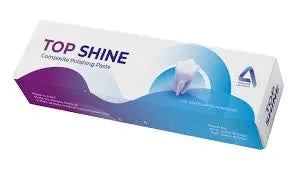
TOP Shine composite polishing Paste 4 g
Low stock (14 units)Regular price LE 70.00 EGPUnit price /Unavailable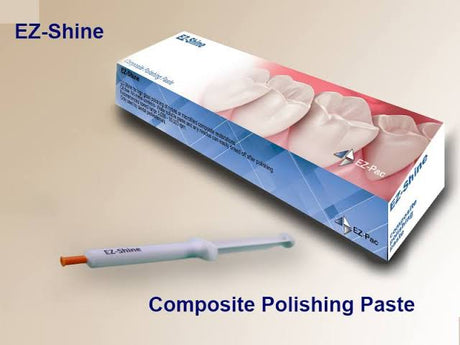
EZ-PAC
EZ-Shine Composite polishing paste
Low stock (15 units)Regular price LE 125.00 EGPUnit price /Unavailable
Eve
EVE DIACOMP Diamond Polishing Paste
Low stock (19 units)Regular price LE 925.00 EGPUnit price /Unavailable
Shofu
Shofu Direct Dia polishing paste Syringe
Very low stock (4 units)Regular price LE 1,250.00 EGPUnit price /Unavailable
Eve
EVE DIAPOL Diamond Polishing Paste
Low stock (20 units)Regular price LE 925.00 EGPUnit price /Unavailable
Ultradent
Ultradent Diamond Polish mint syringe
Low stock (15 units)Regular price From LE 1,200.00 EGPUnit price /Unavailable
Intensiv
Low stock (10 units)Regular price LE 2,050.00 EGPUnit price /Unavailable
Intensiv
Very low stock (3 units)Regular price LE 1,850.00 EGPUnit price /Unavailable


Choosing and Using Composite Polishing Paste
- Polishing Paste vs Polishing Discs — Polishing paste applied with a prophy cup gives a higher final gloss than disc polishing alone but must follow -- not replace -- the disc sequence. Applying polishing paste on an unsmoothed composite surface traps abrasive in micro-scratches rather than removing them -- always complete the disc sequence first.
- Diamond vs Alumina Paste — Diamond composite polishing pastes (submicron diamond) give a higher gloss than aluminium oxide pastes for nanofill and nanohybrid composites. Alumina paste is suitable for microhybrid composites; diamond paste gives the best result on nanofill composites where maximum final gloss is the priority.
- Prophy Cup Application — Use a rubber prophy cup on a slow handpiece at 5,000-8,000 rpm with continuous movement and light pressure. Sustained pressure on one spot generates heat that can cause surface whitening in nanofill composites -- keep the cup moving continuously.
- Single-Shade vs Multi-Shade — Universal composite polishing pastes work across all composite shades without shade-matching considerations. Unlike surface stains, polishing paste does not alter the shade of the restoration -- it only affects surface gloss level.
- Prophylactic vs Composite-Specific Pastes — Standard prophylactic polishing paste (Prophy Paste) is NOT equivalent to composite polishing paste -- the abrasive is too coarse. Use only composite-specific polishing pastes (EZ Shine, Enamelize, Dialux) on composite restorations -- Prophy Paste scratches composite surfaces.
- Post-Polishing Assessment — Check the final surface under an operatory light angled at 45 degrees -- a properly polished composite reflects light evenly without visible micro-scratches. If micro-scratches are still visible, return to the silicone point or fine disc step before re-applying paste.
Composite Polishing Pastes at a Glance
| Paste | Abrasive | Best Composite | Final Gloss |
|---|---|---|---|
| Diamond Paste (submicron) | Diamond | Nanofill, nanohybrid | Excellent |
| Alumina Paste | Aluminium oxide | Microhybrid, universal | Good |
| Silicon Carbide Paste | SiC | Universal composite | Good-Excellent |
| Prophy Paste (fluoride) | Pumice, silica | NOT suitable for composite | Scratches composite |
How to Use Composite Polishing Paste
- Complete the disc and silicone point finishing sequence before applying polishing paste.
- Select composite-specific polishing paste (diamond or alumina) -- not standard prophy paste.
- Load a rubber prophy cup on the slow handpiece and apply a small amount of paste to the restoration.
- Polish at 5,000-8,000 rpm with light continuous pressure and constant cup movement.
- Check the surface at 45 degrees under the operatory light -- repeat if micro-scratches remain.
Availability & Delivery in Egypt
MedSTA supplies composite-specific polishing pastes and prophy cup systems to Egyptian dental clinics with EGP pricing and nationwide delivery. Diamond and alumina paste options available for all composite types.
Frequently Asked Questions
What is composite polishing paste used for?
What is composite polishing paste used for?
Achieving the final high-gloss surface on direct composite restorations as the last step in the polishing sequence.
Can I use regular prophy paste on composite?
Can I use regular prophy paste on composite?
No -- standard prophy paste is too coarse and scratches composite surfaces. Use composite-specific polishing paste only.
Diamond paste vs alumina paste -- which is better?
Diamond paste vs alumina paste -- which is better?
Diamond paste gives higher gloss on nanofill composites; alumina paste works well on microhybrid universals.
Do I need polishing paste after discs?
Do I need polishing paste after discs?
Yes -- polishing paste with a prophy cup gives the final high-gloss finish that disc polishing alone does not achieve.
What speed do I use composite polishing paste at?
What speed do I use composite polishing paste at?
5,000-8,000 rpm with a rubber prophy cup and continuous light pressure -- sustained pressure causes heat and surface whitening.
Does composite polishing paste change the shade?
Does composite polishing paste change the shade?
No -- it only improves surface gloss, not the intrinsic shade of the composite restoration.
Is composite polishing paste available in Egypt from MedSTA?
Is composite polishing paste available in Egypt from MedSTA?
Yes -- diamond and alumina paste options in EGP with nationwide delivery across Egypt.