


T.Fit
T.Fit Orthodontic mini screw Single
In stock (192 units)Regular price LE 555.00 EGPUnit price /Unavailable
Matt
Matt Ortho Closed Coil Spring 1 piece
In stock (574 units)Regular price LE 96.00 EGPUnit price /Unavailable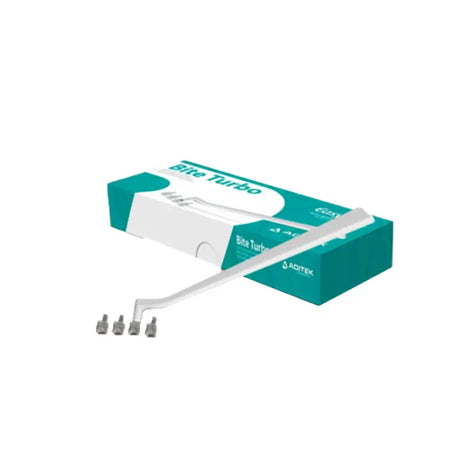
Aditek
Aditek Bite Turbo Mini Mold Kit 4 pcs+ applicator
Low stock (13 units)Regular price LE 990.00 EGPUnit price /UnavailableMatt
Matt Ortho Rotational Wedges 10 pieces/stick
In stock (68 units)Regular price LE 162.00 EGPUnit price /Unavailable-

DTC
DTC Closed Coil With Surgical Eyelts
In stock (286 units)Regular price LE 250.00 EGPUnit price /Unavailable
Matt
Matt Ortho Medium Helical Torque Spring 1 piece
In stock (100 units)Regular price LE 142.00 EGPUnit price /Unavailable
DTC
In stock (43 units)Regular price LE 150.00 EGPUnit price /Unavailable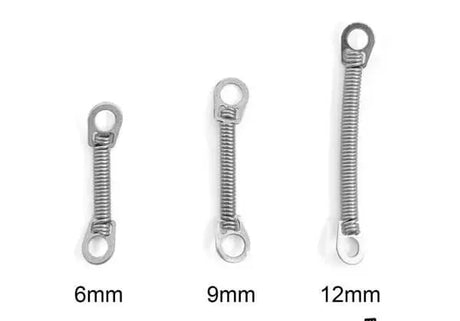
Aditek
In stock (141 units)Regular price LE 50.00 EGPUnit price /Unavailable Up to 19% off
Matt
Matt Ortho Lingual Retainer Lower- Upper 2 pieces/pack
In stock (196 units)Sale price LE 250.00 EGP Regular price LE 310.00Unit price /Unavailable
Matt
Matt Ortho Bondable Button Round Base 1 piece
In stock (38 units)Regular price LE 65.00 EGPUnit price /Unavailable
Matt
Matt Ortho Bondable Button Round Base with hook 1 piece
In stock (31 units)Regular price LE 65.00 EGPUnit price /Unavailable
Matt
Matt Ortho Crimpable Power Arm Implant Hooks 8 mm length 1 piece
In stock (96 units)Regular price LE 105.00 EGPUnit price /Unavailable
Matt
Matt Ortho Long Curved Crimpable Hooks 1 piece
In stock (88 units)Regular price LE 102.00 EGPUnit price /UnavailableAditek
Aditek Crimpable Ball Hook 1pcs
In stock (1354 units)Regular price LE 50.00 EGPUnit price /Unavailable-

Matt
Matt Ortho Plastic Sleeves transparent (diameter 0.31 - length 4.5 meter)
In stock (46 units)Regular price LE 590.00 EGPUnit price /Unavailable



Key Orthodontic Auxiliaries for Fixed Appliance Therapy
- Mini Screws (TADs) — Skeletal Anchorage — Temporary anchorage devices (e.g. T.Fit mini screw) are self-drilling titanium mini-screws placed in the alveolar bone between roots or in the palate to provide absolute anchorage for tooth movement without requiring patient compliance. Common applications: molar intrusion, anterior retraction without molar anchorage loss, lateral open bite closure, and vertical control. TAD placement requires topical and infiltration anesthesia (minimal patient discomfort); remove after orthodontic objectives are achieved.
- Bite Turbos (Anterior Bite Stops) — Aditek Bite Turbo mini pads bonded to the palatal surface of upper incisors or the occlusal surface of lower premolars create posterior open bite, disengaging occlusion for free bracket bonding in deep bite cases and accelerating vertical correction by posterior eruption. Mini Mold Kit designs allow custom shape fabrication directly from composite or GIC on the tooth surface.
- Coil Springs (Open and Closed) — Open coil springs placed on the archwire between brackets create tooth-separating force for space creation or molar distalization; closed coil springs create tooth-approximating force for space closure in extraction cases. Matt closed coil springs are pre-activated with a specific force module — confirm the force value matches the desired biological tooth movement force for the phase of treatment.
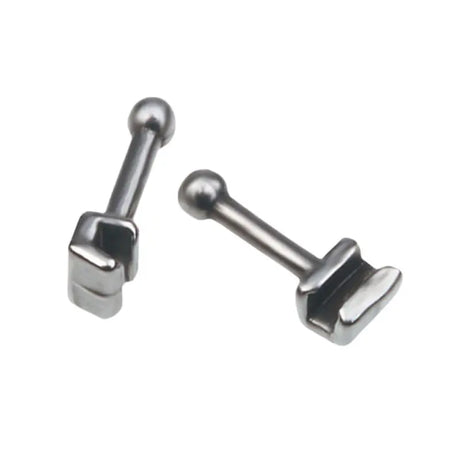
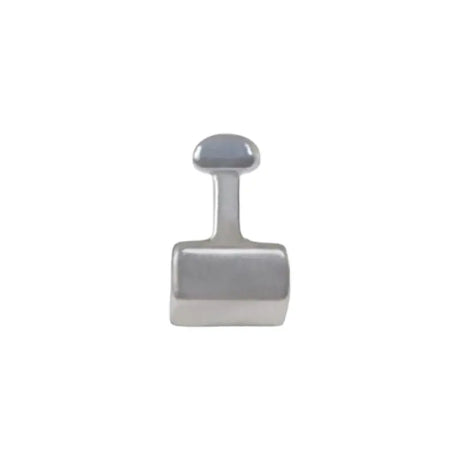
- Crimpable Hooks (Ballhooks) — Aditek crimpable ball hooks are small titanium attachments crimped onto the archwire adjacent to a bracket to provide a ligature or elastic attachment point where no hook exists on the bracket. Used for elastic wear (class II/III correction, vertical elastics) and for auxiliary spring attachment when the bracket design lacks built-in hooks.
- TAD Diameter and Length Selection — Most interradicular TAD sites use 1.4–1.6 mm diameter screws; palatal sites (mid-palate or paramedian) can use 1.6–2.0 mm diameter for maximum stability. Length depends on bone depth at the planned site (6–10 mm for most interradicular sites in Egyptian patients). CBCT measurement of inter-root distance confirms adequate space for the selected diameter without root contact.
Orthodontic Auxiliaries Available in Egypt
| Product | Type | Function | Price (EGP) |
|---|---|---|---|
| T.Fit Mini Screw (TAD) | Skeletal anchor | Absolute anchorage | 555 |
| Aditek Bite Turbo Mini Mold Kit (4 pcs) | Bite turbo | Deep bite correction | 990 |
| Matt Ortho Closed Coil Spring | Coil spring | Space closure | 85 each |
| Aditek Crimpable Ball Hook | Crimpable hook | Elastic attachment | 50 |
Availability & Delivery in Egypt
MedSTA supplies orthodontic auxiliaries from T.Fit, Aditek, and Matt in EGP with same-day dispatch from Cairo. Cairo and Giza delivery within 1–3 business days; all other Egyptian governorates within 3–5 business days.
Frequently Asked Questions
What are TADs (mini screws) and when are they indicated in Egyptian orthodontic practice?
What are TADs (mini screws) and when are they indicated in Egyptian orthodontic practice?
Temporary anchorage devices (TADs) are titanium self-drilling mini-screws (1.4–1.6 mm diameter, 6–10 mm length) placed in alveolar bone between roots or in the palate to provide absolute skeletal anchorage — tooth movement without any reciprocal movement of the anchor unit. TADs are indicated when conventional tooth anchorage cannot achieve the desired movement without unacceptable side-effects (molar mesialisation during retraction, posterior arch expansion during vertical closure). Common indications in Egyptian practice: class II malocclusion requiring maximum anterior retraction without molar advancement; anterior open bite requiring molar intrusion; vertical dimension control in high-angle cases.
How do bite turbos help in deep bite correction in Egyptian orthodontic patients?
How do bite turbos help in deep bite correction in Egyptian orthodontic patients?
Bite turbos (bite stops) bonded to the palatal surface of maxillary incisors or the occlusal surface of lower premolars force the patient to bite on the turbo rather than on the posterior teeth, disengaging posterior occlusion and allowing posterior teeth to erupt while restraining anterior teeth. This creates simultaneous posterior extrusion and potential anterior intrusion that reduces deep bite. In Egyptian patients with class II deep bites (high prevalence in Egyptian orthodontic caseload), bite turbos enable posterior bracket bonding without the deep bite preventing proper bracket access on lower anteriors and allow immediate archwire placement without lower incisor occlusal interference on upper brackets.
When should I use an open versus a closed coil spring?
When should I use an open versus a closed coil spring?
Open coil springs (placed between two bracket slots on the archwire) generate a pushing force that separates adjacent teeth — used to open space in the arch for crowded teeth, impacted canines, or when insufficient space exists for bracket placement. Closed coil springs (attached from hook to hook) generate a pulling force that approximates teeth — used for space closure in extraction cases, mesialisation of posterior teeth, or loop mechanics. Select spring force module (e.g. 100 g or 150 g for Matt springs) based on the required biological force for the rate of movement needed without causing root resorption in Egyptian patients with thin alveolar bone.
How do I place a crimpable hook on an orthodontic archwire?
How do I place a crimpable hook on an orthodontic archwire?
Position the crimpable ball hook on the archwire in the space between the desired bracket and the adjacent bracket, with the hook opening facing occlusally for elastic engagement. Crimp the hook firmly onto the archwire using a crimping plier (not a ligature director, which lacks adequate grip force) by squeezing both wings of the hook closed around the wire diameter. Confirm the hook is locked without sliding along the wire by attempting to reposition it manually; a properly crimped hook should not move under hand pressure. Inspect at every adjustment appointment as hooks can loosen over time with repeated elastic force cycling.
Does MedSTA supply TADs, bite turbos, and coil springs across Egypt?
Does MedSTA supply TADs, bite turbos, and coil springs across Egypt?
Yes — MedSTA supplies T.Fit mini screws (555 EGP each), Aditek Bite Turbo Mini Mold Kits (990 EGP/4 pcs), Matt closed coil springs (85 EGP each), and Aditek crimpable ball hooks (50 EGP) in EGP with same-day dispatch from Cairo. Cairo and Giza delivery within 1–3 business days; all other Egyptian governorates within 3–5 business days.