

Rogin Dental
Rogin Path rotary path-finding files 3 files assorted kit
Very low stock (2 units)Regular price LE 295.00 EGPUnit price /Unavailable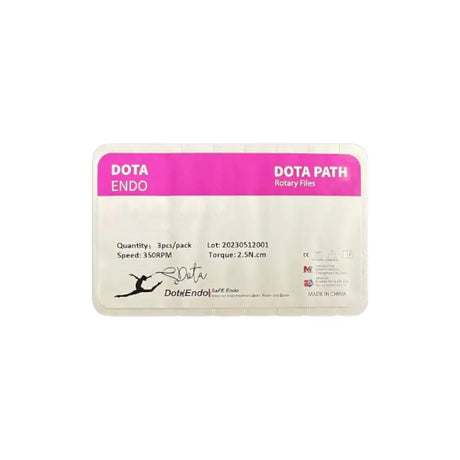
Zarc
ZARC Z Glider Evo 3 files 15/02
Very low stock (8 units)Regular price LE 1,045.00 EGPUnit price /Unavailable-

D-Perfect
D- Perfect MG3 blue Rotary files Path file
In stock (100 units)Regular price LE 369.00 EGPUnit price /Unavailable
Poldent
Poldent Endostar Glide Path Kit (niti2)
In stock (124 units)Regular price From LE 1,065.00 EGPUnit price /Unavailable


How to Choose the Right Endodontic Path Files for Your Practice
- Glide Path Purpose — path files enlarge a canal already negotiated by hand to at least a #10 K-file, creating a smooth apical pathway before larger rotary shaping files engage.
- Tip Size and Taper — typical glide path sequences progress through tip sizes around #13, #16, and #19 at .02 taper, widening the canal without aggressive cutting.
- Cyclic Fatigue Resistance — path files see repeated flexion in curved canals, so M-Wire or CM-wire heat-treated NiTi extends fatigue life compared with conventional ground NiTi.
- Single-Use vs Multi-Use Protocol — because path files experience some of the highest cyclic stress in the shaping sequence, many Egyptian clinics adopt single-patient-use or limited-reuse (three to five canals) protocols to reduce separation risk.
- Motor Speed Settings — path files typically run at 300–400 rpm with light apical pressure; excessive speed increases frictional heat and fatigue.
- Canal Curvature Assessment — a Schneider angle above 25° warrants a manual hand-file glide path supplement before introducing rotary path files, reducing transportation risk.
Path File Sequence at a Glance
| File | Tip Size | Taper | Sequence Position |
|---|---|---|---|
| Path file 1 | #13 | .02 | First |
| Path file 2 | #16 | .02 | Second |
| Path file 3 | #19 | .02 | Third, before main shaping file |
Availability & Delivery in Egypt
Path files at MedSTA range from approximately EGP 230 to EGP 1,555. Orders within Cairo and Giza are typically fulfilled within 1–2 business days; delivery to other governorates takes 2–4 business days.
Frequently Asked Questions — Endodontic Path Files
Why is a glide path necessary before rotary shaping?
Why is a glide path necessary before rotary shaping?
A verified glide path confirms the canal is patent and smoothly negotiable to a reproducible diameter before a larger rotary shaping file is introduced. Skipping this step increases the risk of the shaping file binding, transporting the canal, or separating inside a curved root.
How many times can a path file be reused safely?
How many times can a path file be reused safely?
Path files accumulate cyclic fatigue quickly because they flex repeatedly in the narrowest part of the canal. Most manufacturers and Egyptian clinics limit reuse to three to five canals, discarding sooner for canals with pronounced curvature.
What canal curvature requires extra caution with rotary path files?
What canal curvature requires extra caution with rotary path files?
A Schneider angle above roughly 25° increases the risk of canal transportation or file separation with rotary path files; supplementing with manual K-file negotiation first reduces this risk in sharply curved canals.
What speed should I set my endo motor to for path files?
What speed should I set my endo motor to for path files?
Most path files are designed to run at approximately 300–400 rpm with light apical pressure; check the specific file's data sheet, since exceeding the recommended speed increases frictional heat and fatigue.
Does MedSTA sell replacement path files individually for Egyptian clinics on a budget?
Does MedSTA sell replacement path files individually for Egyptian clinics on a budget?
MedSTA stocks path files both as full sequential kits and, depending on the brand, as individual replacement files, allowing clinics to restock only the sizes they use most. MedSTA delivers across Egypt.