
Aegis-lifesciences
In stock (29 units)Regular price LE 125.00 EGPUnit price /Unavailable-
JK Dental Vision
Low stock (11 units)Regular price LE 130.00 EGPUnit price /Unavailable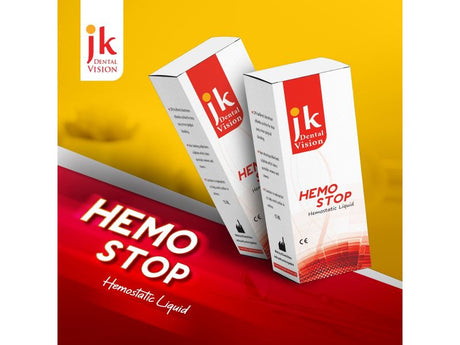
JK Dental Vision
In stock (29 units)Regular price LE 130.00 EGPUnit price /Unavailable

Ultradent
Viscostat Clear Econo refill 1.2ml
Very low stock (8 units)Regular price LE 395.00 EGPUnit price /Unavailable
Ultradent
Ultradent Metal Dento-Infusor Tip with Comfort Hub for Viscostat 1 piece
Very low stock (4 units)Regular price LE 35.00 EGPUnit price /Unavailable
Ultradent
Viscostat Brown Econo Refill 1.2ml
Low stock (9 units)Regular price LE 375.00 EGPUnit price /Unavailable
Ultradent
Viscostat clear Indespence 30 ml
Low stock (9 units)Regular price LE 4,300.00 EGPUnit price /Unavailable
Ultradent
Astringedent 15.5% ferric sulfate Solution 30ml
Low stock (10 units)Regular price LE 3,300.00 EGPUnit price /Unavailable
Ultradent
Low stock (10 units)Regular price LE 3,750.00 EGPUnit price /Unavailable


How to Choose Dental Hemostats for Oral Surgery and Extractions
- Absorbable gelatin sponge (haemostatic foam) — Resorbable gelatin sponges (e.g. Surgispon) are placed dry or wetted with saline directly into the extraction socket. They absorb up to 45 times their weight in blood, providing a physical scaffold for clot formation. The gelatin matrix is fully resorbed within 4–6 weeks, requiring no removal. Ideal for routine extractions and implant sockets.
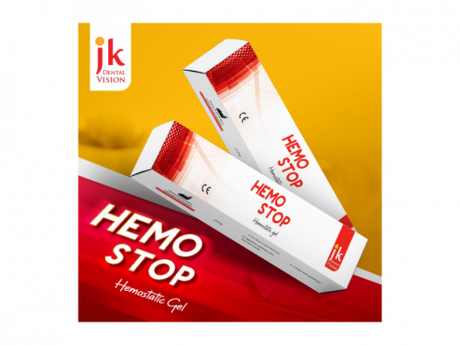
- Haemostatic gel formulations — Aluminium chloride or ferric sulphate-based gels (e.g. JK Hemo Stop) provide astringent haemostasis by protein precipitation at the bleeding capillary surface. These are particularly useful for soft tissue bleeding from gingival incisions rather than bony sockets. Rinse thoroughly with saline after haemostasis is achieved to prevent prolonged tissue contact and fibroblast inhibition.
- Collagen-based vs gelatin-based sponge — Collagen haemostatic agents activate the intrinsic coagulation pathway directly and resorb more rapidly (3–7 days) than gelatin sponges. They are preferred in patients on anticoagulants or with coagulopathies where prolonged socket haemostasis is required. Standard gelatin sponges are adequate for routine extractions in healthy patients.
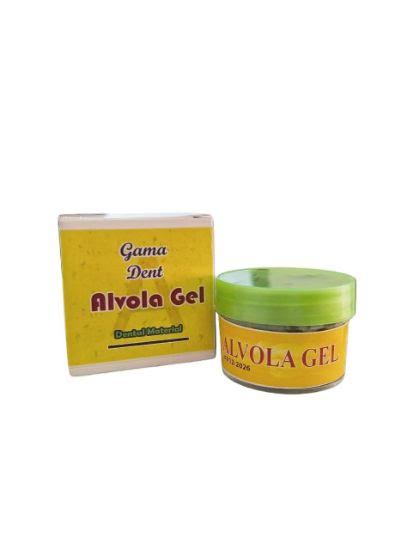
- Dry socket (alveolar osteitis) risk reduction — Gelatin sponge placement in high-risk sockets (lower third molars, post-irradiated bone, patients on bisphosphonates) stabilises the blood clot mechanically, reducing early clot dislodgement. Sponges medicated with zinc oxide or iodoform (e.g. Alvola Gel) additionally provide an antimicrobial environment during early healing.
- Haemostasis in patients on anticoagulant therapy — For patients on warfarin, aspirin, or NOACs, local haemostatic agents are an essential component of post-extraction management. Absorbable gelatin sponge combined with oxidised cellulose or tranexamic acid-soaked gauze is the standard protocol. Confirm INR or anti-Xa levels are within the safe range before extraction, and use haemostatic agents regardless of INR result as an additional precaution.
Dental Hemostat Products at a Glance
| Product | Type | Active Mechanism | Best For |
|---|---|---|---|
| Surgispon Foam Gel | Absorbable gelatin sponge | Physical clot scaffold | Extraction sockets, implant sites, routine surgery |
| Alvola Gel | Medicated socket dressing | Antimicrobial + haemostatic | High-risk sockets, dry socket prevention |
| JK Hemo Stop Gel | Astringent haemostatic gel | Protein precipitation (AlCl₃) | Soft tissue bleeding, gingival haemostasis |
Availability & Delivery in Egypt
MedSTA stocks haemostatic sponges and gels for oral surgery priced in EGP. Delivery covers Cairo and Giza within 24–48 hours and all other Egyptian governorates within 3–5 working days. Store haemostatic gelatin sponges in a dry, cool environment at 15–25°C — Egyptian summer humidity can compromise the sponge's absorption capacity if packaging is breached before use.
Frequently Asked Questions
What is the difference between a haemostatic gelatin sponge and a haemostatic gel for dental use?
What is the difference between a haemostatic gelatin sponge and a haemostatic gel for dental use?
Absorbable gelatin sponges (e.g. Surgispon) provide haemostasis through a physical scaffold that absorbs blood and supports clot formation within the socket; they resorb completely within 4–6 weeks without removal. Haemostatic gels such as aluminium chloride or ferric sulphate formulations (e.g. JK Hemo Stop) achieve haemostasis by astringent protein precipitation at the capillary surface — they are better suited for soft tissue and gingival bleeding rather than bony extraction sockets. The two product types address different clinical scenarios and are often used together: sponge in the socket, gel for marginal soft tissue control.
How should absorbable gelatin sponge be placed in an extraction socket?
How should absorbable gelatin sponge be placed in an extraction socket?
Cut or tear the gelatin sponge to fit the socket dimensions loosely — the sponge should fill the void without being compressed under excessive pressure, which would reduce its absorptive capacity. The sponge can be placed dry or wetted with sterile saline (wetting expands the sponge and eases placement). Stabilise the sponge with a figure-of-eight suture across the socket opening, or with a piece of oxidised cellulose gauze sutured over the socket. Do not pack the socket so tightly that the sponge expands and dislodges the surrounding clot after closure.
Can dental hemostats be used safely in patients on anticoagulant therapy?
Can dental hemostats be used safely in patients on anticoagulant therapy?
Yes — local haemostatic agents are a recommended component of post-extraction management in anticoagulated patients, but they do not replace pre-operative INR or anti-Xa assessment. For patients on warfarin with an INR of 2.0–3.5, local haemostatic measures (absorbable sponge + pressure + tranexamic acid mouthwash) are sufficient without dose interruption for routine extractions per current guidelines. For NOACs, the timing of the last dose relative to the extraction is more important than the use of local haemostats, though they should still be placed routinely.
How does Alvola Gel differ from a plain absorbable gelatin sponge?
How does Alvola Gel differ from a plain absorbable gelatin sponge?
Alvola Gel is a medicated socket dressing — typically a eugenol or iodoform-based formulation — designed primarily for the prevention and treatment of dry socket (alveolar osteitis) rather than as a primary haemostatic agent. Unlike plain gelatin sponge, which only provides mechanical clot support, Alvola Gel contains antimicrobial components that reduce bacterial contamination of the socket during early healing. It is best used in high-risk sockets (lower third molars, smokers, patients on contraceptives) where dry socket incidence is elevated in the Egyptian patient population.
How should haemostatic gels and sponges be stored in Egyptian dental clinics?
How should haemostatic gels and sponges be stored in Egyptian dental clinics?
Store absorbable gelatin sponges at 15–25°C in a dry environment — Egyptian summer humidity (often exceeding 70–80% RH) can compromise the integrity of sponge packaging and pre-humidify the sponge before use, reducing its absorptive capacity. Keep all haemostatic products sealed in their original packaging until immediate use. Haemostatic gels should be kept away from direct heat (avoid storage in drawers near autoclave units or in cabinets exposed to exterior summer heat). MedSTA delivers haemostatic dental materials across all Egyptian governorates.