

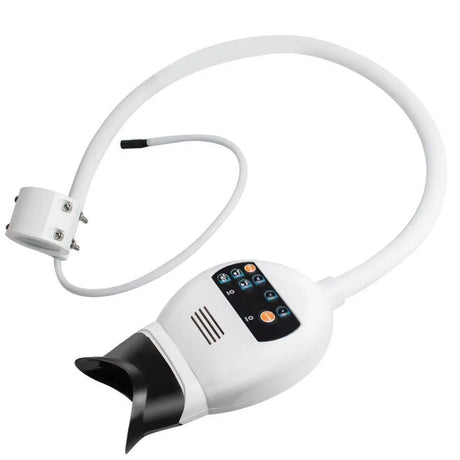
GENERIC
Atlas Bleaching Device 14 Lamps
Very low stock (1 unit)Regular price LE 3,950.00 EGPUnit price /Unavailable
Zafdent
Very low stock (5 units)Regular price LE 23,150.00 EGPUnit price /Unavailable
Bisico
Bisico Natural+ Professional device + 2 kits free
Very low stock (2 units)Regular price LE 66,600.00 EGPUnit price /Unavailable
Monitex
Monitex WhitenMAX BR800 Whitening Unit
Low stock (20 units)Regular price LE 51,000.00 EGPUnit price /Unavailable
COXO
Coxo C-Bright Mobile whitening Unit
Very low stock (3 units)Regular price LE 25,000.00 EGPUnit price /Unavailable


Choosing the Right Bleaching System for Your Practice
- Light Source Technology — LED and halogen lamps each offer different heat profiles and activation speeds. LED units typically generate less heat, improving patient comfort during extended whitening sessions while maintaining effective gel activation.
- Number of Lamps — Multi-lamp configurations cover the full arch simultaneously. Systems with 14 or more lamps can illuminate upper and lower arches at once, reducing total chair time compared to single-arch devices.
- Mobile vs Fixed Units — Mobile units offer flexibility across operatories and clinic locations. Floor-standing mobile bleaching systems can be repositioned easily, ideal for practices with multiple treatment rooms or limited space.
- Timer and Intensity Controls — Adjustable settings allow customised treatment protocols. Variable intensity and programmable timers help clinicians tailor sessions to different gel concentrations and patient sensitivity levels.
- Patient Comfort Features — Cooling systems and ergonomic positioning reduce discomfort. Integrated fans or cooling mechanisms help dissipate heat during activation, while adjustable arms ensure optimal patient positioning.
- Maintenance Requirements — Lamp lifespan and replacement availability affect long-term costs. Consider units with readily available replacement bulbs and easy-clean surfaces to minimise downtime and maintenance expenses.
Bleaching System Types at a Glance
| System Type | Light Configuration | Best For | Key Feature |
|---|---|---|---|
| Multi-Lamp Floor Unit | 14+ LED lamps | High-volume practices | Full-arch coverage |
| Mobile Whitening Unit | LED array | Multi-room practices | Portability |
| Compact Tabletop Unit | Single LED module | Small clinics | Space-saving design |
| Dual-Arch System | Upper and lower arrays | Efficiency-focused clinics | Simultaneous treatment |
| Cold-Light System | Blue LED technology | Sensitive patients | Minimal heat generation |
How to Select Your Bleaching System
- Assess your average weekly whitening case volume to determine capacity needs.
- Evaluate available operatory space for floor-standing versus mobile configurations.
- Compare lamp counts and coverage area for your typical treatment protocols.
- Check timer and intensity options match your preferred bleaching gel requirements.
- Verify replacement lamp availability and warranty terms before purchasing.
Availability & Delivery in Egypt
MedSTA supplies professional dental bleaching systems across Egypt with all prices in EGP. Enjoy nationwide delivery to your clinic. Store units in climate-controlled areas to protect electronic components from humidity.
Frequently Asked Questions
How long does a typical in-office bleaching session take?
How long does a typical in-office bleaching session take?
Most professional systems complete treatment in 30 to 60 minutes depending on gel type and desired shade improvement.
Do LED bleaching lamps require special electrical connections?
Do LED bleaching lamps require special electrical connections?
Most units operate on standard electrical outlets, though always verify voltage requirements before installation.
Can bleaching systems be used with all whitening gels?
Can bleaching systems be used with all whitening gels?
Light-activated systems work best with gels formulated for photo-activation; check gel compatibility specifications.
How often do bleaching lamp bulbs need replacement?
How often do bleaching lamp bulbs need replacement?
LED lamps typically last thousands of hours; replacement frequency depends on usage volume and manufacturer guidelines.
Are mobile bleaching units as effective as fixed systems?
Are mobile bleaching units as effective as fixed systems?
Mobile units deliver comparable results when properly positioned, offering flexibility without sacrificing performance.
What safety precautions are needed during bleaching procedures?
What safety precautions are needed during bleaching procedures?
Use protective eyewear for patients and staff, and apply gingival barriers to protect soft tissues from gel contact.
Is professional in-office bleaching suitable for all patients?
Is professional in-office bleaching suitable for all patients?
Screen for contraindications including severe sensitivity, active decay, or pregnancy before recommending treatment.