
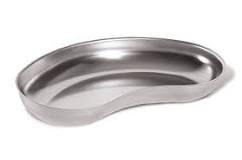
Kidney Dishes: Selection and Use in Dental Practice
- Material (Stainless Steel vs Polypropylene) — Stainless steel kidney dishes (AISI 304) withstand repeated Class B autoclave sterilisation at 134°C and resist corrosion from blood, saline, and disinfectant solutions. PP kidney dishes are lighter and less expensive but are rated for single-use or chemical disinfection only — not autoclave sterilisation. For surgical applications in Egyptian dental theatres and oral surgery suites, stainless steel is mandatory.
- Size (500 mL vs 750 mL vs 1,000 mL) — Standard 500 mL dishes for chairside instrument holding during routine examinations and restorative procedures; 750 mL for extraction and minor oral surgery; 1,000 mL for prolonged surgical cases generating higher volumes of irrigation fluid, blood, and waste. Ensure dish depth is sufficient to prevent spillage when tilted during instrument retrieval.
- Curvature Radius — The kidney shape conforms to the patient’s chin and neck contour when used as an emesis bowl, allowing the patient to hold it comfortably with the curved side against their face. The curve also allows nesting of multiple dishes during storage, reducing cabinet space requirements.
- Surface Finish (Mirror vs Satin) — Mirror-polished surfaces are easier to clean and visually confirm instrument cleanliness; satin (brushed) finish is more resistant to surface scratching from metal instruments and maintains a cleaner appearance through extended use cycles. Both are functionally equivalent for clinical use.
- Clinical Dual Use — Kidney dishes serve two functions simultaneously in a typical dental surgical setup: (1) as a receiver for used instruments and waste during the procedure; (2) as a basin for saline or sterile water for instrument rinsing or wound irrigation. Dedicate separate dishes to clean (irrigation) and waste functions to prevent instrument contamination.
Availability & Delivery in Egypt
MedSTA supplies stainless steel kidney dishes in EGP with same-day dispatch from Cairo. Cairo and Giza delivery within 1–3 business days; all other Egyptian governorates within 3–5 business days. Suitable for Egyptian dental clinics, oral surgery units, and hospital dental departments.
Frequently Asked Questions
What is the standard size kidney dish for dental chairside use?
What is the standard size kidney dish for dental chairside use?
A standard 500–750 mL kidney dish is appropriate for most dental chairside applications including instrument holding during restorative, endodontic, and extraction procedures. For oral surgery with bone work and implant site preparation involving higher irrigation volumes (100–300 mL saline per procedure), a 1,000 mL dish provides adequate capacity without overflow risk. Stock at least two dishes per surgical setup: one for clean items and irrigation fluid, one as a waste receiver for used instruments and surgical debris.
Can kidney dishes go in a Class B autoclave?
Can kidney dishes go in a Class B autoclave?
Yes — stainless steel (AISI 304) kidney dishes withstand Class B autoclave cycles at 134°C, 3 bar, 18 minutes without deformation, discolouration, or corrosion. Rinse dishes under running water to remove gross debris before loading into the autoclave, and ensure they are inverted or tilted to allow condensate drainage during the cycle. PP plastic kidney dishes are NOT autoclavable — they warp at 134°C and should only be used for single-patient disposable applications or cold disinfection workflows.
How should kidney dishes be cleaned after use in Egyptian dental clinics?
How should kidney dishes be cleaned after use in Egyptian dental clinics?
After each procedure, remove instruments and debris from the dish immediately before blood and fluids coagulate. Rinse under running water, then clean in an ultrasonic bath with enzymatic detergent for 5–10 minutes to remove protein deposits from the metal surface. Rinse thoroughly, dry, and autoclave before the next clinical use. In Egyptian clinics without ultrasonic cleaners, manual brushing with a stiff bristle brush and enzymatic detergent is acceptable; avoid steel wool or abrasive pads that scratch the surface and create micro-crevices that harbour biofilm.
Is a kidney dish required for a standard dental extraction in Egypt?
Is a kidney dish required for a standard dental extraction in Egypt?
Yes — a kidney dish is standard equipment for any extraction setup in Egyptian dental practice. It serves as the instrument tray for the elevator and forceps set pre-procedure, as a waste receiver for bloody gauze and tooth fragments during the procedure, and as a holder for the extracted tooth and root fragments for post-procedure inspection. Using a kidney dish prevents instrument contamination on the bracket tray surface and reduces the biohazard handling burden in the immediate post-extraction cleanup workflow.
Does MedSTA supply stainless steel kidney dishes across Egypt?
Does MedSTA supply stainless steel kidney dishes across Egypt?
Yes — MedSTA supplies stainless steel kidney dishes in EGP with same-day dispatch from Cairo. Cairo and Giza delivery within 1–3 business days; all other Egyptian governorates within 3–5 business days. Suitable for Egyptian dental clinics, oral surgery theatres, and hospital dental departments.