

Cotisen
Cotisen Autoclavable impression Plastic tray 13 pcs
In stock (39 units)Regular price LE 199.00 EGPUnit price /Unavailable-
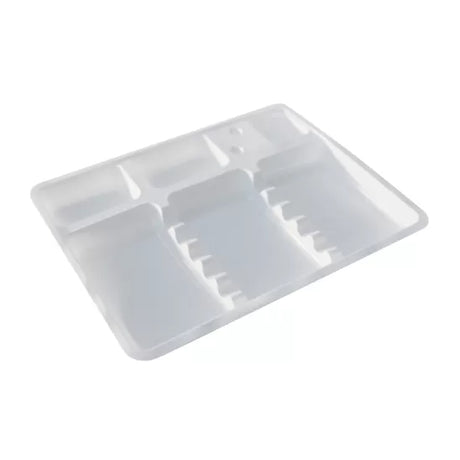
Cotisen
Cotisen Disposable Plastic Tray
In stock (228 units)Regular price From LE 5.00 EGPUnit price /Unavailable-
Asnanco
Low stock (9 units)Regular price From LE 48.00 EGPUnit price /Unavailable-

Asnanco
Asnanco Dental drawer organizer
Low stock (20 units)Regular price LE 225.00 EGPUnit price /Unavailable


How to Choose Dental Instrument Trays for Your Practice
- Autoclavable vs Disposable — Autoclavable polypropylene (PP) trays withstand repeated 134°C steam sterilization (Class B autoclave) cycles. Disposable trays eliminate the sterilization step but generate waste. High-volume clinics often use autoclavable trays for main instrument sets and disposable trays for single-use impression setups.
- Material (PP vs ABS) — Polypropylene (PP) is the preferred autoclave-safe material, stable at 134°C. ABS (acrylonitrile butadiene styrene) is less autoclave-stable and may warp at full sterilization temperatures. Confirm the tray is PP and labelled for autoclave use before purchasing for reusable sterilization workflows.
- Tray Size and Compartment Layout — Full-arch examination trays (13-piece cassette format) accommodate a complete instrument set: mirror, probe, explorer, tweezers, and excavators. Procedure-specific trays are smaller and designed for single applications (e.g. composite setups, perio charting). Match tray size to your autoclave basket dimensions.
- Wall Thickness and Cycle Rating — Autoclavable PP trays should have a minimum wall thickness of 1.5 mm to resist warping across repeated sterilization cycles. Manufacturer datasheets should specify the rated number of autoclave cycles; most high-quality PP trays tolerate 100+ cycles before significant dimensional drift.
- Stackability and Storage — Stackable tray designs reduce storage footprint in Egyptian clinic environments where cabinet space is limited. Confirm that the stacking geometry allows air circulation in the autoclave during the drying phase, which directly affects sterilization efficacy.
Instrument Tray Types at a Glance
| Type | Material | Autoclavable | Best For |
|---|---|---|---|
| Full-arch Examination Tray (13-pc) | PP | Yes — 134°C | Complete instrument setup per patient |
| Disposable Plastic Tray | PS or ABS | No — single use | Impression setups; high-turnover procedures |
| Drawer Organizer Insert | PP or ABS | Check manufacturer | Sterilization room instrument sorting |
Availability & Delivery in Egypt
Dental instrument trays at MedSTA are priced in EGP with nationwide delivery across Egypt. Autoclavable PP trays should be rinsed in deionised or filtered water before sterilization cycles to avoid mineral deposits from hard Egyptian tap water that can accelerate tray surface degradation. Bulk orders available for clinic chains and hospital procurement.
Frequently Asked Questions
What plastic material is safe for autoclave sterilization of dental trays?
What plastic material is safe for autoclave sterilization of dental trays?
Polypropylene (PP) is the standard autoclave-safe plastic for dental instrument trays. PP retains dimensional stability at 134°C (Class B sterilization temperature) across repeated cycles. ABS and polystyrene (PS) plastics are not reliably autoclave-safe and may warp or discolour — avoid these for reusable sterilization applications. Always confirm the tray is specifically labelled for autoclave use.
How many sterilization cycles can a PP dental tray withstand?
How many sterilization cycles can a PP dental tray withstand?
A good-quality PP autoclave tray rated for 134°C Class B sterilization typically withstands 100–200 cycles before showing measurable dimensional drift or surface crazing. Inspect trays at each sterilization cycle for warping, cracking, or colour change. Trays showing visible deformation should be replaced to maintain load integrity in the autoclave.
What is the difference between a 13-piece cassette tray and a disposable tray?
What is the difference between a 13-piece cassette tray and a disposable tray?
A 13-piece cassette tray is an autoclavable PP platform designed to hold a full examination instrument set (mirror, probe, tweezers, excavators, scalers) through multiple sterilization and chairside use cycles. A disposable tray is a lightweight single-use platform for impression materials or temporary setups that is discarded after one use — eliminating the need for reprocessing.
Should I use cassette trays or individual instrument wrapping for my sterilization workflow?
Should I use cassette trays or individual instrument wrapping for my sterilization workflow?
Cassette trays are preferable for high-volume clinics because they maintain instrument organization through the full decontamination-sterilization-chairside cycle, reducing handling time and the risk of sharp injuries during unwrapping. Individual wrapping is appropriate for infrequently used instruments or when cassettes are not available. Both methods are compatible with Class B autoclave sterilization.
How do I prevent mineral deposits from forming on dental trays sterilized in Egypt?
How do I prevent mineral deposits from forming on dental trays sterilized in Egypt?
Egyptian tap water has high mineral content that causes limescale deposits on autoclave trays during steam sterilization. Rinse trays with deionised or filtered water before placing them in the autoclave. Descale the autoclave reservoir regularly using manufacturer-approved descaling solutions. Mineral deposits are not only cosmetically undesirable but can interfere with tray surface integrity over time.