

Asnanco
Very low stock (1 unit)Regular price LE 295.00 EGPUnit price /Unavailable
Asnanco
Chu's Aesthetic Guage (stainless steel)
Very low stock (1 unit)Regular price LE 1,145.00 EGPUnit price /UnavailableAsnanco
Very low stock (4 units)Regular price LE 575.00 EGPUnit price /Unavailable-

Asnanco
Implant locating guide (all on four)
Very low stock (8 units)Regular price LE 525.00 EGPUnit price /Unavailable
Asnanco
Asnanco dental precision measuring ruler
Very low stock (7 units)Regular price LE 120.00 EGPUnit price /Unavailable
Medbone
Low stock (10 units)Regular price From LE 2,200.00 EGPUnit price /Unavailable
Asnanco
Lateral Approach sinus lifting drill
Low stock (9 units)Regular price LE 370.00 EGPUnit price /UnavailableMaco
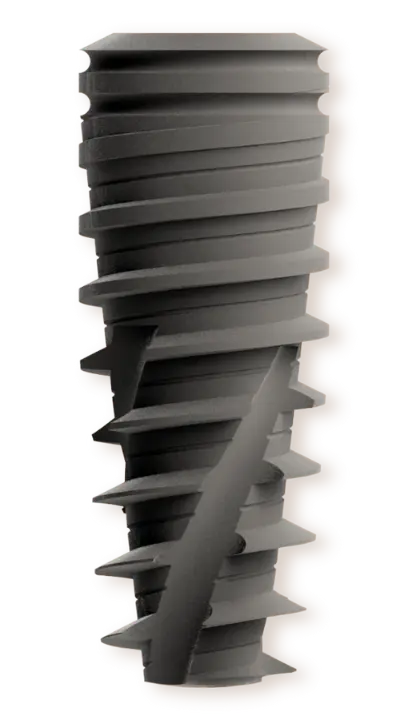
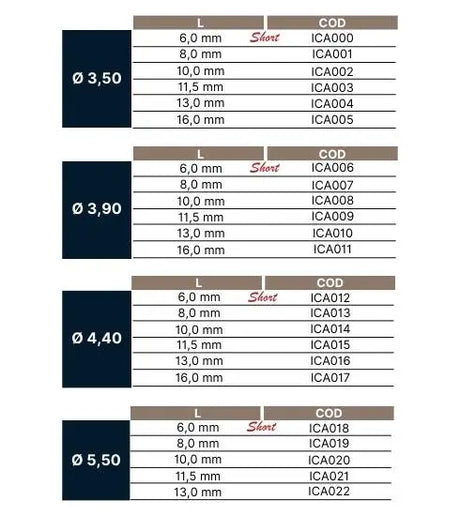
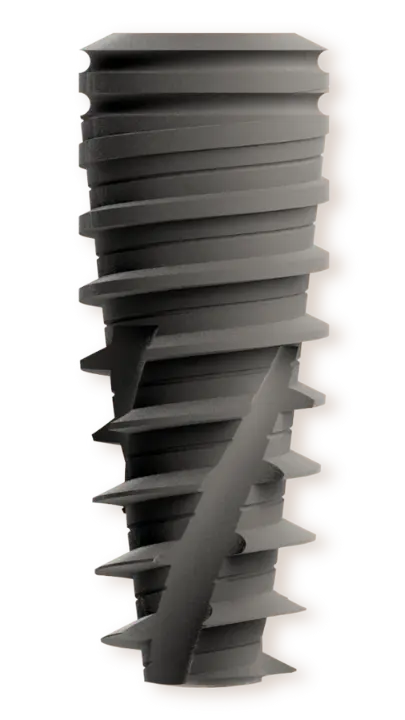
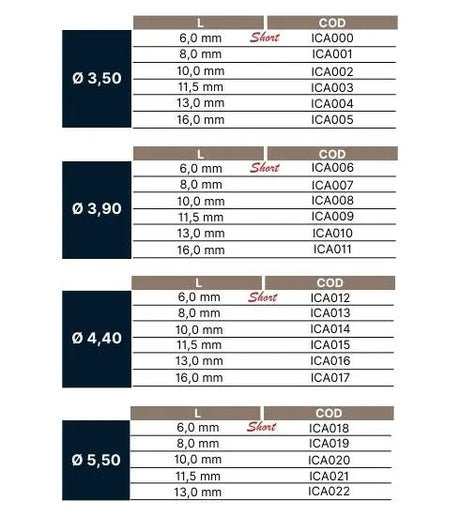
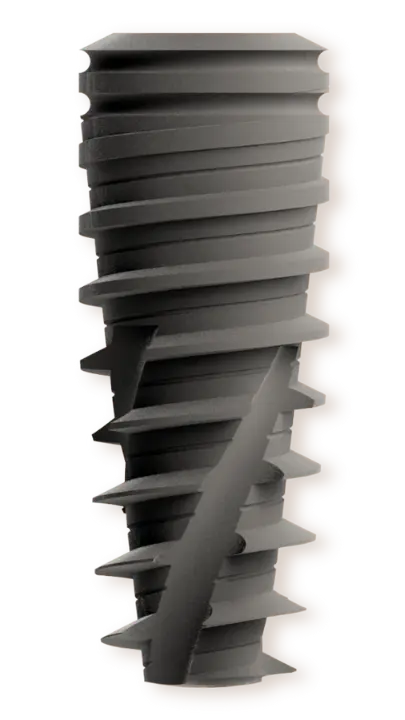
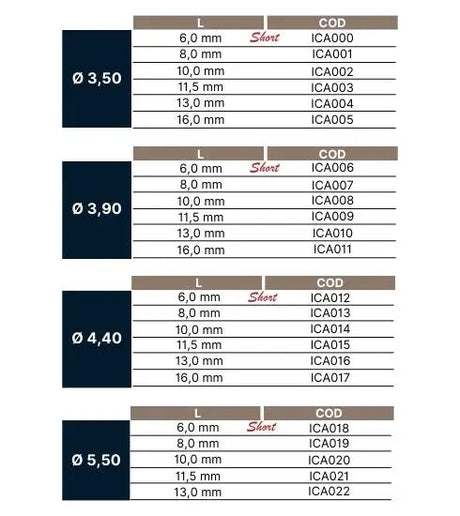
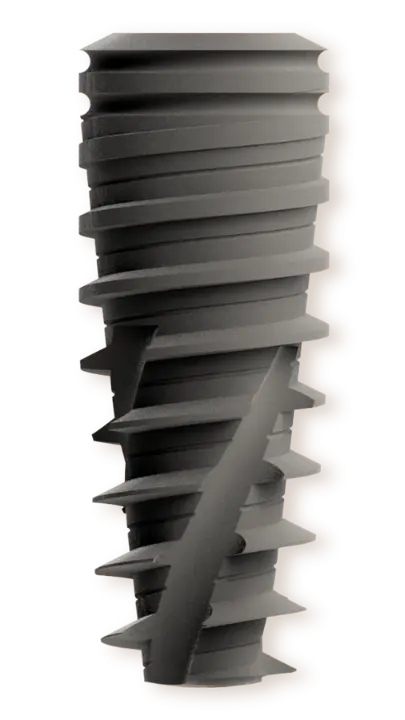
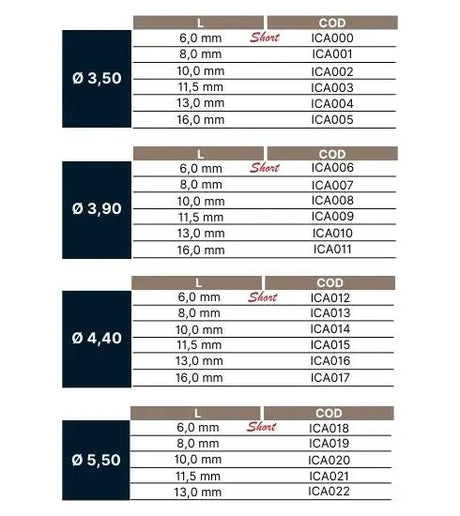
MACO Conical Active Implant 3.5 + Straight Abutment
In stock (40 units)Regular price LE 3,500.00 EGPUnit price /Unavailable-
Maco
MACO Conical Active Implant 3.9 + Straight Abutment
In stock (40 units)Regular price LE 3,500.00 EGPUnit price /Unavailable-
Maco
MACO Conical Active Implant 4.4 + Straight Abutment
In stock (40 units)Regular price LE 3,500.00 EGPUnit price /Unavailable-
Maco
MACO Conical Active Implant 5.5 + Straight Abutment
In stock (30 units)Regular price LE 3,500.00 EGPUnit price /Unavailable-


How to Choose Dental Implant Systems and Surgical Supplies
- Titanium Grade 4 vs Grade 5 — Most standard-diameter implant fixtures (3.5–5.0 mm) use commercially pure titanium Grade 4 (cpTi G4, tensile strength 550 MPa), which provides excellent osseointegration due to its oxide surface chemistry. Grade 5 (Ti-6Al-4V alloy, tensile strength 860–950 MPa) is used for narrow-diameter implants (<3.5 mm) and high-stress posterior placements where additional mechanical strength is required to prevent fracture. Grade 5 implants require a slightly higher crystallographic surface roughness specification to match the osseointegration performance of Grade 4.
- Implant surface treatment (SLA vs RBM) — Sandblasted and acid-etched (SLA) surfaces produce micro-roughness of 1.5–3.0 µm Ra, which maximises the bone-to-implant contact (BIC) area by 30–40% compared to machined surfaces, accelerating primary osseointegration. Resorbable blast media (RBM) surfaces use calcium phosphate particles that are fully resorbed, leaving a comparable micro-rough surface without alumina or sand contamination. Hydrophilic SLA variants (SLActive, Straumann) show faster early osseointegration (2–4 weeks vs 6–8 weeks for standard SLA) by reducing the wetting angle at the surface.
- Internal hex vs conical connection — Internal hex connections provide a stable, standardised interface between implant and abutment, compatible with a wide range of third-party prosthetic components. Conical (Morse taper) connections at 11–12° taper produce a friction-locked "cold weld" seal, significantly reducing micromovement and microbial leakage at the interface — resulting in less crestal bone loss and better soft tissue stability over long-term function. Conical connections are increasingly preferred for aesthetic anterior cases in Egyptian implantology.
- Bone grafting material selection — For Egyptian patients requiring ridge augmentation before implant placement, xenograft bovine bone particles (e.g. Bio-Oss) in 0.25–1 mm particle size provide a slowly resorbing osteoconductive scaffold that maintains ridge volume over 12–24 months. Alloplastic materials (biphasic calcium phosphate, HA/TCP) are cost-effective alternatives with predictable resorption profiles. Autogenous bone (block graft from the chin or ramus) provides osteoinductive growth factors but requires a second surgical site — reserved for large defects where graft volume cannot be provided by substitutes alone.
- PRF/PRP kits for accelerated healing — Platelet-rich fibrin (PRF) prepared from the patient's own blood (centrifuged at 400–700 g for 10–12 minutes) releases concentrated growth factors (PDGF, TGF-β, VEGF) that accelerate soft tissue healing and early osseointegration. PRF membranes combined with xenograft particles are increasingly used in Egyptian implant practices for simultaneous implant placement and bone augmentation, reducing the total treatment timeline.
Dental Implant Supply Categories
| Category | Key Products | Clinical Use |
|---|---|---|
| Implant Systems | Standard, narrow, mini implants | Osseointegrated tooth replacement |
| Abutments | Healing, temporary, permanent, titanium bases | Implant-crown connection |
| Surgical Instruments | Implant surgical kits, torque wrenches, depth gauges | Osteotomy and fixture placement |
| Bone Augmentation | Bone grafts, membranes, collagen sponge, PRF kits | Ridge augmentation, socket preservation |
| Guided Surgery | Surgical guides, digital tools | Computer-guided implant placement |
Availability & Delivery in Egypt
MedSTA supplies dental implant systems, surgical kits, and bone augmentation materials priced in EGP with delivery across all Egyptian governorates. High-value implant systems and bone substitutes are available for individual case orders and institutional procurement by Egyptian implant centres and university oral surgery departments.
Frequently Asked Questions
What is the difference between titanium Grade 4 and Grade 5 dental implants?
What is the difference between titanium Grade 4 and Grade 5 dental implants?
Commercially pure titanium Grade 4 (cpTi G4) is the most widely used implant material for standard-diameter fixtures (3.5–5.0 mm diameter), offering excellent biocompatibility and an oxide surface that integrates predictably with alveolar bone. Its tensile strength (~550 MPa) is sufficient for standard loading conditions. Titanium Grade 5 (Ti-6Al-4V alloy, 860–950 MPa) is stronger and used for narrow-diameter implants (<3.5 mm) where fracture resistance is critical, or in posterior high-load applications. Grade 5 implants require careful surface treatment to match the osseointegration performance of Grade 4 — confirm that Grade 5 fixtures carry SLA or equivalent micro-roughened surface specifications.
What is platform switching in implant dentistry and why does it preserve crestal bone?
What is platform switching in implant dentistry and why does it preserve crestal bone?
Platform switching moves the implant-abutment junction (IAJ) inward from the outer edge of the implant platform by using an abutment with a narrower diameter than the implant head. This design shifts the biological width zone away from the crestal bone and reduces bone remodelling forces at the crest. Studies consistently show less crestal bone loss (0.2–0.4 mm vs 0.8–1.5 mm over 5 years) around platform-switched implants compared to platform-matched designs. For aesthetic anterior cases in Egyptian patients with thin gingival biotypes, platform switching combined with a conical connection is the preferred configuration to maintain long-term soft tissue contour.
When is immediate implant placement after extraction appropriate?
When is immediate implant placement after extraction appropriate?
Immediate implant placement (Type 1 protocol) is appropriate when: the extraction socket has intact bony walls with no fenestration or dehiscence; there is no active periapical infection or periodontal disease at the site; adequate primary stability (ISQ ≥65 or insertion torque ≥35 Ncm) can be achieved apically and lingually to the socket; and the clinician has sufficient surgical experience with the technique. In Egyptian patients with high-density cortical bone (common in the upper jaw in patients with parafunctional habits), immediate placement achieves good primary stability. Socket preservation with xenograft is recommended when any of these criteria is not met, followed by delayed placement at 3–4 months.
What bone grafting materials are recommended for ridge augmentation in Egyptian patients?
What bone grafting materials are recommended for ridge augmentation in Egyptian patients?
For alveolar ridge augmentation prior to implant placement in Egyptian patients, xenograft bovine bone mineral (e.g. Bio-Oss, 0.25–1.0 mm particle size) combined with a resorbable collagen membrane is the most widely used and evidence-supported protocol. Xenograft resorbs slowly (over 24–36 months), maintaining ridge volume through the osseointegration and provisional period. Alloplastic biphasic calcium phosphate (HA/TCP 60:40) is a cost-efficient alternative with predictable resorption. Autogenous block grafts from the chin or ramus are reserved for large horizontal defects requiring >4 mm augmentation where xenograft volume alone is insufficient.
Does MedSTA supply dental implant systems and surgical kits in Egypt?
Does MedSTA supply dental implant systems and surgical kits in Egypt?
Yes — MedSTA supplies titanium implant systems, healing and permanent abutments, implant surgical kits, torque wrenches, depth gauges, surgical trays, bone grafting materials, barrier membranes, collagen sponges, PRF/PRP centrifuge kits, and guided surgery digital tools — all priced in EGP. High-value implant systems and bone substitute materials are available for individual case procurement and for institutional purchase orders from Egyptian implant centres, university oral surgery departments, and hospital dental units. Delivery covers all Egyptian governorates within 24–48 hours (Cairo/Giza) or 3–5 working days.