


HANDAE
Han Core Dual-Cured Core Build Up Composite Resin 9 g
Very low stock (8 units)Regular price From LE 770.00 EGPUnit price /Unavailable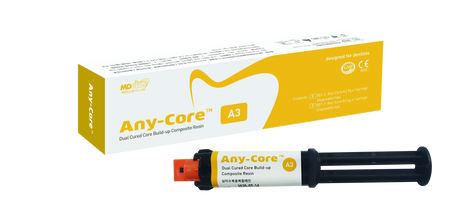
Mediclus
Mediclus Any-Core Dual-cured, core build-up composite 9 g syringe
Low stock (9 units)Regular price From LE 750.00 EGPUnit price /Unavailable
Centrix
Centrix SuperCure - Light-Activated Composite Core Buildup Composite 0.5 g Compules
In stock (350 units)Regular price From LE 200.00 EGPUnit price /Unavailable New arrival
Dengen Dental
Very low stock (5 units)Regular price LE 1,280.00 EGPUnit price /Unavailable 11% off
Kettenbach
Kettenbach Visalys Core Dentin Syringe 1 piece
Low stock (20 units)Sale price LE 1,950.00 EGP Regular price LE 2,200.00Unit price /Unavailable 18% off
Kettenbach
Kettenbach Visalys CemCore Starter Set
Low stock (20 units)Sale price LE 4,100.00 EGP Regular price LE 5,000.00Unit price /Unavailable 18% off
Kettenbach
Kettenbach Visalys CemCore Refill Translucent
Low stock (20 units)Sale price LE 4,100.00 EGP Regular price LE 5,000.00Unit price /Unavailable
COLTENE
Coltene ParaCore Dual cure core build up
Low stock (10 units)Regular price From LE 2,160.00 EGPUnit price /Unavailable
Bisico
Bisico Repo-Core DC syringe 5 ml
Low stock (15 units)Regular price LE 2,778.00 EGPUnit price /UnavailableBisico
Bisico Repo-Core DC cartridge 25 ml
Low stock (15 units)Regular price LE 6,500.00 EGPUnit price /Unavailable-


Choosing Core Build Up Materials for Your Practice
- Dual-Cure vs Light-Cure Systems — Dual-cure composites self-polymerise in deep areas while light activates the surface. Light-cure options suit shallow cores with direct light access, while dual-cure is preferred for deep post preparations where light cannot fully penetrate.
- Radiopacity for Clinical Monitoring — Radiopaque core materials allow clear distinction from tooth structure on radiographs. This visibility helps assess margin integrity and detect secondary caries beneath restorations during follow-up appointments.
- Handling Characteristics and Working Time — Core build ups vary in viscosity from flowable to packable consistency. Flowable versions adapt easily around posts, while higher viscosity materials offer better sculptability for direct crown preparation.
- Adhesion to Post and Tooth Structure — Reliable bonding to both dentine and post materials prevents microleakage. Check compatibility with your bonding system and post type—some cores bond chemically to fibreglass posts for enhanced retention.
- Delivery System Options — Core materials come in syringes, cartridges, or single-dose compules. Automix cartridges reduce waste and ensure consistent mixing, while compules offer precise dosing for single-tooth restorations.
- Shade Selection Considerations — Core shades range from dentine-like to high-contrast blue or white. Contrasting shades help identify the core-crown margin during preparation, while natural shades suit anterior translucent restorations.
Core Build Up Types at a Glance
| Type | Curing Mode | Best Use Case | Delivery Format |
|---|---|---|---|
| Dual-Cure Syringe | Self + Light | Deep post preparations | Automix syringe |
| Dual-Cure Cartridge | Self + Light | High-volume practices | 25ml cartridge |
| Light-Cure Compules | Light only | Shallow cores, direct access | Single-dose compule |
| Flowable Dual-Cure | Self + Light | Around fibre posts | Dual syringe |
| Packable Dual-Cure | Self + Light | Direct core sculpting | Automix syringe |
How to Select Core Build Up Materials
- Assess post depth and light access to determine dual-cure or light-cure suitability.
- Verify compatibility between core material, bonding agent, and post system in use.
- Choose delivery format based on case volume and waste reduction preferences.
- Select shade based on final restoration translucency and preparation visibility needs.
- Confirm adequate stock for endodontic caseload with appropriate expiry dates.
Availability & Delivery in Egypt
MedSTA supplies core build up materials across Egypt with all prices in EGP and fast nationwide delivery. Store products in cool, dry conditions away from direct sunlight to maintain optimal material properties.
Frequently Asked Questions
What is the difference between dual-cure and light-cure core build up?
What is the difference between dual-cure and light-cure core build up?
Dual-cure self-polymerises in deep areas plus light-cures at the surface; light-cure requires direct light access throughout.
Can core build up materials bond to fibre posts?
Can core build up materials bond to fibre posts?
Many dual-cure cores bond chemically to fibre posts when used with compatible adhesive systems.
Why choose a contrasting shade for core build up?
Why choose a contrasting shade for core build up?
Contrasting shades like blue help identify the core margin clearly during crown preparation.
How long is the working time for dual-cure core materials?
How long is the working time for dual-cure core materials?
Working time varies by product but typically ranges from 60 to 120 seconds before self-cure initiates.
Are core build up materials radiopaque?
Are core build up materials radiopaque?
Most modern core composites are radiopaque to allow clear visualisation on diagnostic radiographs.
Can I use core build up without a post?
Can I use core build up without a post?
Yes, when sufficient coronal tooth structure remains, core build up can be placed directly without post placement.
What delivery format minimises material waste?
What delivery format minimises material waste?
Automix cartridges and single-dose compules reduce waste compared to hand-mixed or bulk syringe systems.