


Dentex
Very low stock (2 units)Regular price LE 850.00 EGPUnit price /UnavailableShofu
Shofu Lite Art light-curing coloring Composite 1 ml
Low stock (11 units)Regular price LE 1,350.00 EGPUnit price /Unavailable-

Jen-D
In stock (93 units)Regular price LE 1,165.00 EGPUnit price /UnavailableCerkamed
Very low stock (6 units)Regular price LE 800.00 EGPUnit price /Unavailable-

Bisico
In stock (41 units)Regular price LE 1,295.00 EGPUnit price /Unavailable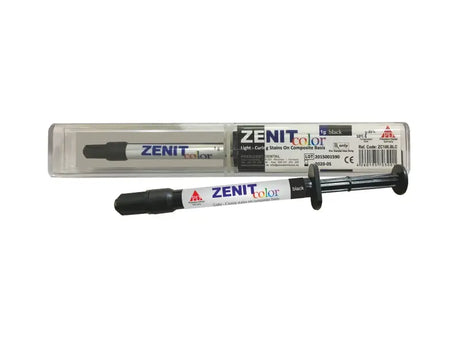
PD Germany
ZENIT COLOR - Light Curing Stains on Composite - Basis Refill 1 g
Low stock (12 units)Regular price LE 1,300.00 EGPUnit price /Unavailable
Bisico
Bisico Micro Esthetic Gingiva composite
Low stock (9 units)Regular price LE 1,290.00 EGPUnit price /Unavailable
Ultradent
Ultradent permaflo Composite 1.2 ml
Low stock (20 units)Regular price LE 1,650.00 EGPUnit price /Unavailable


Using Composite Stains for Natural Characterisation
- Surface vs Internal Staining — Surface stains are applied on top of the cured composite and sealed with a glaze; internal stains are placed between composite layers before final curing. Internal staining gives more natural, depth-visible effects but requires careful planning during layering; surface stains are faster and adjustable but risk wear over time.
- Light-Cured vs Air-Dried Stains — Light-cured composite stains are the standard -- they bond to the composite surface and are sealed with a light-cured glaze. Air-dried stains require no curing but are less durable and only suitable for provisional and temporary restorations.
- Stain Colour Palette — A basic composite stain kit includes orange-brown, grey, opaque white and black stains covering the most common natural tooth features. Orange-brown stains simulate fissure anatomy and check lines; white opaque replicates hypocalcification spots and incisal halo effects.
- Application Technique — Apply stains with a very fine brush in thin layers -- the intensity builds with multiple coats. Apply to the polished composite surface then light-cure each stain layer before applying the next; seal all stains with a thin coat of composite glaze.
- Stain Kits vs Single Stains — Stain kits include 4-8 colours suited to full characterisation workflows; single stains suit targeted single-feature addition. For Egyptian practices performing full direct smile design and anterior composite veneers, a full stain kit is more economical than purchasing individual stains.
- Surface Sealing After Staining — All composite stains must be sealed with a light-cured composite glaze to prevent stain wear and achieve a smooth, glazed surface. Sealing also enhances depth perception of internal stains -- the glaze acts as a translucent optical layer amplifying the characterisation effect.
Composite Stain Types and Uses
| Stain Colour | Effect | Internal or Surface | Cure |
|---|---|---|---|
| Orange-Brown | Fissures, check lines, ageing | Both | Light-cure |
| Grey / Blue-Grey | Interproximal shadow, dentine show-through | Internal preferred | Light-cure |
| Opaque White | Hypocalcification, halo effect, incisal opacity | Both | Light-cure |
| Black / Dark Brown | Deep fissures, crack simulation | Surface (dilute) | Light-cure |
| Pink | Gingival composite margins, pink areas | Surface | Light-cure |
How to Apply Composite Stains
- Polish the composite surface with fine discs and silicone points before applying any stain.
- Load a fine detail brush with a small amount of stain -- dilute with monomer if needed for fine detail.
- Apply stain in thin layers to specific areas -- fissures, check lines or hypocalcification spots.
- Light-cure each stain layer for the manufacturer-specified time before applying the next.
- Seal all stains with a thin coat of light-cured composite glaze and cure for 20-40 seconds.
Availability & Delivery in Egypt
MedSTA supplies composite stain kits and glaze materials to Egyptian cosmetic dental clinics with EGP pricing and nationwide delivery. Full characterisation kits available for anterior direct composite workflows.
Frequently Asked Questions
What are composite stains used for?
What are composite stains used for?
Characterising direct composite restorations to simulate natural tooth features like fissures, check lines and hypocalcification.
Surface stains vs internal stains -- what is the difference?
Surface stains vs internal stains -- what is the difference?
Internal stains are placed between composite layers for natural depth; surface stains are applied after final cure and sealed with glaze.
Do composite stains need to be light-cured?
Do composite stains need to be light-cured?
Yes -- light-cured composite stains are the standard for direct restorations; they bond and must be sealed with a glaze.
What colours are in a composite stain kit?
What colours are in a composite stain kit?
Standard kits include orange-brown, grey, opaque white and black -- covering most natural tooth characterisation needs.
Do I need to seal composite stains?
Do I need to seal composite stains?
Yes -- always seal with a light-cured composite glaze to prevent wear and achieve the final optical depth effect.
Can composite stains change the shade of my restoration?
Can composite stains change the shade of my restoration?
Stains characterise specific features -- they do not change the base shade. Use a different composite shade if base colour is wrong.
Are composite stains available in Egypt from MedSTA?
Are composite stains available in Egypt from MedSTA?
Yes -- stain kits with multiple characterisation colours in EGP with nationwide delivery.