

GENERIC
Pakistan Mucoperiosteal Elevator
Very low stock (4 units)Regular price LE 95.00 EGPUnit price /Unavailable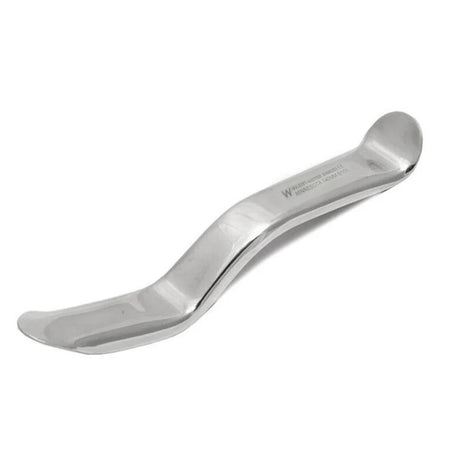
GENERIC
Low stock (14 units)Regular price LE 55.00 EGPUnit price /Unavailable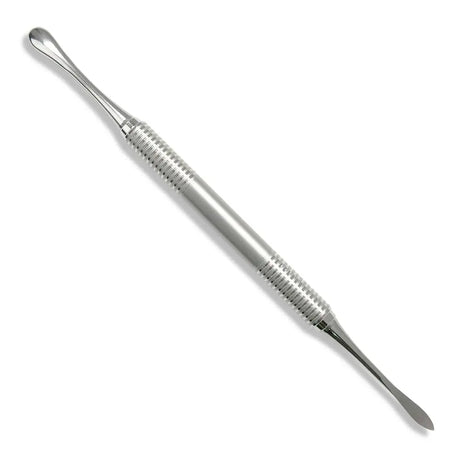
Miltex
MILTEX mucoperiosteal elevator
Very low stock (3 units)Regular price LE 600.00 EGPUnit price /Unavailable
Sedra dent
Sedra MOLT Mucoperiosteal elevator blue plasma
Very low stock (1 unit)Regular price LE 407.00 EGPUnit price /Unavailable
Premia
Low stock (10 units)Regular price LE 410.00 EGPUnit price /Unavailable
Sedra dent
Sedra Buser Mucoperiosteal elevator
Very low stock (5 units)Regular price LE 408.00 EGPUnit price /Unavailable


How to Choose Periosteal Elevators for Oral Surgery
- Instrument Design (Molt vs Minnesota vs Prichard) — Molt periosteal elevators have a concave blade for initial flap reflection from the crestal bone margin; Minnesota retractors (wide, shallow blade) retract and protect the elevated flap during bone work; Prichard elevators have a pointed end for releasing the interdental papilla. A complete surgical kit requires all three types for different stages of flap management.
- Blade Width (3 mm, 6 mm, 9 mm) — Narrow 3 mm blades access tight interdental areas and subcrestal bone pockets; wide 6–9 mm blades elevate larger flap sections in molar extraction and implant preparation sites. A combination instrument (Molt No. 9) has a narrow pointed end and a wider bladed end, providing two blade geometries in a single instrument.
- Steel Grade (AISI 420 vs AISI 316) — AISI 420 stainless steel provides superior hardness for maintaining a sharp blade edge through repeated autoclaving; AISI 316 (surgical-grade 316) has better corrosion resistance in saline and NaOCl environments but is slightly softer. Both are used in periodontal and oral surgical instruments; confirm the grade before purchasing budget instruments that may use lower-grade steel.
- Handle Shape (Round vs Octagonal vs Flat) — Octagonal handles prevent the instrument from rolling off the surgical tray; flat handles provide a positive thumb-index grip during levering motions; round handles allow rotation during access to curved bone surfaces. For Egyptian oral surgeons performing high-volume extraction and implant surgery, octagonal handles reduce instrument drop during long procedures.
- Autoclave Durability — Confirm the instrument is rated for Class B autoclave cycles (134°C, 3 bar). Budget-grade periosteal elevators from non-certified suppliers may lose their blade temper after repeated high-temperature cycles, becoming too soft to elevate periosteum from dense alveolar bone without bending.
Periosteal Elevators Available in Egypt
| Product | Design | Steel Grade | Price (EGP) |
|---|---|---|---|
| Pakistan Mucoperiosteal Elevator | Molt-type | Standard SS | 95 |
| Minnesota Retractor | Minnesota | Standard SS | 55 |
| MILTEX Mucoperiosteal Elevator | Molt No. 9 | Premium SS | 600 |
| SEDRA Mucoperiosteal Elevator | Molt-type | AISI 420 | 400 |
Availability & Delivery in Egypt
MedSTA supplies periosteal elevators from Miltex, Sedra dent, and generic brands in EGP with same-day dispatch from Cairo. Cairo and Giza delivery within 1–3 business days; all other Egyptian governorates within 3–5 business days.
Frequently Asked Questions
What is the difference between a periosteal elevator and a dental elevator?
What is the difference between a periosteal elevator and a dental elevator?
A periosteal elevator is a blunt-bladed instrument designed to reflect and elevate the mucoperiosteum (soft tissue) from the alveolar bone surface, creating a flap for surgical access. A dental elevator (e.g. apexo, Warwick-James) is a pointed or wedge-tipped instrument designed to luxate and loosen a tooth root from its periodontal ligament space, applying leverage to fracture the PDL fibres before forceps extraction. Both are essential in oral surgery but serve completely different functions and must not be interchanged.
How do I prevent periosteal tears during flap reflection?
How do I prevent periosteal tears during flap reflection?
Use sharp instruments with the correct blade width for the anatomical area. Begin reflection at the base of the sulcus with the narrow end of the Molt elevator, keeping the blade parallel to and in contact with the bone surface at all times. Avoid levering against soft tissue; all force should be transmitted through the blade to the bone surface. In Egyptian patients with thin biotype gingiva (common in anterior regions), use extreme caution at the incision line where the flap is thinnest and most susceptible to tearing.
When is a Minnesota retractor used instead of a periosteal elevator?
When is a Minnesota retractor used instead of a periosteal elevator?
The Minnesota retractor is used to hold an already-reflected flap out of the surgical field rather than to elevate it. Once the mucoperiosteum has been elevated with a Molt or Prichard elevator, the assistant places the Minnesota retractor blade between the flap and the alveolar bone to protect the flap from inadvertent instrument trauma, provide the surgeon with clear access to the operative field, and maintain haemostasis by compressing the flap vessels against the bone. The retractor is kept stationary while the surgeon operates.
What steel grade should periosteal elevators have for routine Egyptian oral surgery?
What steel grade should periosteal elevators have for routine Egyptian oral surgery?
For routine extraction and implant surgery in Egyptian dental clinics, AISI 420 stainless steel periosteal elevators provide adequate hardness for clean periosteum reflection from dense alveolar bone without blade deformation. Premium surgical instruments (Miltex, Hu-Friedy) use controlled-hardness AISI 420 with precision tempering that maintains blade geometry through 500+ autoclave cycles. Budget-grade instruments may use unspecified lower-grade steel that softens faster under repeated autoclave cycles, requiring more frequent replacement.
Does MedSTA supply periosteal elevators from Miltex and Sedra dent across Egypt?
Does MedSTA supply periosteal elevators from Miltex and Sedra dent across Egypt?
Yes — MedSTA supplies Pakistani Molt-type elevators (95 EGP), Minnesota retractors (55 EGP), MILTEX Molt No. 9 elevators (600 EGP), and Sedra dent elevators (400 EGP) in EGP with same-day dispatch from Cairo. Cairo and Giza delivery within 1–3 business days; all other Egyptian governorates within 3–5 business days.