
GENERIC
In stock (44 units)Regular price LE 190.00 EGPUnit price /Unavailable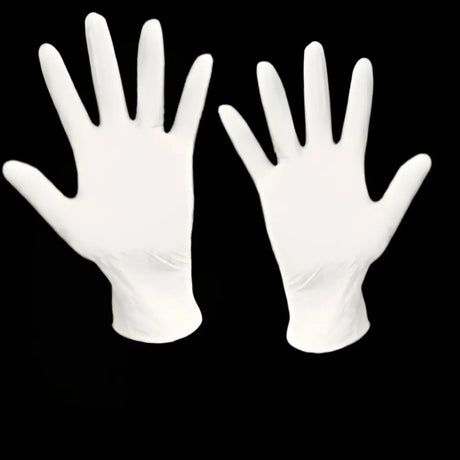
GENERIC
In stock (149 units)Regular price LE 195.00 EGPUnit price /Unavailable
GENERIC
Nitrile Gloves powder Free Black
In stock (62 units)Regular price LE 195.00 EGPUnit price /Unavailable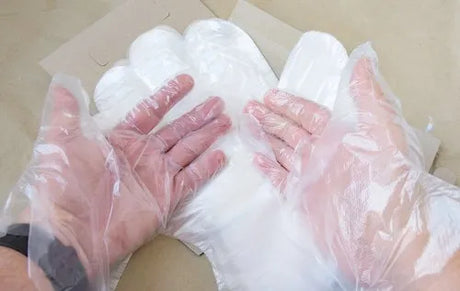
GENERIC
In stock (102 units)Regular price From LE 6.00 EGPUnit price /Unavailable-
GENERIC
In stock (46 units)Regular price LE 75.00 EGPUnit price /Unavailable 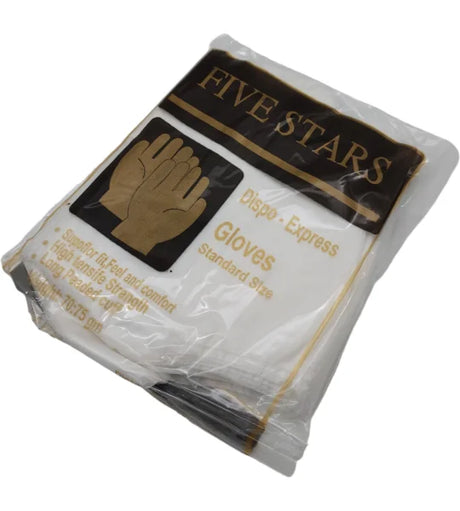
GENERIC
Heavy Plastic Over gloves (100 pcs)
Low stock (9 units)Regular price From LE 20.00 EGPUnit price /Unavailable-
GENERIC
Low stock (13 units)Regular price LE 45.00 EGPUnit price /Unavailable 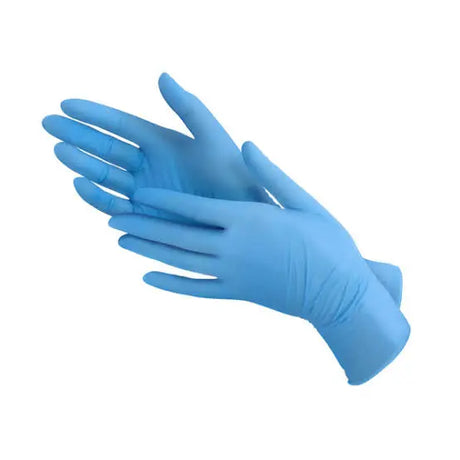
GENERIC
In stock (67 units)Regular price LE 185.00 EGPUnit price /Unavailable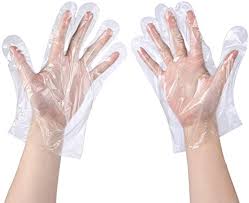
GENERIC
In stock (197 units)Regular price From LE 22.00 EGPUnit price /Unavailable

How to Choose the Right Dental Gloves for Your Practice
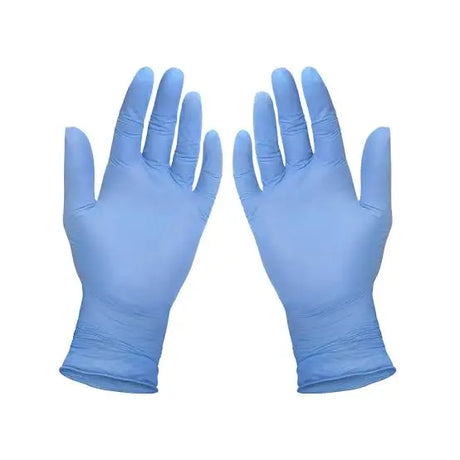
- Material (Nitrile vs Latex vs Vinyl) — Nitrile gloves (acrylonitrile-butadiene) provide the best chemical resistance, durability, and AQL 1.5 barrier integrity without natural rubber latex protein — the preferred choice for Egyptian dental clinics to eliminate latex allergy risk in both staff and patients. Latex gloves offer superior tactile sensitivity and elasticity but carry latex sensitisation risk. Vinyl (PVC) gloves are the most economical but have the lowest puncture and tear resistance — appropriate only for non-invasive examination procedures.
- Powder-Free vs Powdered — Powder-free gloves are mandatory for all Egyptian dental procedures involving open wounds, dental materials, and bone contact. Cornstarch powder particles inhibit adhesive and composite bonding, contaminate impression materials, and can cause post-surgical granuloma formation. WHO and ADA guidelines recommend exclusively powder-free gloves in clinical dentistry.
- Glove Thickness (0.05–0.12 mm) — Examination-grade gloves (0.05–0.08 mm) provide adequate protection for routine dentistry. Heavier 0.10–0.12 mm gloves reduce tactile sensitivity but are preferred for oral surgery and periodontal procedures involving sharp instruments and extended procedure times in Egyptian clinics.
- Size Selection (XS, S, M, L, XL) — Gloves that are too large bunch at the fingers, reducing dexterity and increasing tearing risk; too-small gloves fatigue the hand muscles and tear at the finger tips. Most Egyptian dental clinicians use S (female) or M (male) sizing; have at least two sizes available for multi-operator clinics.
- AQL Rating (Acceptable Quality Level) — AQL 1.0 (examination grade) means ≤1 in 100 gloves may have microdefects; AQL 0.65 (surgical grade) provides higher barrier assurance. For standard dental procedures, AQL 1.0 or 1.5 is appropriate; for oral surgery and implant procedures, AQL 1.0 or lower is recommended.
Dental Glove Types at a Glance
| Type | Material | Latex-Free | Best For |
|---|---|---|---|
| Nitrile (powder-free) | Synthetic rubber | Yes | All dental procedures |
| Latex (powder-free) | Natural rubber | No | High tactile precision work |
| Vinyl | PVC | Yes | Non-invasive examination only |
| Plastic over-gloves | PE | Yes | Cross-contamination barrier over examination gloves |
Availability & Delivery in Egypt
MedSTA supplies nitrile, latex, and vinyl dental gloves in EGP with same-day dispatch from Cairo. Cairo and Giza delivery within 1–3 business days; all other Egyptian governorates within 3–5 business days. Bulk packs and monthly supply contracts available for Egyptian dental centres.
Frequently Asked Questions
What is the difference between nitrile and latex dental examination gloves?
What is the difference between nitrile and latex dental examination gloves?
Nitrile gloves are made from acrylonitrile-butadiene synthetic rubber and contain no natural latex proteins, eliminating the risk of Type I latex hypersensitivity reactions in staff and patients. They have slightly lower initial elasticity than latex but equivalent or superior puncture resistance after 30 minutes of use, when latex becomes increasingly brittle. Nitrile is the recommended default for Egyptian dental practices; reserve latex only for procedures where maximum tactile sensitivity is essential and both operator and patient have confirmed latex tolerance.
Do powder-free gloves affect composite bonding and impression taking?
Do powder-free gloves affect composite bonding and impression taking?
Yes — powdered gloves (cornstarch) contaminate bonded surfaces and composite restorations with starch granules that inhibit resin polymerisation and adhesive bonding. Powder also contaminates polyvinylsiloxane impression materials, causing surface inhibition and distortion of impression detail. Use powder-free gloves for all restorative, prosthodontic, and surgical procedures. Remove and replace gloves if you suspect contamination before handling bonding materials in Egyptian composite and prosthetic cases.
How many boxes of gloves does an Egyptian dental clinic use per month?
How many boxes of gloves does an Egyptian dental clinic use per month?
A single-chair Egyptian dental clinic seeing 15–20 patients per day and using 2–3 glove pairs per patient (donning, re-gloving for procedures) consumes approximately 100–150 gloves daily, or 2,000–3,000 per month. A 100-piece box per week is the baseline for one active dental chair. Multi-chair practices should calculate total monthly consumption and order monthly to avoid stock-outs, which are a patient safety issue.
Are blue nitrile gloves the same quality as purple or black nitrile?
Are blue nitrile gloves the same quality as purple or black nitrile?
Glove colour is a manufacturer’s branding choice and does not indicate quality difference. Blue, purple, and black nitrile gloves from the same manufacturer with the same AQL rating and EN 455 certification are functionally equivalent. Some practitioners prefer darker colours for improved visibility of dental material staining during procedures — a cosmetic rather than safety benefit. Always evaluate gloves by their EN 455 certification, AQL rating, and thickness specification, not colour.
Does MedSTA supply dental examination gloves across all Egyptian governorates?
Does MedSTA supply dental examination gloves across all Egyptian governorates?
Yes — MedSTA supplies nitrile, latex, and vinyl powder-free examination gloves in EGP with same-day dispatch from Cairo. Cairo and Giza delivery within 1–3 business days; all other Egyptian governorates within 3–5 business days. Monthly supply arrangements and bulk pricing are available for Egyptian dental hospitals and multi-chair centres.