
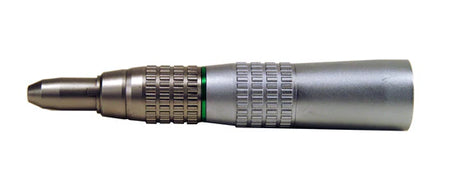
Vector
Alpha Aire Low speed straight handpiece
Very low stock (1 unit)Regular price LE 950.00 EGPUnit price /Unavailable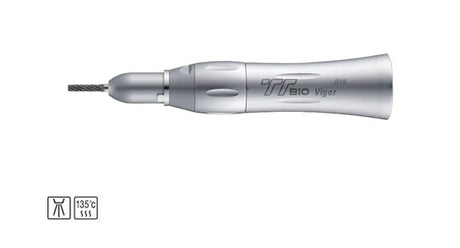
Vigor dental
VIGOR Low speed straight hand piece
Very low stock (4 units)Regular price LE 950.00 EGPUnit price /Unavailable
COXO
MCS Low speed Inner Coolant B4 Set 3 PCS handpieces
Very low stock (1 unit)Regular price LE 8,000.00 EGPUnit price /Unavailable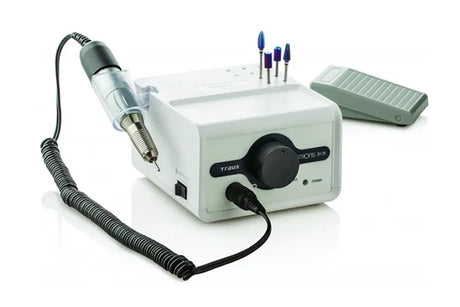
Saeshin
Strong Micromotor + contra B135
Very low stock (4 units)Regular price LE 8,550.00 EGPUnit price /Unavailable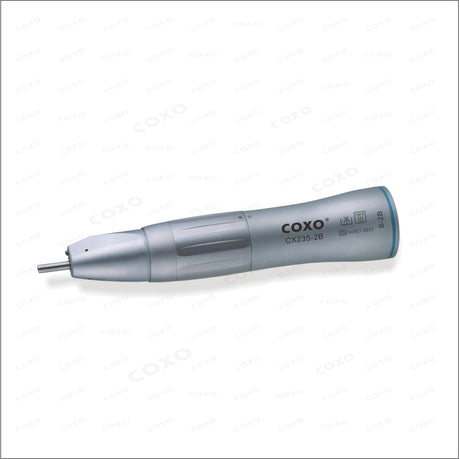
COXO
MCS Coxo Low Speed Straight Inner coolant chanel handpiece
Very low stock (3 units)Regular price LE 3,330.00 EGPUnit price /Unavailable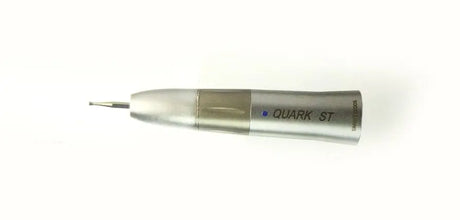
TKD TeKne Dental
TKD QUARK ST straight handpiece
Very low stock (1 unit)Regular price LE 13,999.00 EGPUnit price /Unavailable
Saeshin
Strong Micromotor 204 and Handpiece
Very low stock (2 units)Regular price LE 9,450.00 EGPUnit price /Unavailable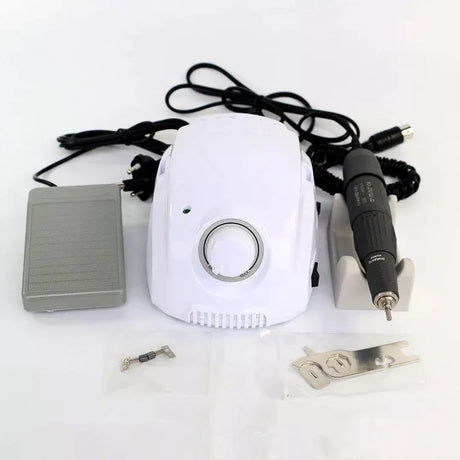
GENERIC
Very low stock (2 units)Regular price LE 5,500.00 EGPUnit price /Unavailable


How to Choose the Right Dental Micromotor and Handpiece System
- Brushless vs Brushed Micromotor Design — Brushless electric micromotors (Saeshin Strong 207, MAC brushless series) use electronic commutation instead of carbon brushes, producing higher torque-to-weight ratios, less heat generation, and service lives exceeding 1,000 operational hours before bearing replacement. Brushed motors (economy MAC and Vigor types) are lower cost but generate more heat per hour of use and require periodic brush replacement every 200-500 hours, which is a relevant maintenance consideration for high-volume Egyptian dental laboratories running multiple shifts.
- Motor Power (Watts) and Its Clinical Significance — A 140 W brushless micromotor maintains constant RPM under the variable load applied when trimming dense zirconia pre-sintered blocks or hard metal alloys. Motors below 100 W experience RPM drop under load, causing uneven surface finish on restorations. For Egyptian labs producing CAD/CAM zirconia and pressed ceramic restorations, minimum 120 W motors prevent the surface roughness from speed variation that requires additional finishing steps.
- Speed Range and Control Precision — A full 1,000-35,000 RPM range with digital speed display provides precise control for all lab applications. Foot pedal control allows the dental technician to vary speed during a procedure without removing hands from the workpiece. Units with memory presets (3-5 speed settings) enable rapid switching between different procedural speeds, reducing setup time in Egyptian laboratories with high daily prosthetic output.
- Handpiece Coupling Type: Contra-Angle vs Straight — Contra-angle handpieces (CA type) accept ISO 2.35 mm HP-shank burs and are used for ceramic contouring, composite adjustment, and fine detail work where angular access is needed. Straight handpieces accept HP-shank burs for flat surface acrylic trimming and metal grinding. The VIGOR Low Speed Kit includes both types, providing maximum procedural flexibility for Egyptian labs handling both conventional and CAD/CAM prosthetic workflows.
- Autoclave Compatibility of Handpieces — Contra-angle and straight lab handpieces should withstand Class B autoclave cycles at 134 degrees C after lubrication. Verify manufacturer autoclave compatibility before purchasing, as some economy handpieces use polymer components that degrade after repeated sterilisation cycles. For Egyptian laboratories performing clinical-grade decontamination, autoclavable handpieces with stainless steel body construction are required.
Dental Micromotors and Handpieces at a Glance
| Product | Motor Type | Max Speed | Lab Application |
|---|---|---|---|
| MAC Micromotor + Handpiece | Brushless electric | 35,000 RPM | Full-range lab work: acrylic, ceramic, zirconia, metal |
| Saeshin Strong micromotor | Brushless electric, 140 W | 35,000 RPM | High-torque zirconia and CAD/CAM material finishing |
| VIGOR Low Speed Kit | Air-driven motor | 20,000 RPM | Acrylic trimming and conventional prosthetic polishing |
| Vector Alpha Aire straight HP | Air-driven | 20,000 RPM | HP-bur acrylic and metal grinding |
| CA lab contra-angle | Handpiece attachment | Motor-dependent | Ceramic contouring, composite and metal finishing |
Availability and Delivery in Egypt
MedSTA stocks dental micromotor systems from MAC, Saeshin, Vigor dental, and Vector in EGP for Egyptian dental laboratories ranging from student setups to high-volume prosthetic production labs. Both complete motor and handpiece systems and individual handpiece replacements are available. Orders dispatch from Cairo with nationwide delivery to all Egyptian governorates.
Frequently Asked Questions
What is the difference between a brushless and brushed dental lab micromotor?
What is the difference between a brushless and brushed dental lab micromotor?
Brushless dental lab micromotors use electronic commutation through Hall sensors rather than physical carbon brush contact, producing higher torque stability across the full speed range, less heat generation during extended lab sessions, and service lives exceeding 1,000 operational hours before bearing replacement. Brushed motors are lower in initial cost but require carbon brush replacement every 200-500 hours, generate more heat during continuous use, and have lower torque at low speeds. For Egyptian dental laboratories running high daily prosthetic output, brushless motors represent a better long-term investment despite the higher upfront cost.
What wattage micromotor should I choose for zirconia and CAD/CAM work in Egypt?
What wattage micromotor should I choose for zirconia and CAD/CAM work in Egypt?
For zirconia pre-sintered block trimming and CAD/CAM ceramic adjustment, a minimum 120 W brushless micromotor is required to maintain constant RPM under the significant load these materials produce. At 20,000-30,000 RPM against dense pre-sintered zirconia, underpowered motors (below 100 W) drop in speed, causing uneven surface finish that requires additional finishing steps. The MAC and Saeshin Strong micromotor series available at MedSTA provide 140 W output with foot pedal control, covering all lab material types from soft acrylic at 5,000 RPM to zirconia finishing at 30,000 RPM.
Can MAC and Saeshin contra-angle handpieces use Egyptian-manufactured dental laboratory burs?
Can MAC and Saeshin contra-angle handpieces use Egyptian-manufactured dental laboratory burs?
MAC and Saeshin contra-angle lab handpieces accept standard ISO 2.35 mm HP-shank rotary instruments, which is the universal standard for dental laboratory burs manufactured domestically in Egypt and imported internationally. Egyptian-manufactured tungsten carbide acrylic burs, ceramic diamond instruments, and zirconia adjustment burs with 2.35 mm HP shanks are all compatible with MAC and Saeshin contra-angle attachments available from MedSTA. Before purchasing, confirm the bur shank type (HP vs FG vs RA) matches your handpiece coupling specification.
How should dental lab micromotors and handpieces be maintained in Egyptian summer heat?
How should dental lab micromotors and handpieces be maintained in Egyptian summer heat?
Dental lab micromotors should be lubricated with the manufacturer's approved oil through the handpiece inlet before each session and after autoclaving handpiece attachments. In Egyptian dental laboratories where summer temperatures commonly reach 38-42 degrees C outdoors, adequate lab air conditioning is essential to prevent motor overheating during extended continuous use. After each day's work, clean handpiece couplings with a dry cloth, apply a single drop of lubricant to the HP bur chuck, and store handpieces in a closed case away from direct sunlight to prevent lubricant evaporation and metal oxidation.
Does MedSTA supply dental micromotor systems with matched contra-angle and straight handpieces across Egypt?
Does MedSTA supply dental micromotor systems with matched contra-angle and straight handpieces across Egypt?
MedSTA supplies complete dental micromotor and handpiece systems including the MAC Micromotor and Handpiece set, Saeshin Strong micromotor units, and the VIGOR Low Speed Kit (air motor, contra-angle, and straight handpiece) in EGP for Egyptian dental laboratories. Individual handpiece replacement components for existing micromotor systems are also available, including standalone contra-angle and straight handpieces compatible with HP bur standards. Orders dispatch from Cairo with nationwide delivery to Egyptian dental laboratories across all governorates, including same-day dispatch for in-stock items.