

BISCO
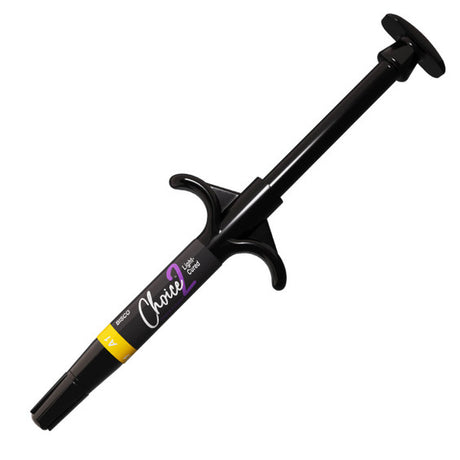
Bisco Choice™ 2 Veneer Cement 4.5 g
Very low stock (7 units)Regular price LE 1,200.00 EGPUnit price /Unavailable
Vincismile
TopCEM-Veneer Light Cure Veneer Cement 2.5g
Low stock (9 units)Regular price LE 1,199.00 EGPUnit price /Unavailable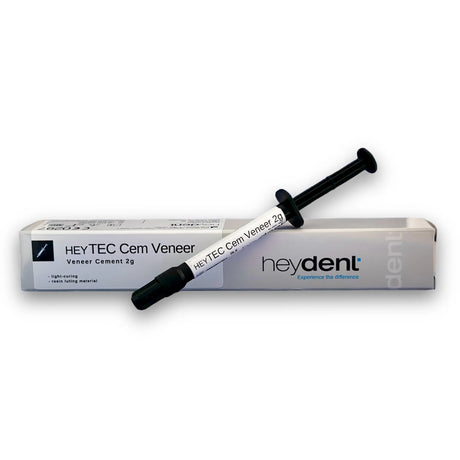
Heydent
HEYTEC Cem Veneer Veneer Resin Cement 2g
Very low stock (6 units)Regular price LE 1,416.00 EGPUnit price /Unavailable
DentsplySirona
Dentsply Calibra Veneer Refill
Low stock (14 units)Regular price LE 2,699.00 EGPUnit price /Unavailable
Kerr
Kerr NX3 Light Cure Veneer Cement Syringe
Low stock (20 units)Regular price LE 2,640.00 EGPUnit price /Unavailable


How to Choose the Right Veneer Resin Cement for Aesthetic Restorations
- Curing Mode: Light-Cure vs Dual-Cure — Light-cure only veneer cements (e.g. Bisco Choice 2, TopCEM-Veneer) are preferred for thin ceramic veneers where translucency allows full light penetration through the ceramic to the cement layer. Dual-cure cements add chemical activation as backup for thicker restorations or areas with limited light access. For feldspathic veneers thinner than 0.5 mm, light-cure only cements are clinically appropriate and produce less post-cure colour shift — a critical factor for anterior aesthetic cases.
- Shade Selection and Translucency — Veneer resin cements are available in multiple shades (typically A-shade, bleach, transparent) and translucency levels to modify or match the underlying shade of the prepared tooth. A try-in paste matching the final cement shade should always be used before cementation — the veneer's appearance on the tooth will shift slightly from the try-in paste because resin cements are more translucent when fully polymerised. Confirm the final shade effect with a cured composite resin approximating the cement before placing.
- Film Thickness and Marginal Seating — Veneer resin cements must achieve film thicknesses below 25–30 µm at the intaglio surface to allow full ceramic seating without cement bulk creating a marginal elevation. Over-application is a common clinical error — apply cement to the ceramic intaglio only in a thin, even layer, then seat and hold firmly while removing excess before light-curing. Excess cement at margins that cures before removal is extremely difficult to remove from ceramic-to-enamel junctions.
- Etching and Silane Pre-Treatment — Veneer resin cement bond strength depends entirely on correct ceramic surface preparation: HF etching (9.5% HF, 20 seconds for e.max; 60 seconds for feldspathic) followed by silane application and air-thinning before cement placement. The enamel or dentine preparation surface requires phosphoric acid etching (for total-etch protocol) or self-etching adhesive depending on the cement system used. The cement itself does not compensate for missed surface preparation steps.
- Shade Stability Over Time — Aesthetic veneer cements must resist colour change from light and staining. Amine-free photo-initiator systems (used in Bisco Choice 2 and Calibra Veneer) produce less post-polymerisation colour shift than conventional camphorquinone/amine systems, which can yellow with UV exposure — relevant for Egyptian patients with high sun exposure and anterior restorations visible in photos.
Veneer Resin Cements at a Glance
| Product | Curing Mode | Shades | Best For |
|---|---|---|---|
| Bisco Choice 2 | Light-cure | Multiple + try-in | Feldspathic and e.max veneers; thin restorations |
| Dentsply Calibra Veneer | Light-cure | Multiple + try-in | High-volume veneer practices; amine-free chemistry |
| HEYTEC Cem Veneer | Light-cure | Standard shades | Mid-range; straightforward anterior veneers |
| TopCEM-Veneer | Light-cure | Standard shades | Budget-conscious aesthetic cases |
Availability & Delivery in Egypt
MedSTA supplies veneer resin cements from Bisco, Dentsply, HEYTEC, and TopCEM to prosthodontic and aesthetic dental practices across Cairo, Giza, Alexandria, and all Egyptian governorates — priced from 1,199 EGP to 2,699 EGP in EGP with fast nationwide delivery. Store cement syringes at 2–8 °C away from light and heat; Egypt's summer temperatures above 30 °C accelerate dual-cure initiation and should prompt refrigerator storage for opened packs.