

MG
MG SLEEVES FOR SINSOR XRAY 300 pcs
Very low stock (5 units)Regular price LE 195.00 EGPUnit price /Unavailable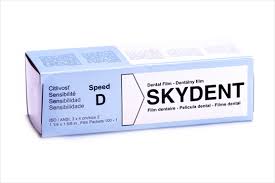
Skydent
In stock (40 units)Regular price From LE 149.00 EGPUnit price /Unavailable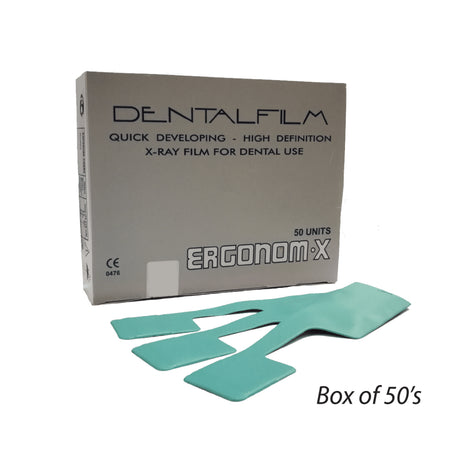
Ergonom X
Ergonom X Self Developing x-ray film
In stock (38 units)Regular price From LE 430.00 EGPUnit price /Unavailable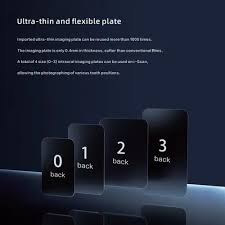
Woodpecker
Woodpecker i-Scan Phosphorus Plate
Low stock (9 units)Regular price From LE 2,080.00 EGPUnit price /Unavailable
ZT DENTAL
Very low stock (2 units)Regular price LE 1,190.00 EGPUnit price /Unavailable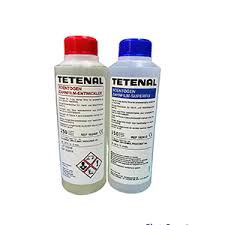
Tetenal
Tetenal X-Ray developer and fixer 250ml&250ml
Very low stock (5 units)Regular price LE 285.00 EGPUnit price /Unavailable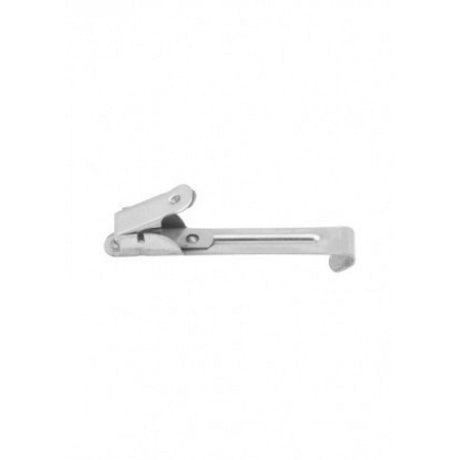
GENERIC
Low stock (20 units)Regular price LE 25.00 EGPUnit price /UnavailableYes!Star
Very low stock (4 units)Regular price LE 2,300.00 EGPUnit price /Unavailable-
GENERIC
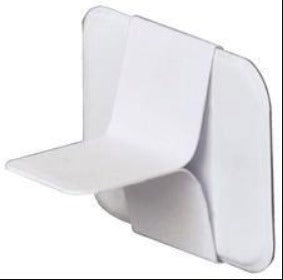
Dental X-Ray Film Bite Wing Tabs Self-Adhesive 500 pcs
Low stock (10 units)Regular price LE 875.00 EGPUnit price /Unavailable



How to Choose Dental Radiology Supplies
- Conventional film vs phosphor plate (PSP) vs direct digital sensor — Conventional intraoral X-ray film (Kodak Insight, Speed E) requires a darkroom and chemical processing but remains in use in Egyptian clinics due to low initial cost. Phosphor plate (PSP/CR) systems use reusable plates that are scanned by a laser reader after exposure, providing digital images without a darkroom; plates must be protected from environmental light and can develop image artefacts from scratches. Direct digital intraoral sensors (CCD/CMOS) provide immediate digital images with 50–80% less radiation than conventional film, but have higher initial cost and require careful handling and barrier protection between patients.
- Sensor size selection — Intraoral sensors and PSP plates are available in Size 0 (for paediatric patients and narrow mandibular anteriors), Size 1 (for anterior teeth and narrow mandibular premolars), and Size 2 (for posterior periapical and bitewing radiographs — the most commonly used in Egyptian adult patients). Size 2 covers the full posterior region in a single exposure and is standard for periapical and bitewing radiography in adults.
- Positioning systems vs bisecting-angle technique — Paralleling technique (using a film/sensor holder with external indicator arm) produces geometrically accurate periapical images with minimal elongation or foreshortening distortion, and requires 20–30% more mA·s than bisecting-angle technique. Bisecting-angle technique does not require a holder but introduces geometric errors. For accurate endodontic working length determination and periapical pathology assessment, paralleling technique with a dedicated holder system (Rinn XCP, Dentsply) is the clinical standard.
- Lead apron radiation protection — Lead aprons for dental X-ray protection should contain a minimum of 0.25 mm lead equivalent (standard) or 0.35 mm lead equivalent (for heavy X-ray workload or high-exposure clinics). Both thyroid collar and body apron must be used for intraoral X-ray of children and pregnant patients. Aprons must be stored hanging (not folded) to prevent cracking of the lead lining. Inspect aprons annually for cracks by fluoroscopy or X-ray verification.
- Sensor sleeves (barrier protection) — Single-use disposable barrier sleeves for intraoral sensors and PSP plates are mandatory for infection control between patients — sensors cannot be autoclaved. Sleeves must fit securely without wrinkles, as wrinkles cause image artefacts on PSP plates. Egyptian clinics using PSP systems should stock size-matched sleeves and inspect each sleeve before insertion to prevent artifact contamination of diagnostic images.
Dental Radiology Supply Categories
| Category | Key Products | Clinical Use |
|---|---|---|
| Image Receptors | Intraoral films, PSP plates, digital sensors | Periapical, bitewing, occlusal |
| Positioning Systems | X-ray holders, indicator arms, bite tabs | Paralleling technique |
| Radiation Protection | Lead aprons, thyroid collars | Patient and staff protection |
| Barrier Sleeves | Sensor sleeves, film covers | Infection control between patients |
| Processing | Developer, fixer, darkroom chemicals | Conventional film processing |
Availability & Delivery in Egypt
MedSTA stocks dental radiology supplies including intraoral X-ray films, sensor sleeves, positioning systems, lead aprons, and processing chemicals priced in EGP. Delivery covers Cairo and Giza within 24–48 hours and all other Egyptian governorates within 3–5 working days.
Frequently Asked Questions
What is the difference between conventional X-ray film, phosphor plate, and direct digital sensor?
What is the difference between conventional X-ray film, phosphor plate, and direct digital sensor?
Conventional intraoral X-ray film (Speed E/F) uses silver-halide chemistry to record the X-ray image after exposure, requiring chemical processing in developer and fixer solutions in a darkroom. Phosphor plate (PSP/CR) systems use reusable photostimulable phosphor plates that store the latent image and release it when scanned by a laser reader — no darkroom is needed, but plates must be protected from light and replaced when scratched. Direct digital intraoral sensors (CCD or CMOS) display the image on screen in under 3 seconds, require 50–80% less radiation than conventional film, and eliminate chemical processing entirely. Digital systems have higher initial cost but significantly lower running costs and superior image manipulation capabilities for Egyptian dental clinics with high patient volumes.
How do I minimise radiation exposure for paediatric patients during dental X-rays?
How do I minimise radiation exposure for paediatric patients during dental X-rays?
To minimise radiation exposure in Egyptian paediatric patients: use the fastest available image receptor (Speed F film or direct digital sensor); use rectangular collimation rather than round (reduces beam area by 60%); apply a thyroid collar in addition to the body lead apron; use the ALARA principle to select the minimum number of projections clinically justified; and use paralleling technique with film holders to avoid retakes from geometric errors. The typical effective dose for a full periapical series with a digital sensor is approximately 5–10 μSv — equivalent to 1–2 hours of natural background radiation — well within safe limits when proper technique is applied.
What is the minimum lead equivalent specification for a dental X-ray protection apron?
What is the minimum lead equivalent specification for a dental X-ray protection apron?
Dental patient protection aprons should contain a minimum of 0.25 mm lead equivalent for standard periapical X-ray procedures, which attenuates the scattered beam sufficiently for gonads and trunk protection at typical diagnostic X-ray energies (60–70 kVp). For clinics with high daily X-ray workloads or for fluoroscopic procedures (CBCT with fluoroscopy), 0.35 mm lead equivalent aprons provide additional attenuation. Thyroid collars of minimum 0.35 mm lead equivalent must be used for children and pregnant patients. Store aprons hanging on a dedicated rack — folding causes cracking of the lead lining, creating unshielded zones that cannot be detected visually without fluoroscopy inspection.
Why must disposable barrier sleeves be used on dental X-ray sensors and PSP plates?
Why must disposable barrier sleeves be used on dental X-ray sensors and PSP plates?
Direct digital intraoral sensors and PSP plates cannot be sterilised in an autoclave — heat above 60°C permanently damages the electronic components of sensors and the phosphor layer of PSP plates. Single-use disposable barrier sleeves placed over the sensor or plate before intraoral insertion prevent direct contact with saliva and mucous membranes, maintaining infection control between patients. After removal, the sleeve is discarded and the sensor is surface-disinfected with a compatible intermediate-level disinfectant (not immersion). PSP plates additionally require light-protection sleeves immediately after removal from the patient's mouth to prevent erasure of the latent image before scanning.
Does MedSTA supply dental radiology supplies across Egypt?
Does MedSTA supply dental radiology supplies across Egypt?
Yes — MedSTA stocks intraoral X-ray films, sensor barrier sleeves in sizes 0, 1, and 2, X-ray positioning holders, bitewing tabs, lead aprons, thyroid collars, X-ray viewers, and darkroom processing chemicals — all priced in EGP. Delivery covers Cairo and Giza within 24–48 hours and all other Egyptian governorates within 3–5 working days. Radiology consumables (particularly sensor sleeves) are available in pack quantities suited to both individual clinics and institutional radiology departments in Egyptian dental hospitals and universities.