
GENERIC
In stock (23 units)Regular price LE 195.00 EGPUnit price /Unavailable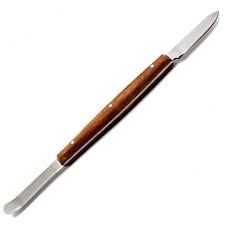

-


How to Choose Dental Wax Instruments for Lab and Clinical Use
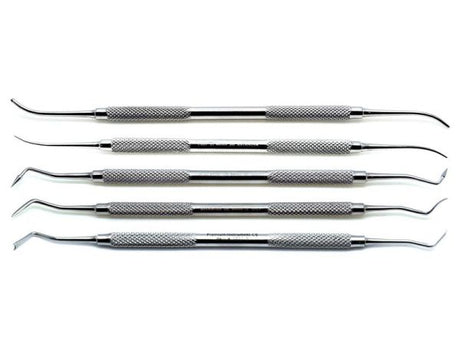
- PKT (PK Thomas) Modelling Instruments — The PK Thomas 5-instrument set is the standard for inlay, onlay, crown, and FPD wax-up in dental laboratories. Each instrument (PKT 1–5) has a specific blade geometry: PKT 1 for adding wax increments; PKT 2 for smoothing and blending; PKT 3 for occlusal anatomy carving; PKT 4 for marginal ridge detail; PKT 5 for groove anatomy. A complete PKT set enables precise anatomical wax-ups that transfer accurately to cast restorations.
- Wax Knife vs Carver — Wax knives (straight blade, both edges sharp) cut and shape bulk wax; carvers (angled, serrated, or curved blade) refine surface anatomy and remove excess wax from restoration margins. Most dental lab work requires both types; a wax knife handles initial shaping and a carver provides anatomical detail.
- Heat Conduction (Electric vs Flame Heating) — Electric wax instruments maintain consistent tip temperature during wax addition, preventing uneven flow from variable flame heating; they produce smoother wax surfaces with fewer voids. In Egyptian dental laboratories without electric wax heater equipment, flame-heated instruments require constant re-heating to maintain consistent wax fluidity and are more technique-sensitive.
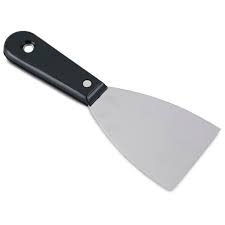
- Basbosa Knife (Egyptian Market) — The Basbosa knife is a locally popular multi-purpose wax and spatula instrument widely used in Egyptian dental laboratories and student practical sessions for its economical price (18 EGP) and versatility in general wax manipulation and alginate mixing.
- Autoclave Compatibility — Stainless steel wax instrument blades and handles withstand Class B autoclave cycles; confirm before autoclaving aluminium-handled instruments which can distort at 134°C. Heat-clean wax instruments by wiping the blade with an alcohol swab while still warm — this removes wax residue without the need for immediate autoclaving between wax additions during laboratory work.
Wax Instruments Available in Egypt
| Product | Type | Best For | Price (EGP) |
|---|---|---|---|
| PK Thomas Modelling Kit | PKT 5-piece set | Crown & bridge wax-up | 195 |
| Wax Knife | Knife | Bulk wax shaping | 35 |
| Wax Carver (Small) | Carver | Anatomy refinement | 34 |
| Basbosa Knife | Multi-purpose | General wax & alginate work | 18 |
Availability & Delivery in Egypt
MedSTA supplies dental wax instruments including PKT sets, wax knives, carvers, and Basbosa knives in EGP with same-day dispatch from Cairo. Cairo and Giza delivery within 1–3 business days; all other Egyptian governorates within 3–5 business days.
Frequently Asked Questions
What is a PK Thomas instrument set and why is it used for crown wax-ups?
What is a PK Thomas instrument set and why is it used for crown wax-ups?
The PK Thomas (PKT) 5-instrument set is a standard dental laboratory tool set developed by Dr. Peter K. Thomas for precise anatomical wax-up of cast restorations. PKT 1 adds wax; PKT 2 smooths and contours buccal surfaces; PKT 3 develops cusp tips and fossae; PKT 4 establishes marginal ridges and proximal contacts; PKT 5 carves developmental grooves. Used systematically, the PKT technique produces wax patterns with functional occlusal anatomy and precise marginal adaptation that translate directly to the final ceramic or metal casting, essential for Egyptian dental technicians fabricating crown and bridge restorations.
How do I clean wax instruments between use without full autoclaving?
How do I clean wax instruments between use without full autoclaving?
During active wax-up work in a dental laboratory session, clean wax instruments by passing the warmed blade through a clean piece of modelling wax (draws residue out of instrument irregularities), wiping with an alcohol-moistened gauze, and re-heating before the next wax addition. This rapid between-use cleaning prevents wax colour contamination between different wax types and maintains blade cleanliness without requiring a full autoclave cycle between each wax addition. Autoclave fully at the end of the laboratory session before the instruments are used on the next patient case.
What is the difference between a wax knife and a wax carver?
What is the difference between a wax knife and a wax carver?
A wax knife has a straight, double-edged blade designed for cutting through bulk wax blocks, shaping occlusal rims on articulated models, and removing large sections of excess wax from pattern surfaces. A wax carver has an angled, pointed, or serrated blade designed for precise anatomical surface carving — refining cusp tips, developmental grooves, marginal ridges, and embrasure anatomy at a detail level that a knife blade cannot achieve. Both are required for a complete dental laboratory wax-up workflow.
Can dental wax instruments be used for alginate mixing in Egyptian dental clinics?
Can dental wax instruments be used for alginate mixing in Egyptian dental clinics?
The Basbosa knife — a multi-purpose instrument popular in Egyptian dental clinics and dental faculty settings — is commonly used for both wax manipulation and alginate spatulation on the rubber mixing bowl. While not its primary design purpose, its blade geometry provides adequate spatulation coverage for standard full-arch alginate impressions. Dedicated cement spatulas with wider, flat blades provide more efficient alginate and GIC mixing than wax knives; use the appropriate instrument type for best mixing results.
Does MedSTA supply PK Thomas modelling kits and dental wax instruments across Egypt?
Does MedSTA supply PK Thomas modelling kits and dental wax instruments across Egypt?
Yes — MedSTA supplies PK Thomas modelling kits (195 EGP), wax knives (35 EGP), wax carvers (34 EGP), and Basbosa knives (18 EGP) in EGP with same-day dispatch from Cairo. Cairo and Giza delivery within 1–3 business days; all other Egyptian governorates within 3–5 business days.