
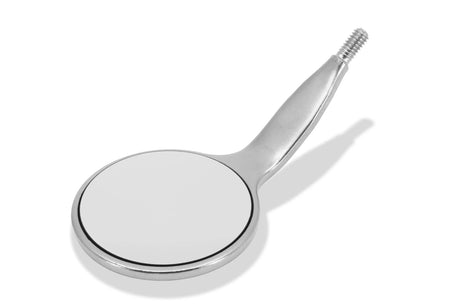
hahnenkratt
Very low stock (8 units)Regular price LE 99.00 EGPUnit price /Unavailable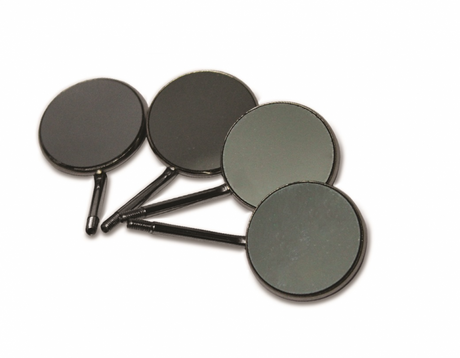
GENERIC
In stock (44 units)Regular price LE 10.00 EGPUnit price /Unavailable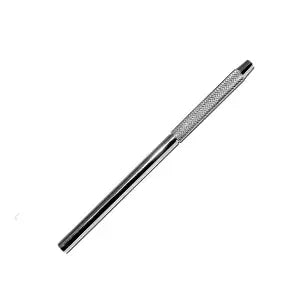
GENERIC
In stock (32 units)Regular price LE 29.00 EGPUnit price /Unavailable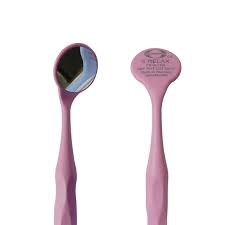
hahnenkratt
Very low stock (6 units)Regular price LE 135.00 EGPUnit price /Unavailable
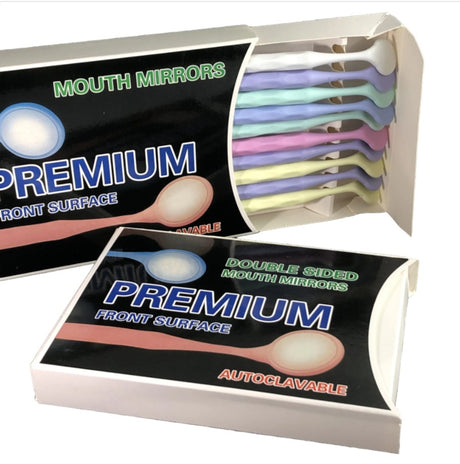
Premium
Very low stock (4 units)Regular price LE 65.00 EGPUnit price /Unavailable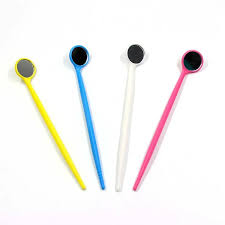
hahnenkratt
In stock (21 units)Regular price From LE 55.00 EGPUnit price /Unavailable-


Asnanco
Dental mini & micro mirrors Handle
Very low stock (1 unit)Regular price LE 180.00 EGPUnit price /UnavailableAsnanco
In stock (71 units)Regular price From LE 200.00 EGPUnit price /Unavailable-

Maxy dent
In stock (34 units)Regular price LE 25.00 EGPUnit price /Unavailable 3% off
Motranser
Motranser M2 Rainbow Magnifying Dental Mirror s4 1 Piece
In stock (48 units)Sale price LE 730.00 EGP Regular price LE 750.00Unit price /Unavailable Up to 25% off
Motranser
Motranser M2 Rainbow Mirror with Endo-Gauge - 1 Piece
In stock (200 units)Sale price LE 470.00 EGP Regular price LE 630.00Unit price /Unavailable
Motranser
Motranser 23mm R98A Spare Mirrors 10 Pcs
Low stock (14 units)Regular price LE 3,500.00 EGPUnit price /UnavailableMotranser
Motranser No.4 Mirror Replacement Key for M1, M2, M3
Low stock (14 units)Regular price LE 620.00 EGPUnit price /Unavailable-



How to Choose Dental Mirrors for Your Practice
- Mirror Surface Type (Front-Surface vs Standard) — Front-surface (first-surface) mirrors have the reflective coating on the glass front face, eliminating the double image (ghost image) produced by standard mirrors where light reflects from both the glass surface and the backing. Front-surface mirrors (e.g. MEGA FS) provide single, sharp reflections critical for high-precision restorative and endodontic examination. Standard mirrors produce a secondary ghost image behind the primary reflection, acceptable for routine examination but less suitable for precision work.
- Mirror Head Diameter (14 mm, 18 mm, 22 mm, 24 mm) — Size 5 (24 mm) provides the widest field of view for full-arch examination; size 4 (22 mm) is the standard for most adults; size 3 (18 mm) improves access in patients with limited mouth opening; size 2 (14 mm) for pediatric patients and narrow posterior access. Stock at least sizes 3 and 4 for a complete examination kit.
- Handle Material (Stainless Steel vs Aluminium) — Stainless steel handles (e.g. Pakistan handle) withstand repeated autoclave cycles without corrosion; aluminium handles are lighter but may pit or discolour after extended chemical disinfection. For long-term clinical use in Egyptian dental practices, stainless steel handles are the more economical choice over the instrument lifecycle.
- Mirror Attachment (Screw-On vs Fixed) — Screw-on mirror heads allow replacement of the mirror glass when scratched or fogged without replacing the handle; fixed mirrors require complete instrument replacement when the mirror surface degrades. High-volume practices benefit from the economics of screw-on heads and stock multiple replacement glass inserts.
- Rhodium vs Standard Silver Coating — Rhodium-coated front-surface mirrors (used in MEGA FS) provide a harder, more scratch-resistant coating than standard silver, maintaining image quality through more autoclave cycles before degradation. Rhodium mirrors are significantly more expensive but have a 3–5 times longer usable life in active clinical rotation.
Dental Mirror Products Available in Egypt
| Product | Type | Handle | Price (EGP) |
|---|---|---|---|
| MEGA FS Mirror (Hahnenkratt) | Front-surface | SS handle | 99 |
| Pakistani Mirror Head | Standard | Separate | 10 |
| Pakistan Mirror Handle | N/A | SS | 29 |
| MASA Plus Kit (2 pcs) | Photography/examination | SS handle | 250 |
Availability & Delivery in Egypt
MedSTA supplies dental mirrors from MEGA FS (Hahnenkratt), MASA, and generic brands in EGP with same-day dispatch from Cairo. Cairo and Giza delivery within 1–3 business days; all other Egyptian governorates within 3–5 business days.
Frequently Asked Questions
What is the difference between a front-surface and a standard dental mirror?
What is the difference between a front-surface and a standard dental mirror?
Standard dental mirrors have a reflective silver coating behind the glass, causing light to produce a primary reflection from the front glass surface and a secondary ghost image from the backing — a double image that reduces diagnostic clarity. Front-surface (first-surface) mirrors have the reflective coating on the front face of the glass, producing a single, sharp, undistorted reflection. For precision work including composite margin evaluation, crack detection, and endodontic cavity floor assessment, front-surface mirrors are the clinical standard.
How often should dental mirror heads be replaced?
How often should dental mirror heads be replaced?
Replace dental mirror heads when the reflective surface shows visible scratches, pitting, or fogging that distorts the reflected image during clinical use. Front-surface mirrors with rhodium coating (e.g. MEGA FS Hahnenkratt) maintain their optical clarity through 200–400 autoclave cycles before degradation becomes clinically significant. Standard silver-coated mirrors degrade faster under repeated Class B autoclaving — typically requiring replacement after 80–120 cycles. Inspect mirrors before each use; a degraded mirror extends examination time and reduces diagnostic accuracy.
Can dental mirrors be used as photography mirrors for intraoral photography?
Can dental mirrors be used as photography mirrors for intraoral photography?
Standard dental examination mirrors are NOT suitable for intraoral photography; they produce distorted, double-image reflections that are unusable for clinical photography documentation. Dedicated dental photography mirrors (e.g. MASA sets) use stainless steel or rhodium-coated front-surface glass with precise curvature and anti-fog coatings specifically designed for intraoral photographic documentation. MASA photography mirrors come in buccal, occlusal, and lingual configurations for complete intraoral photo series.
How should dental mirrors be sterilised in Egyptian dental clinics?
How should dental mirrors be sterilised in Egyptian dental clinics?
Autoclave dental mirror handles and heads using Class B cycles (134°C, 3 bar) with the handle and mirror head separated to ensure steam penetration around all surfaces. Some front-surface mirror glass cannot withstand Class B temperatures — check the manufacturer’s rating before autoclaving, as some coated mirrors are rated for Class N only (gravity displacement at 121°C). Never use cold chemical disinfection alone as the primary sterilisation method; it does not achieve sporicidal activity required for patient-contact instruments in Egyptian dental practice.
Does MedSTA supply MEGA FS front-surface dental mirrors across Egypt?
Does MedSTA supply MEGA FS front-surface dental mirrors across Egypt?
Yes — MedSTA supplies MEGA FS Hahnenkratt front-surface mirrors, Pakistani examination mirror heads and handles, and MASA dental photography mirror sets in EGP with same-day dispatch from Cairo. Cairo and Giza delivery within 1–3 business days; all other Egyptian governorates within 3–5 business days.