
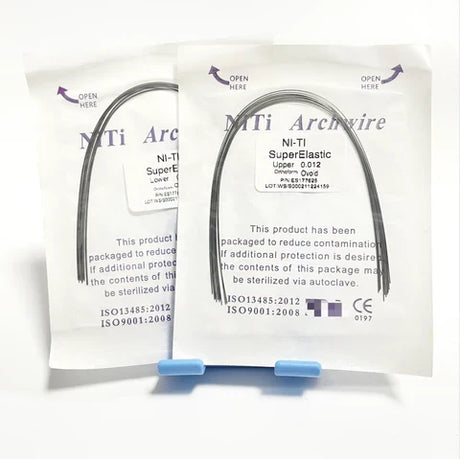
GENERIC
In stock (50 units)Regular price LE 37.00 EGPUnit price /Unavailable
GENERIC
In stock (30 units)Regular price LE 19.00 EGPUnit price /Unavailable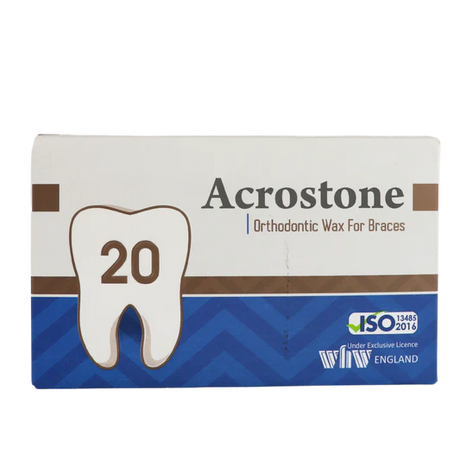
Acrostone
Acrostone Orthodonic Wax For Braces
Low stock (10 units)Regular price From LE 15.00 EGPUnit price /UnavailableGENERIC
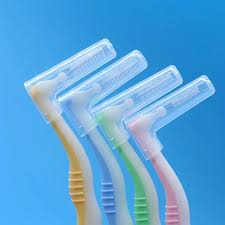
Ortho Inter Dental Brush 5 pcs
In stock (22 units)Regular price LE 60.00 EGPUnit price /Unavailable-

Matt
Matt Ortho Premolar Bands one piece
In stock (1203 units)Regular price LE 127.00 EGPUnit price /Unavailable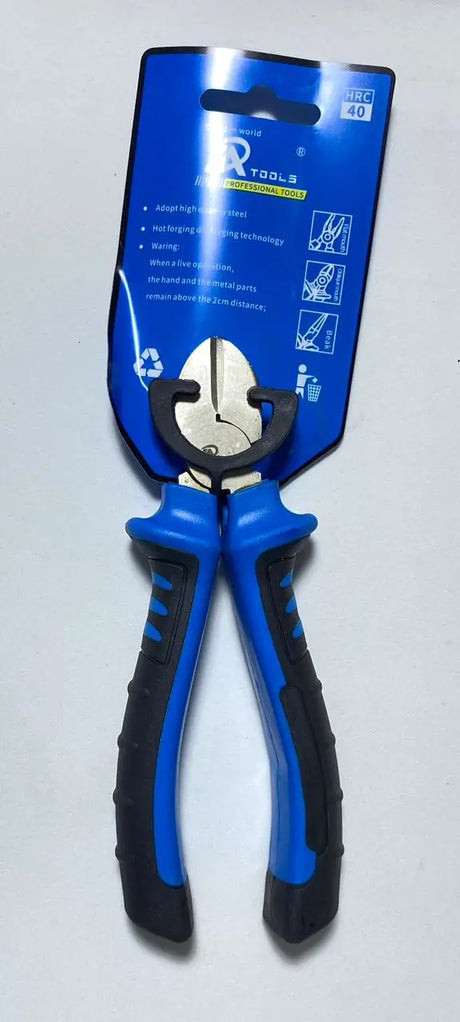
GENERIC
Low stock (9 units)Regular price LE 85.00 EGPUnit price /Unavailable
DTC
DTC Stainless Steel Rectangular Archwires
In stock (267 units)Regular price LE 125.00 EGPUnit price /UnavailableAditek
Aditek Super Elastic NiTi Arch Wire Natural Round 10pcs
In stock (399 units)Regular price LE 225.00 EGPUnit price /Unavailable-


DTC
In stock (471 units)Regular price LE 125.00 EGPUnit price /Unavailable
Matt
In stock (1674 units)Regular price LE 208.00 EGPUnit price /Unavailable
DTC
DTC Niti Rectangular Archwires
In stock (274 units)Regular price LE 125.00 EGPUnit price /Unavailable Up to 17% off
Matt
Matt Ortho PROFormance NITI Round Upper ( 10 wires/pack)
In stock (106 units)Regular price From LE 245.00 EGPUnit price /Unavailable
Matt
Matt Ortho Power Chain continous
In stock (289 units)Regular price LE 530.00 EGPUnit price /Unavailable Up to 10% off
Matt
Matt Ortho Gemma Single Bondable Non-Convertible Tubes MBT 022
Low stock (18 units)Regular price From LE 235.00 EGPUnit price /Unavailable- Up to 17% off
Matt
Matt ortho pierre metal brackets standard 022
Low stock (12 units)Regular price From LE 710.00 EGPUnit price /Unavailable -





How to Choose Orthodontic Supplies for Predictable Tooth Movement
- Metal vs ceramic brackets — Stainless steel metal brackets produce lower friction against archwires and are mechanically stronger, making them the clinical standard for most Egyptian fixed appliance cases. Ceramic brackets (polycrystalline alumina or monocrystalline sapphire) provide superior aesthetics but generate higher archwire friction (15–50% more than metal), which can slow space closure in extraction cases. Ceramic brackets also risk enamel damage on debonding if an appropriate mechanical or thermal debonding technique is not used.
- Self-ligating vs conventional brackets — Self-ligating brackets (passive: Damon; active: In-Ovation) claim reduced friction and shorter treatment times versus conventionally ligated brackets. Clinical evidence shows modest differences in overall treatment duration (1–2 months) and similar final occlusal outcomes. The key clinical advantage of passive self-ligating brackets is reduced chairside time per visit (no tie-in of elastomeric ligatures) and less force on the archwire at the initial levelling stage.
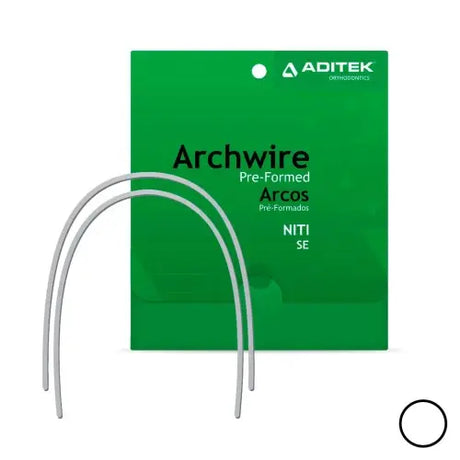
- NiTi archwire selection for initial alignment — Super-elastic NiTi wires (e.g. 0.014" NiTi or 0.016" NiTi) are the first-choice wire for initial levelling due to their low force delivery and shape-memory over large deflections. Thermally activated NiTi (TANI) wires deliver force only when warmed to body temperature, allowing flexible ligation at room temperature — useful for engaging severely malpositioned teeth without excessive force. Avoid using stainless steel archwires at the initial alignment stage in uncrowded cases.
- Buccal tube vs convertible tube on first molars — Convertible buccal tubes (with a removable cap) allow the clinician to change the tube to a bracket at a later stage if additional flexibility is required. Non-convertible single tubes are simpler and lower-profile. For most straightforward fixed appliance cases, non-convertible metal buccal tubes are sufficient; convertible tubes are recommended when auxiliary auxiliaries (springs, hooks) may be needed at the molar later in treatment.
- Temporary anchorage devices (TADs) — Orthodontic mini-screws (1.5–2.0 mm diameter, 8–12 mm length, titanium alloy Grade 5) are placed in inter-radicular bone to provide absolute anchorage for intrusion, retraction, or vertical control mechanics without requiring patient compliance with headgear or Class III elastics. Placement requires proper training, CBCT guidance for safe inter-radicular positioning, and a sterile insertion technique with local anesthesia.
Orthodontic Supply Categories at a Glance
| Category | Key Products | Clinical Use |
|---|---|---|
| Brackets | Metal, ceramic, self-ligating | Tooth movement, fixed appliance |
| Archwires | NiTi, stainless steel, TMA | Levelling, alignment, finishing |
| Bands & Tubes | Molar bands, buccal tubes, premolar bands | Molar anchorage and attachment |
| Auxiliaries | Elastics, springs, stops, hooks | Force application and space management |
| TADs | Orthodontic mini-screws | Absolute anchorage |
Availability & Delivery in Egypt
MedSTA supplies a full range of orthodontic materials to Egyptian orthodontists priced in EGP. Delivery covers Cairo and Giza within 24–48 hours and all other governorates within 3–5 working days. Both individual clinic orders and bulk procurement for orthodontic centres and hospitals are accommodated.
Frequently Asked Questions
What is the difference between self-ligating and conventional orthodontic brackets?
What is the difference between self-ligating and conventional orthodontic brackets?
Conventional brackets use elastomeric modules or metal ligature ties to secure the archwire in the bracket slot, creating friction that resists tooth movement. Self-ligating brackets use a built-in mechanical clip (passive: Damon, Speed; active: In-Ovation) that closes over the archwire without an external ligature. Passive self-ligating brackets allow the archwire to slide more freely through the bracket, delivering lower force levels — particularly beneficial in the initial levelling stages. Clinical evidence shows modest treatment-time advantages (1–2 months) for self-ligating brackets, with similar final occlusal outcomes to conventional systems. Chair time per appointment is reduced since no tie-in is required.
How do I select the correct NiTi archwire for the initial alignment stage?
How do I select the correct NiTi archwire for the initial alignment stage?
For initial levelling and alignment, select a super-elastic NiTi wire in a round cross-section: 0.014" for severely crowded cases (greater than 8 mm total crowding) and 0.016" NiTi for mild-to-moderate crowding. Super-elastic NiTi delivers constant low force over large deflections, which is the defining requirement at the initial stage. Thermally activated NiTi (TANI) — which engages at body temperature (37°C) — is an alternative for cases where room-temperature placement would otherwise be impossible due to extreme tooth position. Avoid advancing to heat-treated (stainless) archwires until the teeth are substantially levelled and aligned.
What are temporary anchorage devices (TADs) and when are they used in orthodontics?
What are temporary anchorage devices (TADs) and when are they used in orthodontics?
Temporary anchorage devices (TADs) are 1.5–2.0 mm diameter titanium mini-screws placed inter-radicularly in alveolar bone under local anaesthesia to provide absolute skeletal anchorage for orthodontic tooth movement. They eliminate the need for patient compliance with headgear or inter-arch elastics for anchorage-demanding movements such as en masse retraction, posterior intrusion for open bite correction, or molar distalisation. TADs are placed with a self-drilling screwdriver under CBCT guidance to confirm safe inter-radicular positioning, remain in place for the duration of that treatment phase, and are removed without bone damage when anchorage is no longer required.
How does Egyptian summer heat affect orthodontic bracket bond strength?
How does Egyptian summer heat affect orthodontic bracket bond strength?
Bracket adhesive bond strength is not significantly affected by intraoral temperatures in the clinical range (35–42°C), as resin-based orthodontic adhesives are formulated to cure and maintain strength across physiological temperature ranges. However, storage of orthodontic bonding adhesives above 25°C — common in non-air-conditioned Egyptian dental supply rooms — accelerates degradation of the initiator system, reducing shelf life and potentially affecting working time and final bond strength. Store orthodontic adhesives at 2–8°C (refrigerator) or at maximum below 20°C. Ceramic brackets may require higher debonding forces in hot environments due to improved bonding — use mechanical debonding instruments to prevent enamel damage.
Does MedSTA supply the full range of orthodontic supplies to Egyptian practices?
Does MedSTA supply the full range of orthodontic supplies to Egyptian practices?
Yes — MedSTA stocks a comprehensive range of orthodontic supplies including metal and ceramic brackets (both conventional and self-ligating), NiTi and stainless steel archwires in all standard dimensions, molar and premolar bands, convertible buccal tubes, orthodontic elastics, auxiliaries, springs, TAD mini-screws, and clinical pliers — all priced in EGP. Individual clinic orders and bulk procurement for orthodontic centres and university departments are accommodated with delivery across all Egyptian governorates within 24–48 hours (Cairo/Giza) or 3–5 working days (other governorates).