
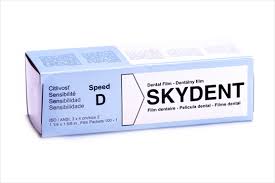
Skydent
Very low stock (4 units)Regular price LE 1,499.00 EGPUnit price /Unavailable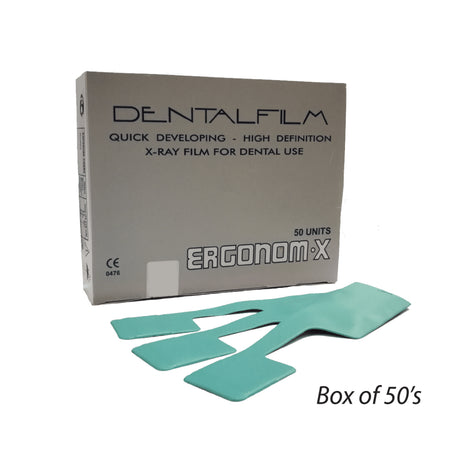
Ergonom X
Ergonom X Self Developing x-ray film 50pcs
Low stock (18 units)Regular price LE 2,000.00 EGPUnit price /Unavailable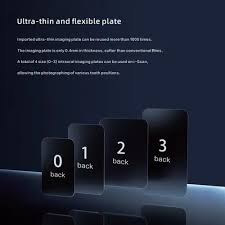
Woodpecker
Woodpecker i-Scan Phosphorus Plate
Low stock (11 units)Regular price From LE 2,080.00 EGPUnit price /Unavailable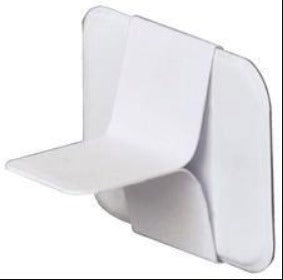
GENERIC
Dental X-Ray Film Bite Wing Tabs Self-Adhesive 500 pcs
Low stock (10 units)Regular price LE 875.00 EGPUnit price /UnavailableYes!Star
Very low stock (4 units)Regular price LE 2,300.00 EGPUnit price /Unavailable-
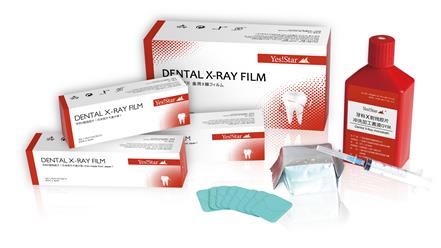
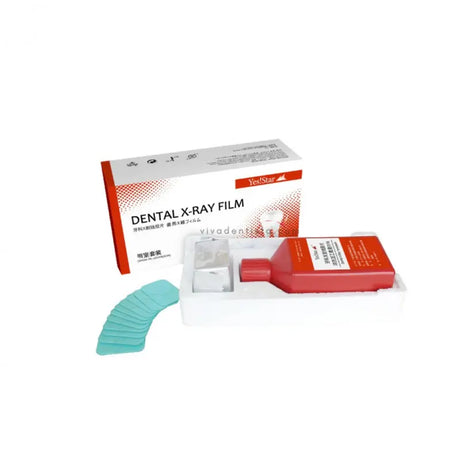
How to Choose the Right Intraoral X-ray Films for Your Practice
- Conventional Silver-Halide Film vs Phosphor Plate (PSP) — Conventional intraoral X-ray film uses silver-halide emulsion and requires wet darkroom development (developer and fixer solutions, or self-developing chemistry). Phosphor plate (PSP) systems store latent image energy in a photostimulable phosphor layer and are digitized by a scanner — no darkroom required. PSP plates are reusable (up to 200–500 exposures per plate) and are compatible with existing analog X-ray units without upgrading to a direct digital sensor.
- Film Speed and Radiation Dose — ISO 6846 classifies intraoral X-ray film speed from A (slowest, highest dose) to F (fastest, lowest dose). Speed D film is the minimum acceptable speed for new equipment under most current guidelines; speed E and F films require 50% less radiation than D-speed for equivalent image density. In Egyptian clinics using older X-ray units calibrated for D-speed, upgrading to E or F film reduces patient dose without requiring unit replacement.
- Self-Developing Films for Portable Workflows — Self-developing (chairside developing) films such as Ergonom X use a built-in chemical sachet that is activated by pressure — no darkroom or processing equipment needed. Developing time is 30 to 90 seconds depending on ambient temperature. Particularly useful for Egyptian field clinics, rural dental outposts, and portable X-ray units where darkroom infrastructure is unavailable.
- Film Size Selection — Size 2 (31 × 41 mm) is the standard adult posterior periapical and horizontal bitewing size. Size 1 (24 × 31 mm) is used for narrow anterior teeth and pediatric molars. Size 0 (22 × 27 mm) is for primary dentition. Bitewing tab packs for sizes 1 and 2 are available separately. Occlusal film (size 4, 57 × 76 mm) is used for larger-coverage projections.
- Storage and Shelf Life in Egyptian Climate — Conventional X-ray film is sensitive to temperature, humidity, and background radiation. Store unexposed film below 20°C and at relative humidity below 50% — challenging in Egyptian summers where ambient temperatures regularly exceed 35°C. Film stored above 25°C for extended periods shows fogging (base+fog density increase). PSP phosphor plates should be stored in a lightproof case between uses; prolonged ambient light exposure erases the stored latent image.
- Compatibility with Existing Developing Infrastructure — If a clinic operates an existing automatic processor or manual darkroom, conventional silver-halide film is the lowest-cost choice for routine diagnostic work. PSP plates require a dedicated plate scanner (such as the Woodpecker i-Scan) but can then be processed rapidly and digitally stored. Self-developing film requires no infrastructure but has a higher per-film cost than conventional film.
Intraoral X-ray Film Types at a Glance
| Film Type | Processing | Speed | Reusable? | Best For |
|---|---|---|---|---|
| Conventional silver-halide | Darkroom (developer + fixer) | D to F speed | No | Standard diagnostic X-ray |
| Self-developing film | Chairside sachet activation | Equivalent to D | No | Portable, no darkroom |
| PSP phosphor plate | Plate scanner required | Comparable to E/F | Yes (200–500 uses) | Semi-digital upgrade |
| Bitewing tab film | Standard darkroom | D or E speed | No | Horizontal bitewing views |
Availability & Delivery in Egypt
Intraoral X-ray films on MedSTA are priced in EGP with nationwide delivery. Conventional films are sold in boxes of 100; self-developing films in packs of 50; phosphor plates are sold individually. Store conventional and PSP films away from lead aprons, scattered radiation sources, and high-temperature storage areas. Orders in Cairo and Giza are typically fulfilled within 1–2 business days; delivery to other Egyptian governorates takes 2–4 business days.
Frequently Asked Questions — Intraoral X-ray Films
What is the difference between a conventional X-ray film and a phosphor plate (PSP) in dentistry?
What is the difference between a conventional X-ray film and a phosphor plate (PSP) in dentistry?
Conventional intraoral X-ray film uses silver-halide emulsion and requires darkroom processing with developer and fixer solutions. A PSP plate stores the latent image in a photostimulable phosphor layer and is digitized by a plate scanner, outputting a digital image without wet chemistry. PSP plates are reusable (200 to 500 exposures per plate) and compatible with existing analog X-ray units — a practical transition toward digital imaging in Egyptian clinics without purchasing a direct sensor.
How should conventional intraoral X-ray film be stored in Egyptian clinics during summer?
How should conventional intraoral X-ray film be stored in Egyptian clinics during summer?
Store unexposed film below 20°C at relative humidity below 50%. Egyptian summer temperatures regularly exceed 35°C, causing fogging in film stored in uncontrolled environments. Refrigeration at 4–8°C is acceptable if film is sealed and allowed to reach room temperature before opening to prevent condensation on the emulsion surface.
How does self-developing (chairside developing) X-ray film work?
How does self-developing (chairside developing) X-ray film work?
Self-developing films (e.g., Ergonom X) contain a sealed chemical sachet integrated into the film packet. After exposure, pressing the packet ruptures the sachet, releasing developer and fixer that process the image in 30 to 90 seconds at room temperature — no darkroom required. Particularly useful for Egyptian field clinics, home-visit radiography, and portable X-ray setups without darkroom infrastructure.
What film speed is recommended for reducing radiation dose in Egyptian dental clinics?
What film speed is recommended for reducing radiation dose in Egyptian dental clinics?
ISO 6846 speed classifications run from D (most common in older Egyptian clinics) to F (fastest, lowest dose). Upgrading from speed D to E or F reduces patient radiation dose by approximately 50%, without replacing the X-ray unit. Speed F is the current European Commission recommendation; verify that exposure settings on the X-ray unit are adjusted when switching speeds.
Can bitewing tab adhesives be used with any brand of periapical film?
Can bitewing tab adhesives be used with any brand of periapical film?
Yes. Self-adhesive bitewing tabs adhere directly to the front face of a standard size 2 periapical film packet, converting it into a bitewing film. Confirm the tab adhesive bonds reliably to the specific film packet surface — some brands use plastic-coated packets that may not adhere well to standard tabs. Centre the tab on the film and check for secure adhesion before placement in the patient's mouth.