

 Sold out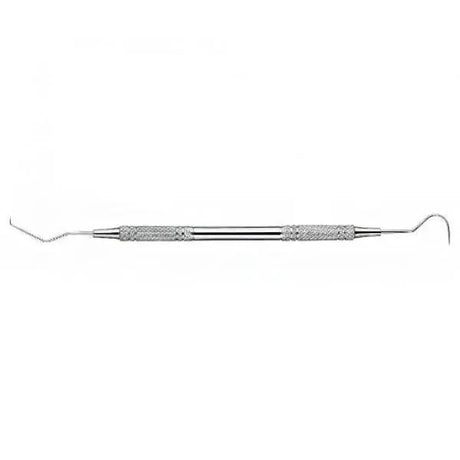
GENERIC
Very low stock (7 units)Regular price LE 28.00 EGPUnit price /Unavailable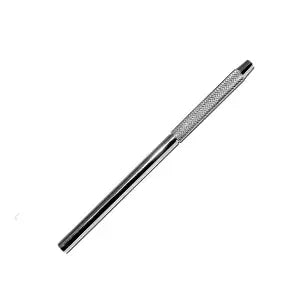
GENERIC
Very low stock (2 units)Regular price LE 29.00 EGPUnit price /Unavailable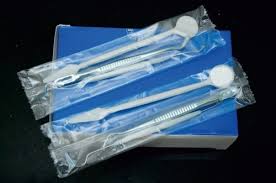
GENERIC
Very low stock (3 units)Regular price LE 11.00 EGPUnit price /Unavailable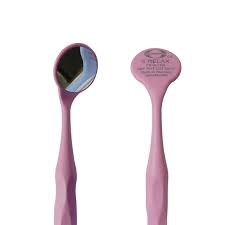
hahnenkratt
Very low stock (8 units)Regular price LE 135.00 EGPUnit price /Unavailable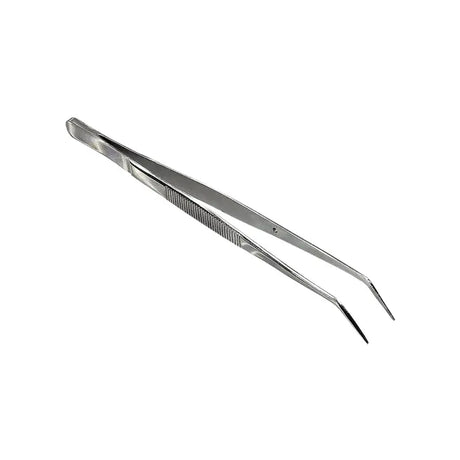
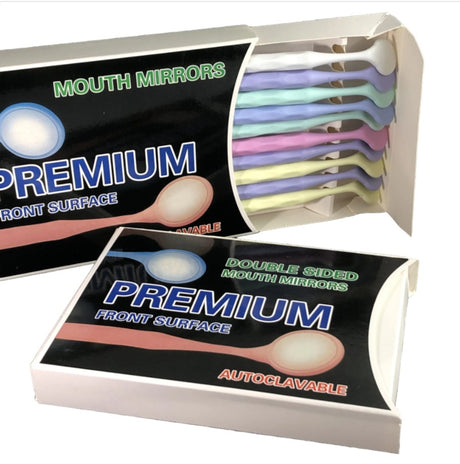
Premium
Very low stock (5 units)Regular price LE 65.00 EGPUnit price /Unavailable Sold out
hahnenkratt
In stock (28 units)Regular price From LE 55.00 EGPUnit price /Unavailable-
GENERIC
In stock (49 units)Regular price LE 35.00 EGPUnit price /Unavailable Sold out
Asnanco
Dental mini & micro mirrors Handle
Very low stock (5 units)Regular price LE 180.00 EGPUnit price /UnavailableAsnanco
In stock (75 units)Regular price From LE 200.00 EGPUnit price /Unavailable-




How to Choose the Right General Dental Instruments for Your Practice
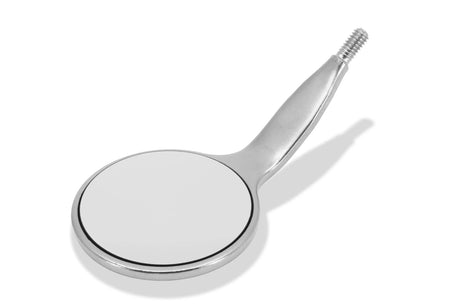
- Mirror Surface Type — Front-surface (first-surface) mirrors apply the reflective coating to the outer glass face, eliminating the ghost image of second-surface mirrors. The hahnenkratt MEGA FS provides an undistorted reflection essential for diagnostic accuracy and intraoral photography in Egyptian specialist practices.
- Steel Grade and Autoclave Resistance — AISI 316L (18/10 stainless steel with 2-3% molybdenum) resists pitting corrosion from blood and saline across repeated Class B autoclave cycles at 134 degrees C. ISO 7153-1 compliant instruments maintain edge geometry and surface quality in Egypt's high-humidity clinic environments where AISI 420 grade instruments rapidly deteriorate.
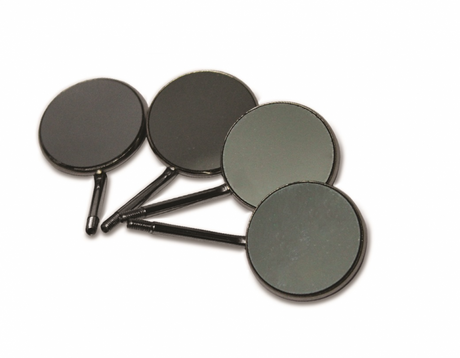
- Mirror Head Diameter — Standard number 4 (22 mm) mirrors suit adult patients; number 3 (18 mm) improves access in pediatric and posterior mandibular areas. Front-surface number 5 (24 mm) mirrors enhance retraction and indirect vision during wide-arch restorative preparations.
- Probe Calibration and Marking Pattern — Williams probes (1/2/3/5/7/8/9/10 mm) and WHO probes (3.5/5.5/8.5/11.5 mm, ball-ended) serve different periodontal protocols. Laser-etched calibration marks on AISI 316L handles retain legibility across thousands of autoclave cycles unlike painted markings that fade with repeated sterilisation.
- Tray and Cassette System — Perforated AISI 304 trays allow steam penetration during Class B cycles. Colour-coded cassette systems enable procedure-specific setups and reduce instrument handling errors in high-volume Egyptian clinic environments.
- Handle Geometry — Hexagonal handles prevent rotation during fine intraoral manipulation. Knurled grip patterns maintain tactile control even when gloved, reducing force required during mirror retraction in deep posterior examinations.
General Dental Instruments at a Glance
| Instrument | Material | Key Specification | Clinical Application |
|---|---|---|---|
| Front-surface mirror #4 | Borosilicate glass / AISI 316L handle | 22 mm, first-surface coating, no ghost image | Intraoral examination, indirect vision, photography |
| Shepherd hook explorer | AISI 316L stainless steel | Fine tip, ISO 7153-1 compliant | Caries detection, restoration margin assessment |
| Williams periodontal probe | AISI 316L stainless steel | 1/2/3/5/7/8/9/10 mm markings, hexagonal handle | Pocket depth measurement, clinical attachment level |
| Perforated instrument tray | AISI 304 stainless steel | Class B autoclavable, colour-coded | Chairside instrument organisation |
| Cotton pliers | AISI 316L stainless steel | Locking and non-locking, fine serrated tips | Material handling, retraction cord placement |
Availability and Delivery in Egypt
MedSTA stocks general dental instruments from hahnenkratt, Sedra dent, Bibodent, and Epona across EGP price points suited to student setups and specialist practices alike. Economy diagnostic kits start from EGP 1,000; premium front-surface MEGA FS mirrors are available for specialist practices. Orders dispatch from Cairo with nationwide delivery to all Egyptian governorates.
Frequently Asked Questions
What is the difference between a front-surface and a standard dental mirror?
What is the difference between a front-surface and a standard dental mirror?
A front-surface (first-surface) mirror applies its reflective coating to the outer glass face, eliminating the double image produced when light passes through glass twice. This provides a sharper, undistorted reflection critical for accurate caries detection and intraoral photography. Standard second-surface mirrors produce a faint ghost image. For clinical diagnostics and documentation, front-surface instruments such as the hahnenkratt MEGA FS are preferred in Egyptian specialist practices requiring diagnostic precision.
Which stainless steel grade should dental instruments have for Egyptian clinic conditions?
Which stainless steel grade should dental instruments have for Egyptian clinic conditions?
Instruments conforming to AISI 316L (18/10 stainless steel with 2-3% molybdenum) or ISO 7153-1 offer superior corrosion resistance in Egypt's high-temperature, high-humidity dental operatories. The molybdenum content resists chloride-induced pitting from blood and saline. For instruments undergoing repeated Class B autoclave cycles at 134 degrees C, AISI 316L substantially extends service life and maintains calibration mark legibility compared to lower-cost AISI 420 or 304 grades found in budget instrument sets.
How should general dental instruments be sterilised in Egyptian dental practices?
How should general dental instruments be sterilised in Egyptian dental practices?
General dental instruments contacting mucosa should be sterilised by Class B (pre-vacuum) autoclave at 134 degrees C for 3-4 minutes or 121 degrees C for 15 minutes. Class N gravity-cycle autoclaves are acceptable for solid, unwrapped instruments but cannot penetrate hollow lumens. After autoclaving, store instruments in sealed Class 4 or Class 6 indicator pouches in a dry, air-conditioned environment. In Egyptian clinics where summer humidity can exceed 80 percent, climate-controlled instrument storage substantially prolongs sterile pouch integrity.
Can the same dental mirror be used for clinical examination and intraoral photography?
Can the same dental mirror be used for clinical examination and intraoral photography?
A second-surface dental mirror functions adequately for examination but produces a ghost reflection reducing photographic clarity. For the standardised intraoral photographic series required in orthodontic and esthetic documentation, dedicated photography mirrors with first-surface coatings and anti-fog treatment are needed. In Egypt's air-conditioned operatories, warming the mirror slightly before insertion prevents condensation fogging. Brands such as MASA and hahnenkratt MEGA FS provide clinically acceptable image quality for professional documentation purposes.
How many instrument sets does an Egyptian dental clinic need for continuous patient throughput?
How many instrument sets does an Egyptian dental clinic need for continuous patient throughput?
A single-chair Egyptian dental practice running continuous morning and afternoon sessions typically requires 6-8 complete instrument cassettes per operatory to maintain sterile supply through a full day's patient load. Each Class B autoclave cycle takes approximately 30-45 minutes, so the cassette inventory must exceed the number of patients seen per cycle. Higher-volume clinics should calculate based on hourly patient throughput multiplied by autoclave cycle time to determine minimum cassette inventory requirements across all Egyptian governorates.