

EL-KODS
EL-KODS DENTAX Pink Modeling Wax (500g)
In stock (39 units)Regular price LE 225.00 EGPUnit price /Unavailable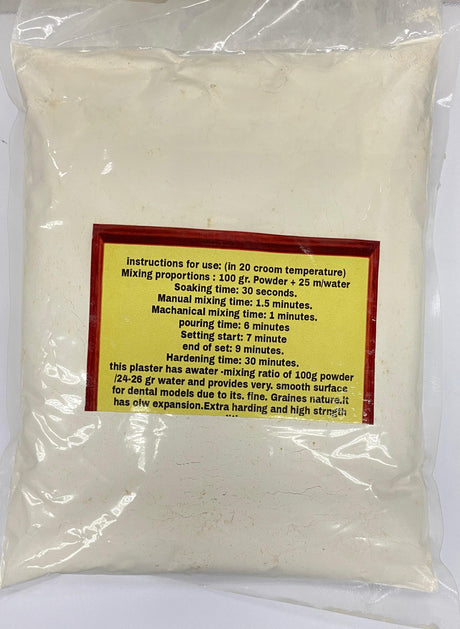
GENERIC
Very low stock (4 units)Regular price LE 20.00 EGPUnit price /Unavailable
Dental Smile
Low stock (15 units)Regular price From LE 10.00 EGPUnit price /Unavailable
CAVEX
CAVEX Set Up: Pink Wax (500gr)
Very low stock (3 units)Regular price LE 595.00 EGPUnit price /Unavailable 3% off
MORSA
In stock (45 units)Sale price LE 369.00 EGP Regular price LE 380.00Unit price /Unavailable-
BMS
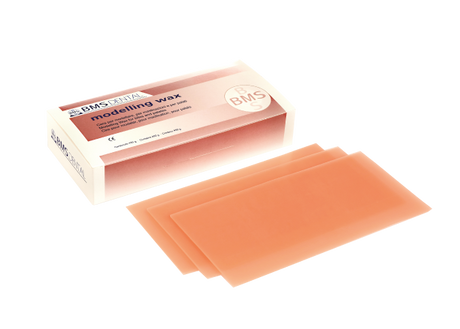
BMS Modelling Wax for bites and palates 450 g
In stock (499 units)Regular price LE 411.00 EGPUnit price /Unavailable
SCHEU
In stock (40 units)Regular price LE 15,000.00 EGPUnit price /Unavailable
Leone
Leone Termoplast 125×125 (1.5 MM)
Low stock (10 units)Regular price LE 1,500.00 EGPUnit price /Unavailable
Lascod
Lascod Kromotypo4 type 4 extra hard stone 6 kg
Very low stock (1 unit)Regular price LE 905.00 EGPUnit price /Unavailable
SCHEU
Low stock (10 units)Regular price LE 37,500.00 EGPUnit price /Unavailable




How to Choose the Right Dental Lab Materials for Your Practice
- Dental Stone Type and Compressive Strength — Type III dental stone (die stone) has a compressive strength of 20-35 MPa and setting expansion of 0.1-0.2%, suitable for general model work and opposing arch models. Type IV (high-strength die stone) has 35-45 MPa compressive strength with 0.05-0.10% expansion, required for die fabrication in crown and bridge work. Type V (high-expansion) is used with refractory investment for casting with matched thermal expansion. Select stone grade based on downstream prosthetic use to avoid die fracture or crown margin distortion.
- Dental Wax Selection for Lab Applications — Pink modelling wax (EL-KODS DENTAX type, 500g blocks) is standard for wax-up occlusal rims and full denture wax patterns. Inlay wax Type II has controlled flow suitable for indirect lab wax-ups at room temperature. In Egyptian labs during summer months where ambient temperatures exceed 35 degrees C, dental waxes must be stored below 25 degrees C to prevent softening and dimensional changes in completed wax patterns before investing.
- Investment Material Type and Casting Expansion — Gypsum-bonded investments (for base metal casting at 700-900 degrees C) have total expansion of 1.0-1.5% to compensate for metal solidification shrinkage. Phosphate-bonded investments tolerate higher temperatures (900-1,100 degrees C) required for cobalt-chromium RPD frameworks. Investment expansion must match the alloy's casting shrinkage value for passive-fit restorations. Use distilled water for mixing to achieve consistent expansion values across Egyptian governorates where tap water mineral content varies.
- Separating Medium Application — Sodium alginate separating medium prevents stone-to-stone adhesion when pouring duplicate models and prevents wax from adhering to stone dies. Apply a uniform thin coat with a soft brush and allow to dry before investing. In Egyptian laboratories where water evaporation is faster in dry summer conditions, apply a second coat after the first dries to ensure complete surface coverage at die margins.
- Acrylic Resin Powder-to-Liquid Ratio — Heat-cure PMMA acrylic for complete denture fabrication requires a powder-to-liquid ratio of 3:1 by volume per ISO 1567 Type 1. Self-cure (cold cure) repair acrylic uses 2.5:1 P:L. Egyptian summer temperatures accelerate cold-cure polymerisation, reducing dough stage working time; cooling the monomer liquid below room temperature extends manipulation time by 2-3 minutes for prosthetic repair procedures.
Dental Lab Materials at a Glance
| Material | Key Specification | Lab Application | Egyptian Climate Note |
|---|---|---|---|
| EL-KODS DENTAX Modelling Wax (500g) | ISO 7492, controlled flow | Occlusal rims, denture wax patterns | Store below 25 degrees C; softens above 30 degrees C |
| Type III Dental Stone | 20-35 MPa, 0.1-0.2% expansion | Study models, opposing arch casts | Mix with distilled water for consistent setting |
| Separating Medium | Sodium alginate solution | Prevents stone-to-stone bonding | Apply two coats in dry summer conditions |
| Gypsum-bonded investment | 1.0-1.5% total expansion | Base metal casting at 700-900 degrees C | Weigh water precisely; humidity affects setting |
| Heat-cure PMMA acrylic | 3:1 P:L ratio, ISO 1567 Type 1 | Complete denture fabrication | Cool monomer to extend summer working time |
Availability and Delivery in Egypt
MedSTA stocks dental lab materials including EL-KODS DENTAX modelling wax, dental stones, investment materials, sodium alginate separating mediums, and acrylic resins in EGP for Egyptian dental technicians and prosthodontic practices. Both small-quantity individual orders and bulk procurement for high-volume labs are available with nationwide delivery to all Egyptian governorates.
Frequently Asked Questions
What is the difference between Type III and Type IV dental stone for crown and bridge work in Egypt?
What is the difference between Type III and Type IV dental stone for crown and bridge work in Egypt?
Type III dental stone (die stone) has a compressive strength of 20-35 MPa and linear setting expansion of 0.1-0.2%, appropriate for general model work and opposing arch models for crown and bridge cases. Type IV (high-strength die stone) has 35-45 MPa compressive strength and 0.05-0.10% linear expansion, required for die fabrication where dimensional precision at margin areas is critical. Egyptian dental laboratories producing metal-ceramic and zirconia restorations should use Type IV stone for working dies to prevent die fracture during repeated crown seating and removal procedures.
How does Egyptian summer heat affect dental wax storage and handling in the lab?
How does Egyptian summer heat affect dental wax storage and handling in the lab?
In Egyptian dental laboratories during summer months, ambient temperatures commonly reach 35-42 degrees C in uncontrolled lab environments. Pink modelling wax (EL-KODS DENTAX type) softens above 30 degrees C, causing completed wax patterns to distort under their own weight before investing. Inlay wax Type II has a narrow acceptable working temperature range and becomes too soft for precise manipulation above 28 degrees C. Store all dental waxes below 25 degrees C in air-conditioned lab drawers or dedicated wax storage cabinets, and cool completed wax patterns on a cold glass slab before transferring them to the investment flask.
What powder-to-liquid ratio should be used for heat-cure acrylic resin in Egyptian dental labs?
What powder-to-liquid ratio should be used for heat-cure acrylic resin in Egyptian dental labs?
Heat-cure PMMA acrylic resin for complete denture fabrication requires a powder-to-liquid ratio of 3:1 by volume, as specified in ISO 1567 Type 1. Using excess monomer (lower ratio) increases volumetric shrinkage and residual monomer; insufficient monomer causes porosity and surface roughness. Egyptian dental technicians should use calibrated measuring cups rather than visual estimation. In Egyptian summer conditions where cold-cure acrylic polymerises faster than expected, cooling the monomer liquid below room temperature extends the dough stage working time by 2-3 minutes for repair procedures.
How should investment materials be mixed for consistent results in Egyptian dental laboratories?
How should investment materials be mixed for consistent results in Egyptian dental laboratories?
Gypsum-bonded investment materials should be mixed with distilled water (not tap water) at the manufacturer's water-to-powder ratio, weighed precisely by balance scale. Egyptian tap water mineral content varies significantly between governorates, and elevated calcium or chloride levels alter investment setting time and thermal expansion values, affecting restoration fit. Investment materials should be stored in airtight containers below 25 degrees C as moisture absorption in humid coastal Egyptian environments (Alexandria, Suez, Port Said) causes premature setting and unpredictable expansion. Use a dental vibrator when filling the casting flask to eliminate air bubbles.
Does MedSTA supply dental lab materials in bulk for Egyptian dental laboratories?
Does MedSTA supply dental lab materials in bulk for Egyptian dental laboratories?
MedSTA supplies dental laboratory consumables including EL-KODS DENTAX modelling wax (500g blocks), dental stones in Type III and IV grades, gypsum-bonded investment materials, sodium alginate separating mediums, and heat-cure acrylic resins priced in EGP for Egyptian dental laboratories. Both individual item quantities for small-volume labs and bulk procurement packages for high-output prosthetic centres are available. Orders dispatch from Cairo with nationwide delivery to all Egyptian governorates, covering dental laboratory supply needs in both the Cairo-Giza metropolitan area and Egypt's peripheral governorates.