

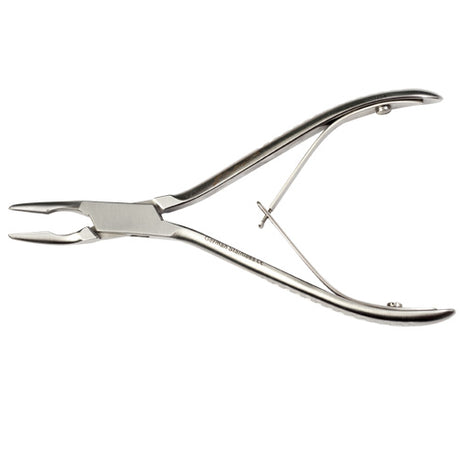
Essential Guide to Selecting Bone Rongeur Instruments
- Jaw Design and Cutting Action — Rongeur jaws determine the type of bone removal achievable. Side-cutting designs provide lateral access while end-cutting styles suit direct bone removal from ridge crests.
- Single vs Double-Action Mechanisms — Double-action rongeurs require less hand force to operate. This mechanism multiplies cutting power, reducing operator fatigue during prolonged surgical procedures.
- Jaw Width Considerations — Narrow jaws access tight interproximal spaces effectively. Wider jaw options remove larger bone segments more efficiently during ridge reductions.
- Handle Length and Ergonomics — Longer handles improve leverage for dense cortical bone. Ergonomic handle designs with spring mechanisms reduce hand strain during multiple uses.
- Material and Durability — Stainless steel construction ensures corrosion resistance. High-grade surgical steel maintains sharp cutting edges through repeated sterilisation cycles.
- Maintenance Requirements — Regular lubrication keeps hinge mechanisms functioning smoothly. Inspect cutting edges for damage and ensure complete debris removal before autoclaving.
Bone Rongeur Types at a Glance
| Type | Jaw Design | Best Use | Key Feature |
|---|---|---|---|
| Side-Cutting Rongeur | Angled lateral jaws | Interproximal bone removal | Access to confined areas |
| End-Cutting Rongeur | Straight forward jaws | Ridge crest contouring | Direct bone trimming |
| Narrow Jaw Rongeur | Slim profile | Tight surgical sites | Precision bone removal |
| Double-Action Rongeur | Compound mechanism | Dense bone procedures | Reduced hand fatigue |
| Standard Rongeur | Classic design | General bone removal | Versatile application |
How to Select the Right Bone Rongeur
- Identify the primary surgical procedures requiring bone removal in your practice.
- Consider jaw width based on typical surgical access requirements.
- Evaluate single or double-action mechanisms for your comfort and procedure types.
- Check handle length suits your preferred grip and leverage needs.
- Confirm autoclave compatibility with your sterilisation equipment.
Availability & Delivery in Egypt
All bone rongeur instruments at MedSTA are priced in EGP with nationwide delivery across Egypt. Store instruments in dry conditions and follow manufacturer sterilisation guidelines.
Frequently Asked Questions
What is a bone rongeur used for in dentistry?
What is a bone rongeur used for in dentistry?
Bone rongeurs remove and contour alveolar bone during extractions, implant preparation, and ridge reductions.
What is the difference between side-cutting and end-cutting rongeurs?
What is the difference between side-cutting and end-cutting rongeurs?
Side-cutting provides lateral access while end-cutting suits direct removal from bone crests.
How do I sterilise bone rongeur instruments?
How do I sterilise bone rongeur instruments?
Clean thoroughly, lubricate hinges, and autoclave according to standard surgical protocols.
What jaw width should I choose for bone rongeurs?
What jaw width should I choose for bone rongeurs?
Narrow jaws for tight spaces, wider jaws for efficient removal of larger bone sections.
How often should bone rongeurs be replaced?
How often should bone rongeurs be replaced?
Replace when cutting edges become dull or when hinge mechanisms show excessive wear.
Can bone rongeurs be sharpened?
Can bone rongeurs be sharpened?
Professional sharpening services can restore cutting edges on quality stainless steel instruments.
What is a double-action bone rongeur?
What is a double-action bone rongeur?
A compound mechanism that multiplies cutting force, requiring less hand pressure to operate.