

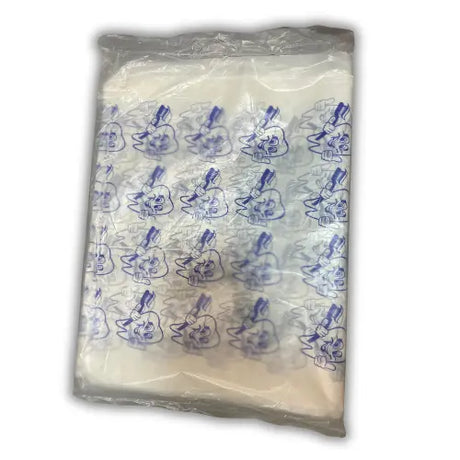

How to Choose the Right Dental Napkin for Your Practice
- Paper vs. Nonwoven vs. Plastic-Backed Construction — Standard dental napkins use two-ply tissue paper construction offering basic absorbency for water and light saliva splatter. Nonwoven napkins (spunbond polypropylene) are stronger, softer, and more resistant to tearing when wet — important when patients pull against the bib chain. Plastic-backed napkins (PE film laminated to the patient-facing side) prevent fluid strikethrough to the patient’s clothing, essential during irrigation-heavy procedures, phlebotomy adjacent to the dental chair, or oral surgery. For standard restorative appointments, standard two-ply is adequate; for surgical or high-moisture procedures, choose plastic-backed.
- Absorbency Rating — Higher-quality dental napkins use a middle cellulose layer bonded between two tissue sheets, increasing absorbency. For routine restorative and examination appointments, standard two-ply (total weight ~40–50 g/m²) is sufficient. For orthodontic bonding (etching and rinsing), extractions, or implant procedures, a higher-weight nonwoven bib (60–80 g/m²) reduces strikethrough and maintains patient comfort.
- Size and Chain Attachment — Standard dental patient bibs measure 33×45 cm or 40×45 cm. They incorporate two metal chain loops at the upper corners for attachment to a napkin holder clip. Verify that the chain loop size and spacing is compatible with your napkin holder clip design before bulk purchasing.
- Box Count and Cost Per Unit — Standard boxes contain 200–400 napkins. A clinic using 2 napkins per patient (one at tray preparation, one during treatment) and treating 15 patients daily consumes 300 napkins per week — one 400-piece box per week at typical volume. Brands like Mega (400 pcs) and Al-Abd Group (400 pcs) offer good per-unit economics for Egyptian dental practices.
- Colour and Aesthetics — White napkins are standard and maintain a clinical appearance. Some brands offer green or blue tinted bibs for visual contrast, useful in orthodontic bonding where bracket adhesive discolouration on the bib indicates product wastage. Colour has no clinical significance but may factor into clinic presentation preferences.
- Single-Use Protocol — Dental napkins are classified as single-use patient contact items and must be discarded after each patient appointment. Reuse constitutes a cross-contamination risk and a clinical hygiene standard violation.
Dental Napkin Types at a Glance
| Type | Construction | Strikethrough Protection | Best For |
|---|---|---|---|
| Standard paper bib | 2-ply tissue | Low | Routine exams, restorative |
| Nonwoven bib | Spunbond PP | Medium | High-moisture procedures |
| Plastic-backed bib | Paper + PE film | High | Surgery, irrigation, ortho bonding |
Availability & Delivery in Egypt
MedSTA stocks dental napkins from Mega, JM Care, Al-Abd Group, and generic brands in box quantities of 200–400 pieces, all priced in EGP with nationwide delivery across Egypt. Bulk orders for dental hospitals, university dental clinics, and multi-chair practices in Egypt are available with volume pricing.
Frequently Asked Questions
What is the difference between paper, nonwoven, and plastic-backed dental napkins?
What is the difference between paper, nonwoven, and plastic-backed dental napkins?
Paper dental napkins are standard two-ply tissue bibs offering basic absorbency for water splash and saliva. Nonwoven napkins use spunbond polypropylene fibres that are stronger and softer when wet, reducing tearing when the patient moves against the chain. Plastic-backed napkins incorporate a polyethylene film layer on the patient-facing side, preventing fluid strikethrough to clothing during high-moisture procedures such as irrigation, implant surgery, or orthodontic etching and bonding. Choose the construction based on the procedure’s expected fluid volume.
Why do some Egyptian dental clinics prefer plastic-backed napkins over standard paper bibs?
Why do some Egyptian dental clinics prefer plastic-backed napkins over standard paper bibs?
Plastic-backed napkins eliminate fluid strikethrough to the patient’s clothing, which is a common patient complaint during irrigation-heavy procedures (root canal, implant surgery, orthodontic bonding). In Egyptian dental clinics where patients typically arrive in formal or professional clothing, avoiding moisture strikethrough onto clothing significantly improves patient experience and reduces post-appointment complaints. The higher cost per unit of plastic-backed napkins (approximately 20–30% more than standard two-ply) is offset by improved patient satisfaction in procedures lasting more than 30 minutes.
How many dental napkins does a typical Egyptian dental clinic need per week?
How many dental napkins does a typical Egyptian dental clinic need per week?
A single-operator clinic treating 15 patients per day typically uses 1–2 napkins per patient across examination, treatment preparation, and post-procedure cleanup, consuming 15–30 napkins per day or 75–150 per five-day week. A 400-piece box lasts approximately 3–5 weeks for a single-operator practice. Multi-chair dental centres or university clinics with 50+ patients per day should calculate per-operator usage and order in multi-box quantities to avoid stockouts during high-volume periods.
What absorbency should I look for in a dental patient napkin for oral surgery procedures?
What absorbency should I look for in a dental patient napkin for oral surgery procedures?
For oral surgical procedures (extractions, implant placement, periodontal surgery), choose a higher-weight dental napkin with a minimum of three layers: two tissue layers bonded around a central cellulose absorbency layer, producing a total weight of 60–80 g/m² and high fluid uptake capacity. A plastic-backed PE film layer further ensures that irrigation saline, blood, and rinse water do not penetrate to patient clothing. Standard two-ply bibs are inadequate for procedures generating significant fluid volume and should be reserved for routine restorative and examination appointments.
How should dental napkins be stored in an Egyptian clinical environment?
How should dental napkins be stored in an Egyptian clinical environment?
Dental napkins should be stored in sealed boxes away from moisture, direct sunlight, and heat sources. In Egyptian summer conditions, high ambient humidity (60–80% in coastal cities such as Alexandria) can cause tissue-layer napkins to absorb atmospheric moisture, becoming damp and degraded before use. Store boxes in an air-conditioned storage area or a dry cabinet. Nonwoven and plastic-backed napkins are less sensitive to humidity than pure paper bibs and remain stable in standard Egyptian climate conditions when stored in their original sealed box.