

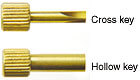
How to Choose the Right Dental Post Key for Your Post System
- System Compatibility — Post keys are not universal: each is manufactured to the hex socket dimension of a specific active threaded post system (Unimetric, Nordin, Radix-Anker). Using a mismatched key strips the post drive socket, making post removal impossible and potentially fracturing the post in the canal. Confirm system compatibility before purchase.
- Handle Torque Control — Quality post keys incorporate a T-bar or ring handle designed for controlled rotational torque. Maximum recommended seating torque for active dental screw posts is 10–15 Ncm; exceeding this causes dentinal cracking along the threaded portion. Avoid using pliers as a substitute — uncontrolled torque substantially increases root stress risk.
- Single-Ended vs Double-Ended — Single-ended keys have one socket size matched to one post system diameter; double-ended keys carry two socket sizes for systems spanning two post diameters, reducing the total instrument count in the operatory tray.
- Material and Sterilisation — Stainless steel post keys can be autoclaved (134°C, 3 bar, 18-minute cycle) without dimensional change. Confirm handle material (stainless steel vs chrome-plated carbon steel) before autoclaving to avoid corrosion in Egyptian humid storage conditions.
- Post Removal Capability — Some post key designs include a reversal function allowing the same instrument to unscrew and retrieve a previously placed active post during retreatment, eliminating the need for a separate post-removal ultrasonic tip in straightforward cases.
Dental Post Key Types at a Glance
| Type | Compatible Systems | Handle Style | Use |
|---|---|---|---|
| Unimetric Post Key | Unimetric passive posts | T-bar | Seating/removal of Unimetric posts |
| Nordin Post Key | Nordin threaded screw posts | Ring handle | Seating/removal of Nordin posts |
| Generic Screw Post Key | Generic threaded posts | T-bar | Economy option for non-branded systems |
Availability & Delivery in Egypt
MedSTA supplies dental post keys for Unimetric and Nordin systems, priced in EGP from 125 EGP per instrument. Both are autoclavable stainless steel designs suitable for routine clinical use. Cairo delivery within 1–3 business days; nationwide Egypt within 3–5 business days.
Frequently Asked Questions
What is a dental post key and how does it differ from standard hand instruments?
What is a dental post key and how does it differ from standard hand instruments?
A dental post key is a purpose-made insertion wrench with a hex socket head precisely matched to the drive geometry of a specific active threaded post system. Unlike pliers or haemostats, a post key applies controlled rotational torque along the post’s long axis without lateral force, preventing the post from rotating against the canal wall and generating crack-initiating stress. Using improvised instruments instead of the correct post key is a documented cause of post drive stripping and subsequent post fracture intra-canal.
How do I correctly seat a threaded screw post using a post key?
How do I correctly seat a threaded screw post using a post key?
After preparing the post space with the matched drill, irrigate and dry the canal. Apply dual-cure resin cement to canal walls and post surface using a lentulo or paste filler. Insert the post by hand initially to confirm passive engagement, then use the post key to rotate clockwise until resistance increases. Stop at 10–15 Ncm — this is the recommended seating torque for most screw post systems. Do not force further; audible resistance signals adequate engagement. Allow dual-cure polymerisation before further instrumentation.
Can the same post key be used for both Unimetric and Nordin screw post systems?
Can the same post key be used for both Unimetric and Nordin screw post systems?
No — Unimetric and Nordin systems use different post drive head geometries and require dedicated keys. The Unimetric system uses a specific hex socket size that does not match the Nordin post drive profile. Using the wrong key risks stripping the post head, making controlled seating impossible and subsequent retrieval extremely difficult. MedSTA supplies both Nordin-specific and Unimetric-specific post keys separately.
How do I prevent root fracture when using an active screw post?
How do I prevent root fracture when using an active screw post?
Root fracture during screw post placement occurs almost exclusively from over-torquing. Preventive measures include: using the correct matched post key rather than pliers; limiting rotation to 10–15 Ncm; never forcing the post if resistance is felt before full seating (indicates a post space diameter mismatch — re-drill before reinserting); selecting post diameter no greater than one-third the root diameter at the narrowest level; and avoiding active screw posts in roots with thin dentinal walls, curved anatomy, or signs of root resorption.
Does MedSTA supply dental post keys for Unimetric and Nordin systems in Egypt?
Does MedSTA supply dental post keys for Unimetric and Nordin systems in Egypt?
Yes — MedSTA supplies both Unimetric-compatible and Nordin-compatible post keys in autoclavable stainless steel, priced in EGP from 125 EGP per key. Cairo and Giza delivery within 1–3 business days; nationwide Egypt within 3–5 business days.