

GENERIC
Low stock (10 units)Regular price LE 39.00 EGPUnit price /Unavailable
- Up to 33% off
GENERIC
In stock (90 units)Regular price From LE 30.00 EGPUnit price /Unavailable -
-
GENERIC
Low stock (12 units)Regular price LE 85.00 EGPUnit price /Unavailable
GENERIC
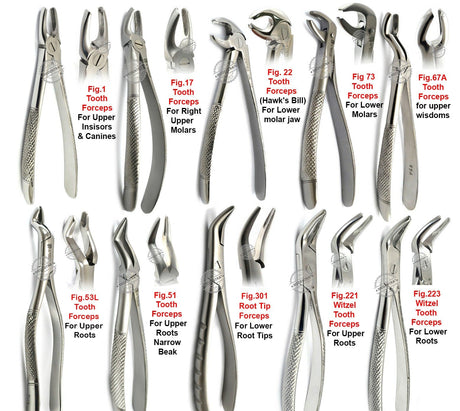
Dental Surgical Extraction Forceps
In stock (47 units)Regular price LE 250.00 EGPUnit price /Unavailable
GENERIC
Pakistan Mucoperiosteal Elevator
Very low stock (4 units)Regular price LE 95.00 EGPUnit price /Unavailable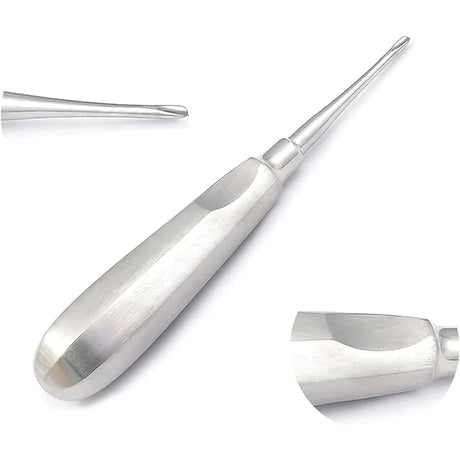
GENERIC
Very low stock (7 units)Regular price LE 115.00 EGPUnit price /Unavailable-
GENERIC
Low stock (14 units)Regular price LE 55.00 EGPUnit price /Unavailable
Komet
Komet Low Speed Carbide Round Bur – Long Shank 1 pc
Very low stock (7 units)Regular price LE 100.00 EGPUnit price /Unavailable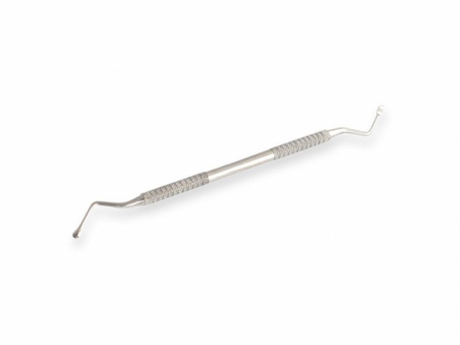
GENERIC
In stock (28 units)Regular price LE 70.00 EGPUnit price /Unavailable





How to Choose the Right Surgical Instruments for Your Practice
- Steel Grade and ISO Compliance — Surgical instruments conforming to AISI 316L (18/10 stainless steel with molybdenum) or ISO 7153-1 maintain corrosion resistance across repeated Class B autoclave cycles at 134 degrees C. For Egyptian oral surgery practices where instruments are exposed to blood, bone chips, and saline irrigation, AISI 316L resists pitting corrosion far better than AISI 420 or generic stainless grades.
- Forceps Jaw Design and Angulation — Upper forceps have straight or slightly curved beaks; lower forceps are angled approximately 90 degrees. Root tip forceps (Stieglitz) have narrow, cross-serrated beaks for retrieving fractured apices. Cowhorn forceps for lower molars have pointed beaks that engage the furcation for controlled luxation without excessive crestal bone loss.
- Elevator Tip Design and Shank Angle — Straight elevators (No. 1, No. 2) apply mesial purchase-point leverage for single-rooted teeth. Cryer elevators use a triangular tip for post-extraction root socket entry. Warwick-James elevators are curved in three planes for posterior root tip retrieval from curved sockets in Egyptian patients with hypercementosed roots.
- Surgical Bur Geometry and Shank Type — Surgical round burs (ISO 023, 027) remove bone in extraction sockets; fissure burs section multi-rooted teeth before elevation. All surgical burs require latch-type (RA) handpieces rated for irrigation. HP-shank burs fit straight surgical handpieces for bone management in implant site preparation.
- Retractor Design — Minnesota retractors provide broad tissue retraction for third molar and implant flap procedures. Cheek retractors improve access in deep posterior surgical sites. All retractors must be AISI 316L autoclavable and free of surface micro-cracks that harbour surgical debris after decontamination.
- Mouth Gag Design and Patient Safety — Ratchet-type mouth gags (Heister, Jennings) maintain controlled mouth opening during procedures under local anaesthesia or sedation. Maximum opening should not exceed patient's natural lateral pterygoid range to prevent TMJ strain. Rubber-tipped variants reduce enamel damage in Egyptian patients with heavily restored dentitions.
Surgical Instruments at a Glance
| Instrument Type | Material | Key Specification | Surgical Application |
|---|---|---|---|
| Extraction forceps (upper) | AISI 316L stainless steel | Straight beaks, serrated grips | Coronal luxation during dental extraction |
| Straight elevator No. 1 | AISI 316L stainless steel | 6 mm tip width, angled shank | Purchase-point root luxation |
| Round surgical bur ISO 023 | Tungsten carbide / AISI 304 shank | RA shank, 2.3 mm head, cross-cut | Bone removal in surgical extraction socket |
| Ratchet mouth gag (Heister) | AISI 316L stainless steel | Adjustable ratchet, 10 positions | Mouth opening maintenance during oral surgery |
| Minnesota retractor | AISI 316L stainless steel | Broad paddle tip, 24 mm width | Mucoperiosteal flap retraction |
Availability and Delivery in Egypt
MedSTA stocks surgical instruments from established manufacturers including Sedra dent, Bibodent, Hu-Friedy, and Miltex across EGP price points for both high-volume clinic procurement and individual instrument replacement. Complete extraction kit sets are available for Egyptian general practitioners setting up new oral surgery capabilities. Orders dispatch from Cairo with nationwide delivery to all Egyptian governorates.
Frequently Asked Questions
What steel grade should dental surgical instruments be made from for Egyptian oral surgery?
What steel grade should dental surgical instruments be made from for Egyptian oral surgery?
Surgical instruments used in oral surgery in Egypt should conform to AISI 316L (18/10 stainless steel containing 2-3% molybdenum) or ISO 7153-1 standards. The molybdenum content prevents chloride-induced pitting corrosion from blood, bone chips, and saline irrigation solutions. Instruments undergoing daily Class B autoclave cycles at 134 degrees C retain their edge geometry and surface finish over years of clinical use, unlike lower-cost AISI 420 grade instruments that corrode rapidly in Egypt's hot, humid clinical environments.
What is the difference between a straight dental elevator and a Cryer elevator for oral surgery?
What is the difference between a straight dental elevator and a Cryer elevator for oral surgery?
Straight elevators (No. 1, No. 2) are used for purchase-point luxation, inserting the tip mesial or distal to the root and applying controlled rotational force to expand the periodontal space. Cryer elevators have a triangular, pointed tip designed to enter an empty adjacent socket after multi-rooted tooth extraction, using a wheel-and-axle motion to elevate the remaining root. The Cryer is particularly useful in Egyptian patients with hypercementosed or curved roots where straight elevator access is limited.
How should dental surgical instruments be sterilised between oral surgery procedures?
How should dental surgical instruments be sterilised between oral surgery procedures?
Dental surgical instruments must be sterilised by Class B (pre-vacuum) autoclave at 134 degrees C for 3-4 minutes after thorough manual or ultrasonic instrument cleaning to remove blood, bone, and debris. Instruments in cassettes or perforated trays achieve better steam penetration than wrapped bundles. In Egyptian oral surgery clinics performing multiple surgical cases per session, sufficient instrument sets (minimum 4-6 per operatory) are required to maintain sterile supply through sequential autoclave cycles without delaying patient treatment.
When should a mouth gag be used during oral surgery in Egyptian patients?
When should a mouth gag be used during oral surgery in Egyptian patients?
A dental mouth gag (Heister or Jennings type) is indicated when sustained mouth opening is needed during oral surgery under local anaesthesia, intravenous sedation, or general anaesthesia. It prevents patient voluntary mouth closure during extractions, flap procedures, and implant surgery. In Egyptian patients with temporomandibular dysfunction, the gag opening should be set below maximum intercissal distance to prevent TMJ strain. Ratchet gags allow incremental adjustment; rubber-tipped variants reduce enamel damage in heavily restored dentitions.
Does MedSTA supply surgical instrument kits for Egyptian dentists setting up an oral surgery practice?
Does MedSTA supply surgical instrument kits for Egyptian dentists setting up an oral surgery practice?
MedSTA supplies individual surgical instruments and complete extraction kit sets in EGP for Egyptian dentists establishing or expanding their oral surgery capabilities. Instrument kits typically include upper and lower extraction forceps for anterior and posterior teeth, straight and curved elevators, periosteal retractors, tissue scissors, needle holders, and surgical curettes. Complete sets from Sedra dent, Bibodent, and Miltex are available with nationwide delivery to all Egyptian governorates, including same-day dispatch for in-stock instruments from Cairo.