
Tetenal
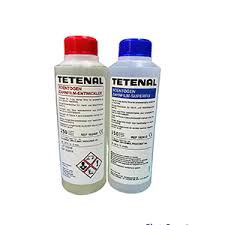
Tetenal X-Ray developer and fixer 250ml&250ml
Very low stock (5 units)Regular price LE 285.00 EGPUnit price /Unavailable New arrival
MAC
Low stock (10 units)Regular price LE 2,010.00 EGPUnit price /Unavailable

How to Select and Use X-ray Developer and Fixer for Dental Radiography
- Correct Dilution Ratio — Most dental X-ray developers and fixers (including Tetenal) are supplied as concentrates requiring dilution with water before use. Typical working dilution for developer is 1:4 (1 part concentrate to 4 parts water); fixer is often 1:4 to 1:3 depending on brand formulation. Always use distilled or deionized water for dilution — tap water in Egyptian cities contains mineral ions that can cause uneven development or precipitation in the fixer tank, accelerating solution exhaustion.
- Processing Temperature and Time — Manual processing at a developer temperature of 20°C requires approximately 4.5 to 5 minutes of development time for D-speed dental film; at higher ambient temperatures — common in Egyptian summer clinics (25–30°C) — reduce development time by 30–45 seconds to avoid film fogging. Maintain fixer at 18–22°C; fixer working time is typically 8–10 minutes at 20°C. Temperature-compensated manual processing charts are available from film manufacturers.
- Solution Capacity and Exhaustion Signs — Developer becomes exhausted when it can no longer reduce silver-halide crystals adequately: developed films show reduced image density (underdevelopment), increased fog density, or brownish discolouration. Fixer is exhausted when it fails to clear unexposed film within twice the clearing time (typically when clearing time exceeds 4 minutes at 20°C). Replenish rather than replace to reduce chemistry consumption; most manufacturers provide replenishment ratios per film processed.
- Ventilation Requirements in Egyptian Clinics — Both developer (alkaline, contains hydroquinone and metol) and fixer (acidic, contains ammonium thiosulfate) release vapours that are irritant to mucous membranes and harmful in enclosed spaces. Egyptian clinics operating a darkroom must ensure mechanical ventilation of at least 10 air changes per hour in the processing room. Darkrooms without forced ventilation in warm Egyptian conditions can reach solution fume concentrations above safe occupational exposure limits.
- Silver Recovery and Environmental Disposal — Spent fixer contains dissolved silver from the X-ray film emulsion (typically 1–6 g of silver per litre of exhausted fixer). Egyptian environmental regulations (Law No. 4 of 1994) prohibit direct discharge of silver-containing effluents. Silver can be recovered using electrolytic units or metallic replacement cartridges, producing precipitated silver for sale or recycling. Do not dispose of spent fixer in clinic drains without treatment.
Darkroom Chemistry at a Glance
| Solution | Function | pH | Typical Working Temp | Development/Clearing Time |
|---|---|---|---|---|
| Developer (working) | Reduces exposed Ag-halide to metallic Ag | 9.5–11 | 20°C | 4.5–5 min (D-speed film) |
| Stop bath (water rinse) | Arrests development | Neutral | Ambient | 30 seconds minimum |
| Fixer (working) | Removes unexposed Ag-halide, hardens emulsion | 4–5 | 18–22°C | 8–10 min at 20°C |
Availability & Delivery in Egypt
Tetenal X-ray developer and fixer are sold as a matched pair (250 ml developer + 250 ml fixer) on MedSTA, priced in EGP with nationwide delivery across Egypt. Store solutions in sealed, dark containers at temperatures between 10–25°C; avoid freezing the concentrates. Orders within Cairo and Giza are typically fulfilled within 1–2 business days; delivery to other governorates takes 2–4 business days.
Frequently Asked Questions — X-ray Developers and Fixers
What is the correct dilution ratio for Tetenal X-ray developer and fixer for dental film?
What is the correct dilution ratio for Tetenal X-ray developer and fixer for dental film?
Tetenal concentrates are typically diluted 1 part concentrate to 4 parts water for working solutions. Always use distilled or deionized water — tap water in Egyptian cities contains mineral ions that can cause uneven development or precipitation in the fixer tank. Prepare fresh working solutions at the start of each processing session and discard according to manufacturer guidelines.
How does ambient temperature in Egypt affect X-ray film development time?
How does ambient temperature in Egypt affect X-ray film development time?
Manual processing at 20°C requires approximately 4.5 to 5 minutes of development for D-speed dental film. At Egyptian summer clinic temperatures of 25 to 30°C, reduce development time by 30 to 45 seconds to avoid over-development and film fog. Use a thermometer to monitor developer temperature and refer to the film manufacturer temperature-time chart for your specific film speed.
How do I know when X-ray developer or fixer solution is exhausted?
How do I know when X-ray developer or fixer solution is exhausted?
Exhausted developer produces underdeveloped films with reduced image density and brown solution discolouration. Exhausted fixer fails to clear unexposed film areas within twice the normal clearing time (typically when clearing exceeds 4 minutes at 20°C). Monitor exhaustion by tracking films processed per litre and following the manufacturer replenishment schedule rather than waiting for visible failure.
What ventilation is required for a dental darkroom using chemical developers and fixers in Egypt?
What ventilation is required for a dental darkroom using chemical developers and fixers in Egypt?
Both developer (containing hydroquinone) and fixer (containing ammonium thiosulfate) release irritant vapours. Egyptian dental clinic darkrooms require mechanical ventilation of at least 10 air changes per hour. Unventilated darkrooms in warm Egyptian summer conditions can accumulate chemical fumes above safe occupational exposure limits. Install a safelight-compatible extract fan ducted to the exterior as a minimum.
How must spent X-ray fixer be disposed of in compliance with Egyptian environmental regulations?
How must spent X-ray fixer be disposed of in compliance with Egyptian environmental regulations?
Spent fixer contains dissolved silver (1 to 6 grams per litre), and Egyptian environmental Law No. 4 of 1994 prohibits direct discharge of heavy-metal effluents to sewers. Recover silver using an electrolytic recovery unit or metallic replacement cartridge before disposal. Recovered silver has commercial value. Contact the Egyptian Ministry of Environment for current disposal guidelines specific to dental clinics.