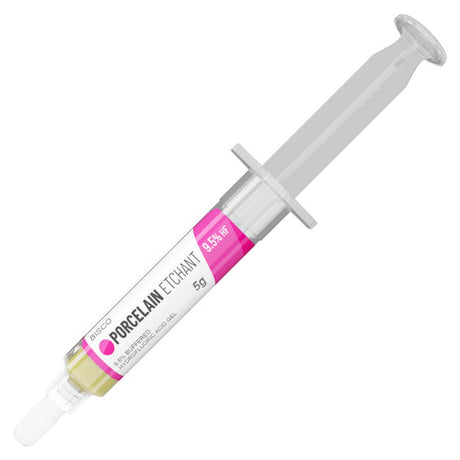
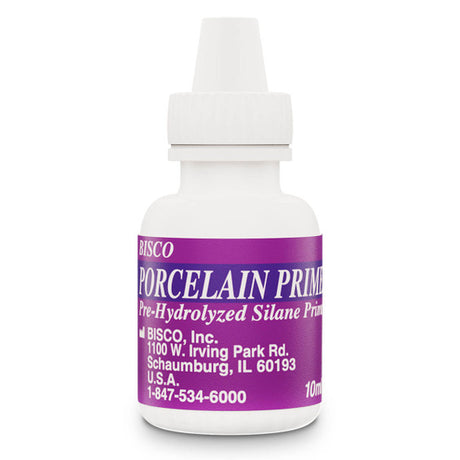
In the advanced field of Prosthodontics, the long-term success of a ceramic or metallic restoration is defined by the quality of its bond to the tooth structure. Prosthetic etch and prime materials are the essential chemical agents used to condition the internal surfaces of crowns, veneers, and inlays, transforming a passive surface into a highly reactive one. In the local dental market, where the use of Zirconia and Lithium Disilicate (E-max) is now the clinical standard, choosing the correct Prosthetic etch and prime materials is the only way to prevent debonding and marginal leakage. At MedSTA, we provide a professional range of surface treatment solutions designed to ensure a high-strength, water-resistant chemical bond. By utilizing the correct Prosthetic etch and prime materials, clinicians can move beyond mechanical retention toward predictable, high-adhesion dentistry.
How to Choose the Right Prosthetic etch and prime materials for Your Practice
Substrate-Specific Etchants: For glass-based ceramics (E-max or Porcelain), choose Prosthetic etch and prime materials containing Hydrofluoric Acid (HF). A 5% or 9% HF concentration is technically required to create the micro-porosities needed for mechanical interlocking.
Silane Coupling Agents: For any glass-ceramic restoration, ensure your Prosthetic etch and prime materials include a Silane primer. Silane acts as a molecular bridge, bonding the inorganic ceramic to the organic resin cement, which is critical for long-term stability in the oral environment.
10-MDP Monomer Inclusion: For Zirconia, Alumina, or base-metal restorations, prioritize Prosthetic etch and prime materials containing the 10-MDP monomer. Zirconia cannot be etched with acid; it requires a phosphate-monomer primer to create a durable chemical-oxide bond.
Cleaning Agents for Saliva Contamination: Select "universal" primers or specialized cleaning gels (like Ivoclean) as part of your Prosthetic etch and prime materials kit. Removing salivary phosphates after a trial fit is essential, as these contaminants block the bonding sites on the prosthetic surface.
Solvent Volatility and Stability: Opt for Prosthetic etch and prime materials with stable solvent bases (Ethanol or Acetone). Ensure the delivery system prevents premature evaporation, as the correct ratio of solvent to active monomer is vital for achieving a thin, uniform priming layer.