

- Up to 15% off
Matt
Matt Ortho DiamondLink Ceramic Polycrystalline Bracket Kit
Low stock (18 units)Sale price LE 1,440.00 EGP Regular price LE 1,695.00Unit price /Unavailable -

Aditek
Aditek Biocrystal Aesthetic Biocompatible Polymer Roth 1 case
Low stock (19 units)Regular price LE 2,300.00 EGPUnit price /Unavailable
Dentaurum
Dentaurum Dinamique sl ceramic bracket
Low stock (10 units)Regular price LE 19,999.00 EGPUnit price /Unavailable
Dentaurum
Dentaurum Discovery pearl Roth bracket
Low stock (10 units)Regular price LE 13,895.00 EGPUnit price /Unavailable- Up to 10% off
Matt
Matt Ortho Crystal Ceramic Monocrystalline Bracket Kit
Low stock (20 units)Sale price LE 6,385.00 EGP Regular price LE 7,095.00Unit price /Unavailable -
Aditek
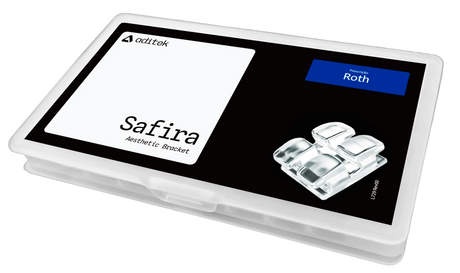
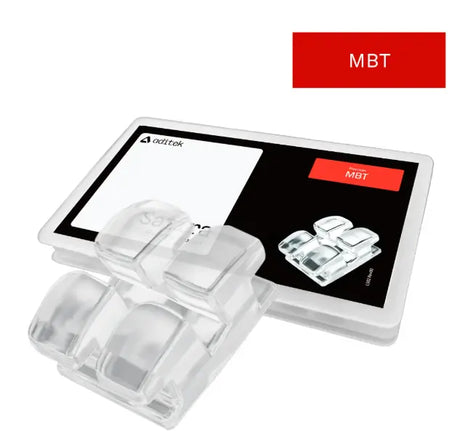
Aditek Safira Monocrystalline Sapphire 1 case
Low stock (15 units)Regular price LE 7,250.00 EGPUnit price /Unavailable-


Essential Guide to Aesthetic Bracket Selection
- Monocrystalline vs Polycrystalline Ceramic — Monocrystalline sapphire brackets offer superior translucency. Polycrystalline ceramic provides excellent strength at a lower price point, though slightly less transparent than sapphire alternatives.
- Biocompatible Polymer Options — Polymer brackets combine aesthetics with metal-free composition. Ideal for patients with metal sensitivities, these brackets offer good stain resistance and comfortable wear throughout treatment.
- Slot Configuration Considerations — Most aesthetic brackets come in standard Roth prescription. Verify your preferred slot size and prescription match your archwire inventory before ordering to ensure seamless case integration.
- Bond Strength and Debonding — Ceramic brackets require careful debonding technique. Use appropriate debonding instruments to prevent enamel damage. Some systems feature mechanical bases designed for controlled removal.
- Stain Resistance Properties — Quality ceramic maintains clarity throughout treatment. Advise patients to minimise consumption of staining foods and beverages, though ligature ties rather than brackets typically discolour.
- Self-Ligating Aesthetic Systems — Self-ligating ceramic brackets eliminate elastic ligature staining. These systems reduce friction and appointment time while maintaining excellent aesthetics for demanding adult patients.
Aesthetic Bracket Types at a Glance
| Bracket Type | Material | Translucency | Best For |
|---|---|---|---|
| Monocrystalline Sapphire | Single crystal alumina | Excellent | Maximum aesthetics |
| Polycrystalline Ceramic | Fused alumina crystals | Very Good | Balance of cost and clarity |
| Biocompatible Polymer | Medical-grade plastic | Good | Metal-free requirements |
| Self-Ligating Ceramic | Ceramic with metal clip | Very Good | Reduced appointments |
| Ceramic with Metal Slot | Ceramic body, steel slot | Good | Enhanced sliding mechanics |
How to Select Aesthetic Brackets for Your Practice
- Assess your patient demographic and demand for discreet orthodontic options.
- Compare monocrystalline sapphire versus polycrystalline based on budget considerations.
- Verify bracket prescription matches your standard archwire and treatment protocols.
- Consider self-ligating systems if reducing chair time is a practice priority.
- Stock appropriate debonding instruments alongside your bracket inventory.
Availability & Delivery in Egypt
MedSTA supplies aesthetic brackets to dental practices throughout Egypt with all prices clearly displayed in EGP. Enjoy reliable nationwide delivery and store brackets in cool, dry conditions to maintain adhesive integrity.
Frequently Asked Questions
Are ceramic brackets as strong as metal brackets?
Are ceramic brackets as strong as metal brackets?
Ceramic brackets have excellent compressive strength but are more brittle, requiring careful debonding technique.
Do sapphire brackets stain during treatment?
Do sapphire brackets stain during treatment?
Quality sapphire brackets resist staining; discolouration typically occurs in elastic ligatures rather than the bracket.
Can I use ceramic brackets on lower teeth?
Can I use ceramic brackets on lower teeth?
Yes, though some clinicians prefer metal on lower teeth due to occlusal considerations and fracture risk.
What prescription do aesthetic brackets come in?
What prescription do aesthetic brackets come in?
Most aesthetic brackets are available in Roth prescription with standard slot sizes.
How do I debond ceramic brackets safely?
How do I debond ceramic brackets safely?
Use ceramic-specific debonding pliers with a squeezing motion to fracture the bracket base cleanly.
Are polymer brackets suitable for all cases?
Are polymer brackets suitable for all cases?
Polymer brackets work well for mild to moderate cases but may have limitations in complex treatments.
Do you deliver aesthetic brackets across Egypt?
Do you deliver aesthetic brackets across Egypt?
Yes, MedSTA delivers to all Egyptian governorates with secure packaging to protect bracket components.