

GENERIC
In stock (239 units)Regular price From LE 20.00 EGPUnit price /Unavailable-
Point
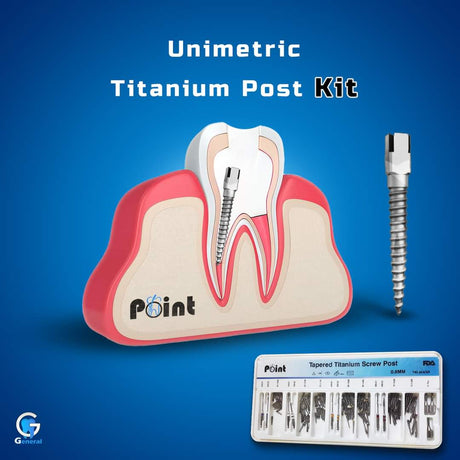
Point UNIMETRIC Titanium POST KIT
Very low stock (2 units)Regular price LE 1,240.00 EGPUnit price /Unavailable
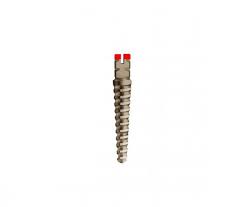
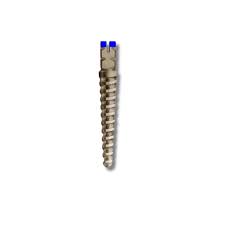
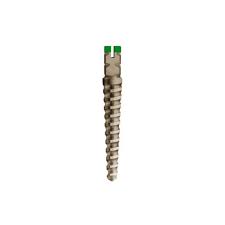
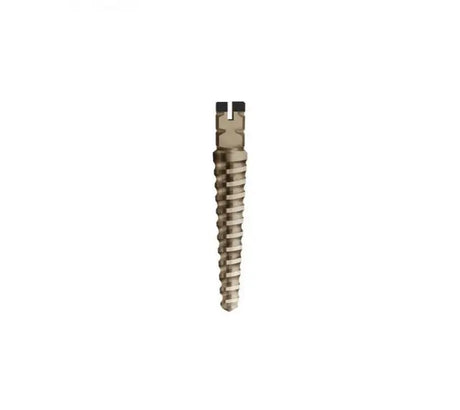
How to Choose the Right Unimetric Post for Root Canal Supported Restorations
- Passive vs Active Post Design — Unimetric posts are passive tapered cylindrical posts that rely entirely on adhesive cement for retention — they do not cut threads into dentine. This eliminates the dentinal cracking risk associated with active screw posts and makes them the safer choice in roots with thin residual walls or curved root anatomy.
- Material Selection — Titanium Grade 5 (Ti-6Al-4V) Unimetric posts offer the best corrosion resistance and biocompatibility; they are radiopaque on standard Egyptian dental X-ray systems and produce no galvanic interference with adjacent restorations. Stainless steel posts are economical but carry a small corrosion risk in moist oral environments over time.
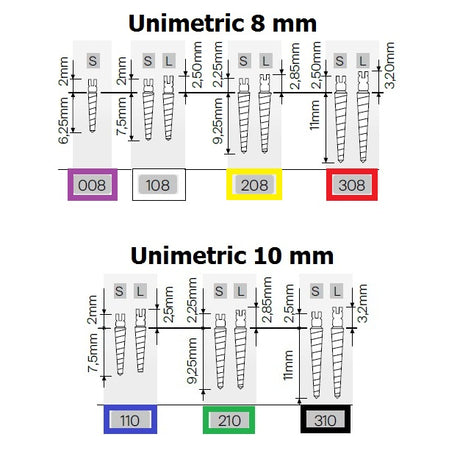
- ISO Size Selection — Available in diameters from 1.0 mm (size 1) to 2.0 mm (size 6); diameter must not exceed one-third of the root width at any level. Use the matched colour-coded drill to prepare the post space to the precise taper and diameter required for passive post seating.
- Cementation Protocol — Dual-cure adhesive resin cement (MDP-containing, e.g. Panavia) provides optimal retention for passive Unimetric posts. The parallel-tapered geometry creates predictable cement film thickness of 25–50 µm along the post length, ensuring consistent bond interface quality.
- Post Length and Apical Seal — Post length should equal the clinical crown height where residual dentine allows; a minimum 4–5 mm apical gutta-percha seal must be maintained. Do not remove all obturation material in pursuit of maximum post length — apical seal integrity is non-negotiable.
- Ferrule Requirement — A minimum 2 mm ferrule of sound coronal dentine encircled by the crown margin is required for long-term success of any post system including Unimetric. Without ferrule, post retention alone cannot prevent crown fracture under function.
Unimetric Post Sizes at a Glance
| ISO Size | Diameter (approx.) | Colour Code | Typical Root Indication |
|---|---|---|---|
| 1 | 1.0 mm | Pink | Mandibular incisors, narrow lower premolars |
| 2 | 1.2 mm | Grey | Upper lateral incisors, lower premolars |
| 3 | 1.4 mm | Purple | Upper central incisors, upper premolars |
| 4 | 1.6 mm | White | Upper canines, molar roots with adequate width |
| 5 | 1.8 mm | Yellow | Wide molar or premolar roots |
Availability & Delivery in Egypt
MedSTA supplies Unimetric posts in titanium and stainless steel versions, from economy generic options (from 20 EGP per post) to branded kits (Point, Rogin Dental) up to 2333 EGP, all priced in EGP. Cairo delivery within 1–3 business days; nationwide Egypt within 3–5 business days.
Frequently Asked Questions
What is a Unimetric post and how does it differ from an active threaded screw post?
What is a Unimetric post and how does it differ from an active threaded screw post?
A Unimetric post is a passive tapered cylindrical post that obtains retention entirely through adhesive cement rather than by cutting threads into root dentine. Active threaded screw posts engage the dentinal walls mechanically during insertion, generating internal wedging stress that can cause dentinal cracking or root fracture — particularly in roots with thin walls. Unimetric posts eliminate this threading-related risk, making them the safer choice in roots with reduced dentinal thickness, curved anatomy, or where retreatability is a consideration.
Which ISO size Unimetric post should I select for different root types?
Which ISO size Unimetric post should I select for different root types?
Post diameter must not exceed one-third of the root width at any level. For narrow roots (mandibular incisors, lower premolars), size 1 (1.0 mm, pink colour code) is indicated. Upper lateral incisors and lower premolars typically accept size 2 (1.2 mm, grey). Upper central incisors and upper premolars accommodate size 3 (1.4 mm, purple). Always prepare the post space with the matched colour-coded Unimetric drill — using a generic drill risks mismatch between post taper and post space, resulting in a passive post that is loose or non-seating.
What cement should be used for passive Unimetric post cementation?
What cement should be used for passive Unimetric post cementation?
Dual-cure adhesive resin cement with MDP monomer (Panavia series, RelyX Ultimate) is the first choice for Unimetric post cementation — MDP provides direct chemical adhesion to titanium oxide, augmenting mechanical retention from the cement-post interface. Self-adhesive resin cements (Unicem) are an acceptable simplification. Glass ionomer cement is not recommended for passive post cementation; its bond strength to metal post surfaces is insufficient under the lateral and compressive forces these restorations must endure.
Are titanium Unimetric posts radiopaque on Egyptian digital X-ray systems?
Are titanium Unimetric posts radiopaque on Egyptian digital X-ray systems?
Yes — titanium Grade 5 (Ti-6Al-4V) Unimetric posts are radiopaque and clearly visible on standard intraoral periapical radiographs and digital sensor systems used in Egyptian dental clinics. The post appears as a distinct radio-opaque object within the root canal space, which is important both for assessing seating depth immediately after placement and for identifying the post during retreatment planning. Generic stainless steel posts are similarly radiopaque.
Does MedSTA supply Unimetric post kits with matching drills in Egypt?
Does MedSTA supply Unimetric post kits with matching drills in Egypt?
Yes — MedSTA supplies Unimetric posts in both individual refills (from 20 EGP per post for generic versions) and complete kits including matched drills and post keys from branded manufacturers (Point, Rogin Dental), all priced in EGP. Cairo and Giza delivery within 1–3 business days; nationwide Egypt within 3–5 business days.