
 15% off
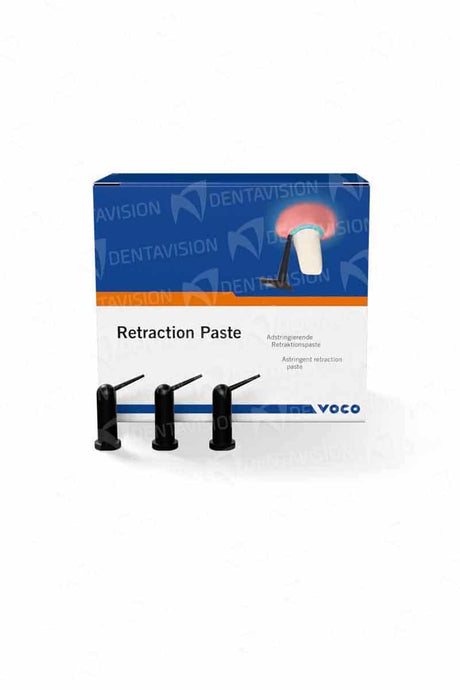
Voco
Low stock (11 units)Sale price LE 179.00 EGP Regular price LE 210.00Unit price /Unavailable
GENERIC
Low stock (11 units)Regular price LE 120.00 EGPUnit price /UnavailableAtriumCare
Low stock (13 units)Regular price LE 250.00 EGPUnit price /Unavailable-
AtriumCare
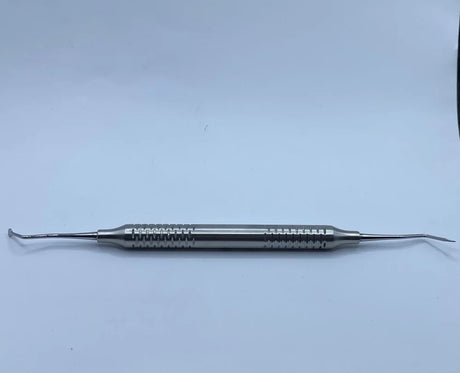
Atria Inc Retraction Cord Applicator
Low stock (10 units)Regular price LE 470.00 EGPUnit price /Unavailable
Sedra dent
Sedra Retraction Cord Applicator
Low stock (9 units)Regular price LE 360.00 EGPUnit price /UnavailableUltradent
Ultradent Fischer’s UltraPak Packer Regular
Low stock (14 units)Regular price LE 1,750.00 EGPUnit price /Unavailable-

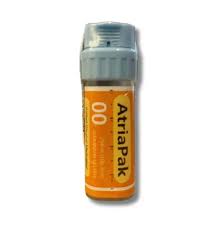
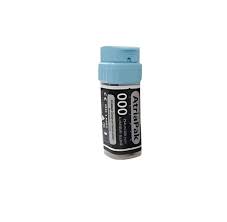


How to Choose Gingival Retraction Cords and Astringents for Your Practice
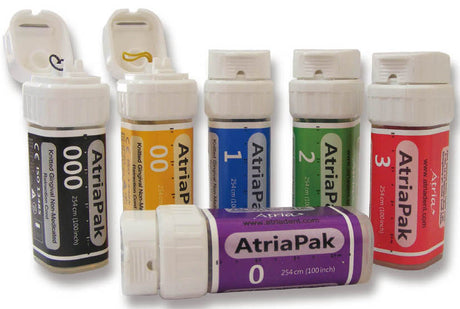
- Plain vs impregnated cord — Plain retraction cords provide purely mechanical gingival displacement without pharmacological agents. Impregnated cords contain haemostatic astringents — aluminium chloride (AlCl&sub3; 20–25%), aluminium sulphate, or racemic epinephrine — which constrict the capillaries lining the sulcus, reducing crevicular fluid and gingival bleeding that would contaminate the final impression margin. For healthy gingiva with minimal bleeding, plain cord is sufficient; for bleeding tendencies or inflamed sulcular tissue, impregnated cord (e.g. ATRIA impregnated) improves margin clarity.
- Cord size selection — Retraction cords are sized #000 (smallest) through #2 (largest). For tight sulci (<0.5 mm wide), use #000 or #0 as a first cord to open the sulcus atraumatically. For deeper, wider sulci, #1 or #2 provides greater lateral displacement. A two-cord technique — #000 first, followed by #1 or #2 — achieves optimal lateral and apical displacement without tissue damage.
- Retraction paste as an alternative — Retraction paste (e.g. Voco Retraction Paste) contains aluminium chloride in a water-soluble base and is injected into the sulcus via a single-dose capsule, providing simultaneous haemostasis and displacement without the packing step. The paste technique is faster than cord in shallow sulci but provides less lateral displacement in deeper preparations with wide sulci.
- PVS compatibility — Aluminium chloride and aluminium sulphate astringents are compatible with PVS (addition silicone) impression materials. Racemic epinephrine-impregnated cords and residual sulphur-containing haemostatic agents can inhibit PVS polymerisation — always rinse the sulcus thoroughly after cord removal and before impression material injection when using these agents.
- Cord applicator technique — A dedicated cord applicator (e.g. Atria Retraction Cord Applicator) with a serrated or knurled tip provides controlled packing force and prevents cord slipping during placement. Start at the interproximal area, advance apically with overlapping 1 mm strokes, and work around the full preparation perimeter in 60–90 seconds to avoid premature sulcular rebound.
Retraction Product Comparison
| Product | Type | Active Agent | Best For |
|---|---|---|---|
| Plain retraction cord | Braided fibre cord | None | Healthy gingiva, minimal bleeding |
| ATRIA Impregnated Cord | Impregnated cord | Aluminium chloride | Moderate bleeding, routine fixed prosthodontics |
| Voco Retraction Paste | Astringent paste | Aluminium chloride | Fast technique, shallow sulci, single appointment |
| Cord applicator | Instrument | N/A | All cord packing; improves placement control |
Availability & Delivery in Egypt
MedSTA supplies plain and impregnated retraction cords, Voco retraction paste, and Atria cord applicators in EGP with same-day dispatch for Cairo and Giza and 2–5 day delivery to all Egyptian governorates.
Frequently Asked Questions
What is the difference between plain and impregnated gingival retraction cords?
What is the difference between plain and impregnated gingival retraction cords?
Plain retraction cords provide purely mechanical gingival displacement — the braided fibre physically separates the cord tissue from the preparation margin without pharmacological effect. Impregnated cords contain haemostatic astringent agents (typically aluminium chloride 20–25% or aluminium sulphate) that constrict capillaries in the sulcular epithelium, reducing crevicular fluid and gingival bleeding during impression-taking. For healthy, non-bleeding gingiva, plain cord is sufficient; for inflamed or bleeding sulci, impregnated cord (e.g. ATRIA impregnated cord) is preferred to ensure a clean, dry impression margin.
What size retraction cord should I use for a posterior molar full-coverage crown preparation?
What size retraction cord should I use for a posterior molar full-coverage crown preparation?
For a posterior molar with a healthy gingival sulcus of 0.5–1 mm depth, size #0 or #1 cord provides adequate lateral and apical displacement. A two-cord technique is recommended for deep subgingival margins: first place #000 cord against the base of the sulcus to open access, then pack #1 cord above it to achieve maximum lateral deflection before removing the #000 cord and taking the impression. The first cord remains in the sulcus during impression-taking in single-cord techniques using #1.
How long should a retraction cord remain in the sulcus before taking a final impression?
How long should a retraction cord remain in the sulcus before taking a final impression?
Standard placement time is 5–8 minutes — sufficient for tissue displacement and haemostasis with impregnated cords. Extended placement beyond 10 minutes increases the risk of permanent gingival recession, particularly in biotype I (thin, scalloped) gingiva commonly found in Egyptian patients with crowded dentitions. Remove the cord slowly and parallel to the long axis of the tooth to avoid tissue tearing, then immediately blow air lightly and take the impression within 15–30 seconds before tissue rebound occurs.
What astringent hemostatic agents are used in impregnated retraction cords?
What astringent hemostatic agents are used in impregnated retraction cords?
Impregnated retraction cords most commonly contain aluminium chloride (AlCl&sub3; 20–25%) or aluminium sulphate, both of which precipitate serum proteins and constrict sulcular capillaries without significant systemic effects. Earlier epinephrine-impregnated cords are now rarely used in Egypt due to cardiovascular contraindications in cardiac patients. Aluminium-based agents are compatible with PVS impression materials; cords impregnated with sulphur-containing compounds must be thoroughly rinsed before PVS injection to prevent polymerisation inhibition at the marginal interface.
Does MedSTA supply Atria and generic retraction cords and astringents across Egypt?
Does MedSTA supply Atria and generic retraction cords and astringents across Egypt?
Yes. MedSTA supplies plain and AtriumCare impregnated retraction cords, Voco retraction paste, and Atria cord applicators in EGP, with nationwide delivery to Cairo, Giza, Alexandria, Mansoura, and all Egyptian governorates. In-stock items are dispatched same-day from MedSTA's Cairo warehouse.