
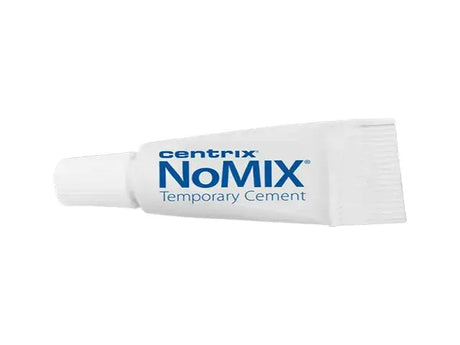
Centrix
Centrix Nomix Temporary Cement 0.5 g tube
In stock (180 units)Regular price LE 95.00 EGPUnit price /Unavailableprevest Denpro
Prevest Zinconol Reinforced ZOE Cement 15g powder + 10ml Liquid
Low stock (10 units)Regular price LE 570.00 EGPUnit price /Unavailable-
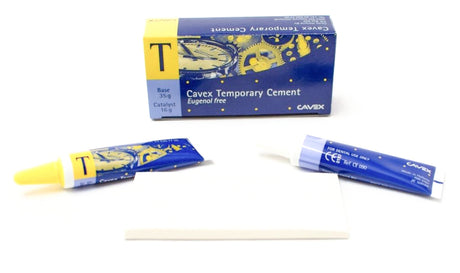
CAVEX
Cavex Temporary Cement 35 g base + 16 g Catalyst
Very low stock (5 units)Regular price LE 790.00 EGPUnit price /Unavailable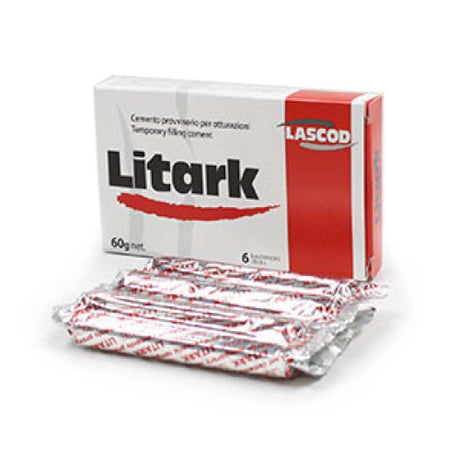
Lascod
Very low stock (5 units)Regular price From LE 60.00 EGPUnit price /Unavailable
prevest Denpro
Very low stock (1 unit)Regular price LE 168.00 EGPUnit price /Unavailable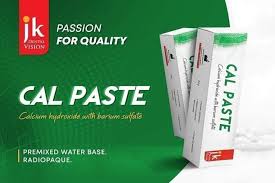
JK Dental Vision
Very low stock (8 units)Regular price LE 195.00 EGPUnit price /Unavailable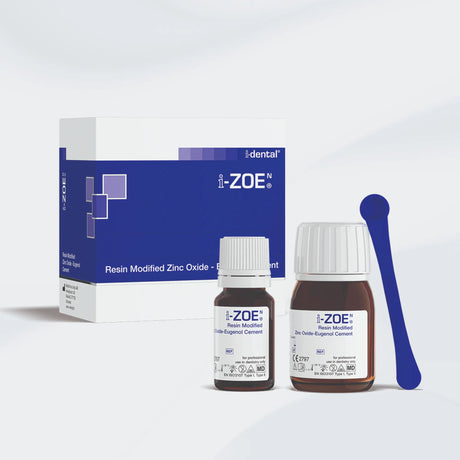
I Dental
Very low stock (2 units)Regular price LE 450.00 EGPUnit price /Unavailable
incidental
Low stock (15 units)Regular price LE 340.00 EGPUnit price /Unavailable
Pharma Everest
Very low stock (5 units)Regular price LE 55.00 EGPUnit price /UnavailablePentron
Pentron Adhesor Carbofine Zinc Polycarboxylate Cement
In stock (38 units)Regular price LE 800.00 EGPUnit price /Unavailable-
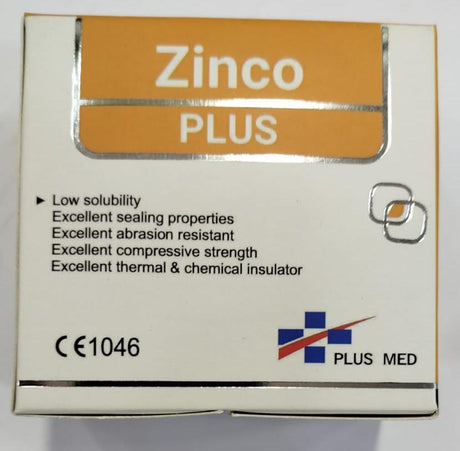
Plus Med Brazil
Zinco plus ZOE Cement 15 powder + 10ml Liquid
Low stock (9 units)Regular price LE 450.00 EGPUnit price /Unavailable
prevest Denpro
Prevest Oratemp NE non-eugenol temporary cement 15gm
Very low stock (7 units)Regular price LE 589.00 EGPUnit price /Unavailable
Kerr
Kerr Temp Bond Clear Automix dual cure, eugenol free transparent resin based cement
Very low stock (3 units)Regular price LE 2,450.00 EGPUnit price /Unavailable
Pharma Everest
Very low stock (5 units)Regular price LE 35.00 EGPUnit price /Unavailable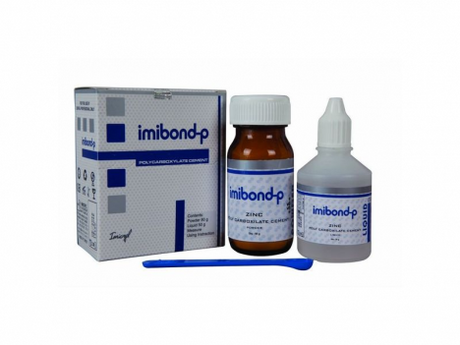
imicryl
Nova IMIBOND - P 80G Powder & 50ml Liquid
Very low stock (3 units)Regular price LE 499.00 EGPUnit price /Unavailable
Detax
Detax Tempolink Clear Temporary cement resin based 5ml
Low stock (9 units)Regular price LE 1,923.00 EGPUnit price /Unavailable


How to Choose the Right Temporary Cement for Your Clinical Workflow
- ZOE vs Non-Eugenol Temporary Cements — Zinc oxide eugenol (ZOE) cements (e.g., Prevest Zinconol) provide adequate retention with easy removal and naturally occurring palliative effect for pulp protection. However, eugenol is contraindicated under resin composite restorations — even trace amounts inhibit the polymerization of bis-GMA and TEGDMA monomers, causing an incompletely cured layer at the base. Use non-eugenol temporary cements (e.g., Centrix Nomix) when the final restoration will be placed using a resin composite or adhesive resin cement.
- Retention Strength vs Retrievability — Temporary cements must provide sufficient retention for the provisional crown or bridge to remain seated during function but must be removable without fracturing the provisional or preparation. ZOE cements are weak and easily removed; reinforced ZOE (e.g., Zinconol reinforced) adds ethoxybenzoic acid (EBA) or polymethyl methacrylate (PMMA) to increase retention while remaining removable. For multi-unit bridges or longer treatment spans, choose a reinforced temporary cement with verified retention strength data from the manufacturer's technical data sheet.
- Provisional Crown Materials vs Temporary Cements — Oratemp C&B (Prevest) is a temporary crown and bridge material (bis-acryl composite resin), not a luting cement. It is used to fabricate the provisional restoration itself (direct or indirect technique). Once the provisional is fabricated, it is seated with a temporary luting cement (e.g., Nomix or Zinconol). This is a critical product category distinction: crown material ≠ luting cement — confirm which phase of provisional fabrication each product covers before ordering.
- Calcium Hydroxide Provisional Sealing — JK Cal Paste (calcium hydroxide paste) serves as a temporary base or pulp capping agent under direct restorations and as a temporary filling in root canals and access cavities between appointments. It is NOT a luting cement for provisional crowns. Calcium hydroxide is bactericidal due to its high pH (approximately 12.5) and promotes hard tissue repair adjacent to the pulp, making it appropriate for deep cavity management and indirect pulp capping prior to final restoration placement.
- Temporary Sealing Sticks — Lascod Litark temporary filling sticks are gutta-percha based sealing sticks used to temporarily close access cavities, fill crown openings, or seal access preparations during multi-visit endodontic treatment. They are plasticized by warming and pressed into the cavity; they seal without adhesion and are easily removed by heat or an instrument at the next appointment. Suitable for short-term sealing (1–2 weeks) in Egyptian clinics between endodontic appointments.
- Storage and Temperature Sensitivity in Egypt — Zinc oxide eugenol cements absorb moisture from the air, which can initiate premature setting of unmixed powder. Store ZOE powder in sealed containers in a cool, dry environment (below 25°C). Bis-acryl temporary crown materials (Oratemp) are temperature-sensitive: warmth above 30°C shortens working time significantly, relevant in Egyptian summer clinics. Pre-chill the mixing tips and material cartridge in a refrigerator before use in warm conditions to regain adequate working time.
Temporary Cementation and Sealing Products at a Glance
| Product | Type | Eugenol? | Application | Removes Easily? |
|---|---|---|---|---|
| Centrix Nomix | Non-eugenol temporary cement | No | Provisional crown/bridge cementation | Yes |
| Prevest Zinconol (ZOE) | Reinforced ZOE cement | Yes | Temporary cementation (not under resin) | Yes |
| Oratemp C&B | Bis-acryl provisional crown material | No | Fabricating provisional restorations | N/A |
| Lascod Litark sticks | Gutta-percha sealing sticks | No | Temporary cavity sealing | Yes (heat or instrument) |
| JK Cal Paste | Calcium hydroxide paste | No | Pulp capping, temporary base | Yes |
Availability & Delivery in Egypt
Temporary cements and provisional materials on MedSTA are priced in EGP with nationwide delivery across Egypt. ZOE cements should be stored in sealed containers away from ambient moisture; bis-acryl materials should be stored below 25°C and away from sunlight. Orders within Cairo and Giza are fulfilled within 1–2 business days; delivery to other Egyptian governorates takes 2–4 business days.
Frequently Asked Questions — Temporary Cements
Can ZOE temporary cement be used before placing a resin composite restoration?
Can ZOE temporary cement be used before placing a resin composite restoration?
No. Eugenol from ZOE cements inhibits the polymerization of bis-GMA and TEGDMA monomers in resin composites and adhesive resin luting cements, leaving an incompletely cured layer at the base. If the final restoration is a resin composite, composite onlay, or adhesive ceramic restoration, use a non-eugenol temporary cement (such as Centrix Nomix) for all provisional cementation appointments.
How long can a temporary cement hold a provisional crown in Egyptian dental practice?
How long can a temporary cement hold a provisional crown in Egyptian dental practice?
ZOE and non-eugenol temporary cements are designed for 2 to 8 weeks of provisional retention under normal occlusal function. Reinforced ZOE (e.g., Zinconol with EBA) extends this to 4 to 12 weeks. For longer Egyptian multi-visit prosthodontic cases with extended laboratory turnaround, use a reinforced temporary cement and monitor at each appointment for loss of retention or marginal secondary caries.
What is the difference between Oratemp C&B provisional crown material and a temporary cement?
What is the difference between Oratemp C&B provisional crown material and a temporary cement?
Oratemp C&B is a bis-acryl composite resin used to fabricate the provisional crown or bridge body (using an impression or preformed matrix). A temporary cement (such as Nomix or Zinconol) is then used to seat the completed provisional on the preparation. These are two distinct products covering different phases: fabrication versus luting of the provisional restoration.
What is calcium hydroxide paste (JK Cal Paste) used for in dental practice?
What is calcium hydroxide paste (JK Cal Paste) used for in dental practice?
Calcium hydroxide paste is used as a direct or indirect pulp capping agent, temporary intracanal medication during multi-visit endodontics, and as a base under deep restorations. Its bactericidal effect derives from its high pH (approximately 12.5). In Egyptian dental practice, calcium hydroxide dressings placed between endodontic appointments remain effective for 1 to 4 weeks before resealing the access cavity.
How does Egyptian summer temperature affect the working time of bis-acryl provisional crown materials?
How does Egyptian summer temperature affect the working time of bis-acryl provisional crown materials?
Bis-acryl materials (e.g., Oratemp C&B) have a working time of 90 to 120 seconds at 23°C. Egyptian summer clinic temperatures of 30 to 35°C can reduce this to 45 to 60 seconds — too short to adapt the material and seat it correctly. Chill the cartridge to approximately 10°C before use to restore full working time without affecting the mechanical properties of the set provisional.