
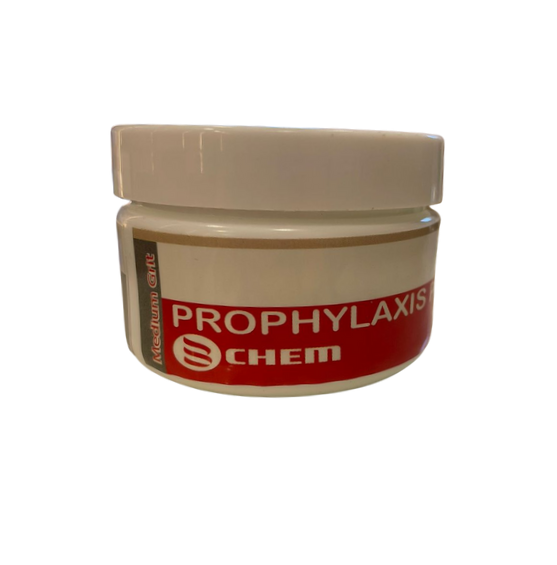
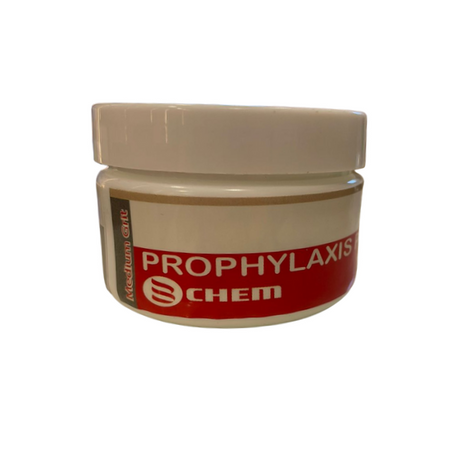
B CHEM
In stock (23 units)Regular price LE 60.00 EGPUnit price /UnavailableAcrostone
Acrostone Acro Polish Polishing Paste
In stock (26 units)Regular price From LE 99.00 EGPUnit price /Unavailable-

prevest Denpro
Prevest Spectra Polishing Paste 75g
Very low stock (5 units)Regular price LE 188.00 EGPUnit price /Unavailable-

I Dental
I fast capsule polishing paste 1 pcs
In stock (47 units)Regular price LE 10.00 EGPUnit price /Unavailable
Dharma
Low stock (12 units)Regular price LE 295.00 EGPUnit price /Unavailable
Kemdent
Kemdent prophylaxis paste 100g
Low stock (18 units)Regular price LE 235.00 EGPUnit price /Unavailable
Dental Technologies
Very low stock (3 units)Regular price LE 250.00 EGPUnit price /Unavailable
DMG
In stock (505 units)Regular price From LE 89.00 EGPUnit price /Unavailable


How to Choose the Right Dental Polishing Paste for Your Practice
- Grit Classification (Coarse/Medium/Fine) — Prophy paste abrasiveness is classified by particle size: coarse (>40 µm) for heavy stain and calculus-free deposit removal, medium (25–40 µm) for routine prophylaxis, fine (<25 µm) for polishing after scaling and during implant maintenance where minimal enamel removal is essential. In Egyptian practices, medium-grit paste covers 80% of routine adult prophylaxis needs; coarse is reserved for heavy tobacco, tea, and coffee stain cases.
- Abrasive Agent — Most prophy pastes use aluminium oxide (alumina), pumice, or calcium carbonate as the primary abrasive. Alumina-based pastes (e.g. Acrostone Acro Polish) provide consistent particle size distribution and reliable RDA (Relative Dentine Abrasivity) values. Pumice is a natural volcanic abrasive with variable particle size between batches — fine for routine prophylaxis but less controlled than alumina. Confirm the abrasive type if treating patients with exposed dentine roots or hypersensitivity.
- Fluoride Content — Fluoride-containing prophy pastes deliver a topical fluoride dose during polishing, which is beneficial for high-caries-risk patients and children. However, fluoride pastes may interfere with the bonding surface if immediately followed by pit-and-fissure sealant or bonding procedures — use fluoride-free prophy paste in the same appointment as composite bonding or sealant application to avoid contamination of the enamel surface.
- Flavour and Patient Acceptance — Mint is standard; assorted fruit flavours (mango, strawberry, bubblegum) improve compliance in Egyptian paediatric patients who refuse mint-flavoured prophylaxis paste. Acrostone's mango and strawberry variants are specifically popular in Egyptian paediatric practices.
- Packaging Format (Single-Dose vs Jar) — Single-dose cups reduce cross-contamination risk and waste. Jars (75–200 g) offer lower per-unit cost for high-volume practices but require strict cross-contamination protocols — never re-dip the same instrument into the jar after oral contact.
Prophy Paste Grit Guide
| Grit | Particle Size | Use Case | Contraindications |
|---|---|---|---|
| Coarse | >40 µm | Heavy tobacco, tea, coffee stain | Exposed dentine, implants, composites |
| Medium | 25–40 µm | Routine adult prophylaxis | Hypersensitive cervical areas |
| Fine | <25 µm | Post-scaling polish, implants | None for enamel surfaces |
Availability & Delivery in Egypt
MedSTA stocks dental polishing paste from B Chem, Acrostone, PSP, and other trusted brands, priced from 60–199 EGP per jar, delivered to periodontic and general practices across Cairo, Giza, Alexandria, and all Egyptian governorates. Mango-flavoured Acrostone prophy paste is especially popular in Egyptian paediatric practice.
Frequently Asked Questions
What is the difference between coarse, medium, and fine prophy paste?
What is the difference between coarse, medium, and fine prophy paste?
Coarse prophy paste (>40 µm particle size) is used for heavy stain removal from tobacco, tea, and coffee — common presenting complaints in Egyptian adult patients. Medium (25–40 µm) covers routine adult prophylaxis. Fine (<25 µm) is used for implant maintenance, post-scaling polishing, and patients with hypersensitive cervical root surfaces. Always follow coarse-grit polishing with fine-grit to smooth the enamel surface.
Should I use fluoride prophy paste before placing a composite restoration or fissure sealant?
Should I use fluoride prophy paste before placing a composite restoration or fissure sealant?
No. Fluoride-containing prophy paste leaves a fluoride-rich surface layer that reduces composite and sealant bond strength if applied immediately before bonding. Use fluoride-free prophy paste (or pumice slurry) in the same appointment as composite restorations, bonding procedures, or fissure sealant application. Reserve fluoride paste for routine prophylaxis appointments not followed by immediate adhesive procedures.
Can prophy paste be used on dental implants?
Can prophy paste be used on dental implants?
Only fine-grit, non-abrasive prophy paste or glycine-based powder should be used for implant surface maintenance. Conventional alumina or pumice prophy paste with medium or coarse grit scratches titanium surfaces, creating micro-roughness that accelerates biofilm accumulation. In Egyptian implant practices, use dedicated implant polishing paste or glycine powder with appropriate plastic-tipped instruments to avoid scratching the implant collar.
How should prophy paste be dispensed to prevent cross-contamination?
How should prophy paste be dispensed to prevent cross-contamination?
Never re-dip the same rubber cup or instrument into a shared paste jar after oral contact. Dispense single-dose cups per patient, or transfer a sufficient quantity to a disposable dish before the procedure. In high-volume Egyptian practices using jar formats, a dedicated dispensing spatula (not the clinical instrument) is used to portion paste, preventing jar contamination.
Does MedSTA supply dental polishing paste across Egypt?
Does MedSTA supply dental polishing paste across Egypt?
Yes. MedSTA delivers prophy paste from B Chem, Acrostone, PSP, and other brands to periodontic and general practices across Cairo, Giza, Alexandria, and all Egyptian governorates, priced in EGP with fast nationwide delivery. Assorted flavour options are available for paediatric practices.