

BISCO
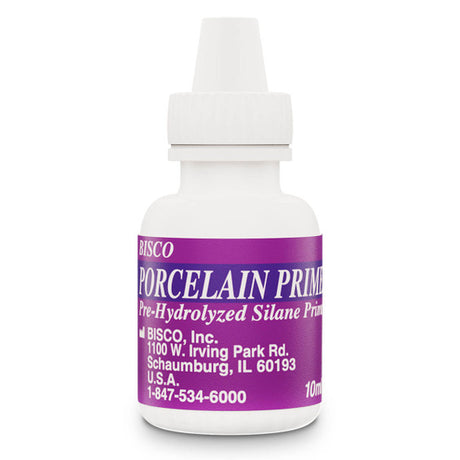
Bisco Porcelain Primer Bis-Silane 10 ml
Very low stock (8 units)Regular price LE 1,045.00 EGPUnit price /Unavailable 14% off
Ultradent
Ultradent Porcelain Etch and Silane Offer
Very low stock (5 units)Sale price LE 1,075.00 EGP Regular price LE 1,254.00Unit price /Unavailable
Ultradent
Ultradent Silane Refill 1 Syringe
Very low stock (3 units)Regular price LE 475.00 EGPUnit price /Unavailable
Dentex
Very low stock (5 units)Regular price LE 725.00 EGPUnit price /Unavailable


How to Choose the Right Dental Silane for Ceramic Restorations
- Single-Component vs Two-Component Formulations — Silane is available as a ready-to-use single-component solution (methacryloxypropyltrimethoxysilane pre-hydrolysed in acidified alcohol) or as a two-component system (separate silane + activator mixed chairside). Single-component silanes are faster and simpler but have a shorter shelf-life after opening because the pre-hydrolysed silanol groups can condense over time, reducing reactivity. Two-component systems (e.g. Bisco Bis-Silane) have longer individual component stability but require consistent mixing — under-activation produces poor bond performance.
- Ceramic Substrate Compatibility — Silane bonds exclusively to silica-containing ceramics: feldspathic porcelain, leucite-reinforced glass ceramic, and lithium disilicate (e.max). It does not bond to polycrystalline ceramics — zirconia and alumina have no silica surface groups for organosilane condensation. Attempting silane on zirconia produces negligible bond improvement; use MDP-containing zirconia primer instead. Always confirm the ceramic type from the laboratory prescription before selecting the surface treatment.
- Application Protocol: Air-Dry vs Heat Activation — After applying silane to the clean, etched, dry ceramic intaglio surface, allow 60 seconds of reaction time, then thin with a gentle air stream. Some protocols recommend gentle heat activation (60–70 °C warm air or a purpose-built ceramic heater) to accelerate condensation of silanol groups and improve bond strength — this is particularly relevant in Egyptian clinic environments where ambient humidity may slow the hydrolysis-condensation reaction. Do not over-dry with a strong cold air blast, which can remove silane before adequate bonding.
- Contamination Sensitivity — The etched and silanised ceramic surface is highly sensitive to contamination between surface preparation and cementation. Saliva, oil from gloves, or water contact after silane application can disrupt the organosilane monolayer and significantly reduce bond strength. In busy Egyptian clinic workflows where ceramic restorations may be staged ahead of the appointment, silanise immediately before cementation rather than in advance — keep the treated intaglio surface covered and handle only at the margins until seating.
- Compatibility with Luting Resin Cement — Silane is designed to interface between the ceramic surface and the hydrophobic resin matrix of conventional and dual-cure resin cements. Self-adhesive resin cements (RelyX Unicem, Panavia SA) have reduced or no benefit from silane because their adhesive mechanism does not rely on the same surface coupling chemistry — but conventional dual-cure cements (Panavia F2.0, Variolink II) require silane to achieve their documented bond strengths. Confirm the cement system before assuming silane is optional.
- Shelf-Life in Egyptian Storage Conditions — Single-component silane degrades faster once opened in high-humidity environments. Store tightly capped at 15–25 °C, away from sunlight and humidity. In Egyptian coastal clinics, open bottles should be used within 3–4 months. Check for cloudiness or precipitation in the liquid, which indicates silanol condensation has occurred and the product should be discarded.
Dental Silane Types at a Glance
| Product | System Type | Volume | Best For |
|---|---|---|---|
| Bisco Porcelain Primer Bis-Silane | Two-component | 10 ml | High-volume practices; maximum bond strength |
| Ultradent Silane | Single-component | Syringe refill | Chairside convenience; consistent application |
| Dentex Dx Silane | Single-component | Syringe | Mid-range; standard ceramic bonding protocols |
| Pentron Silane | Single-component | 3 ml | Entry-level; student and budget practices |
Availability & Delivery in Egypt
MedSTA supplies dental silane primers from Bisco, Ultradent, Dentex, and Pentron — priced from 400 EGP to 1,190 EGP — with fast delivery to prosthodontic and restorative dental practices across Cairo, Giza, Alexandria, and all Egyptian governorates. Authentic, in-date stock ensures consistent reactivity for ceramic bonding workflows regardless of clinic volume or case complexity.
Compare /5
Loading...