
JK Dental Vision
Very low stock (2 units)Regular price From LE 60.00 EGPUnit price /Unavailable-
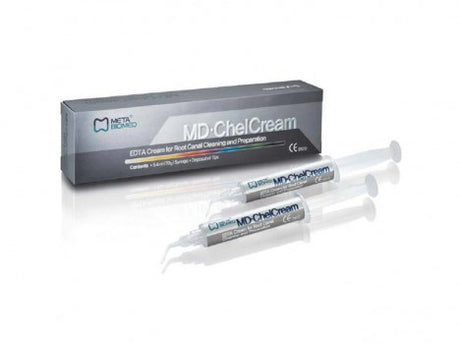
meta biomed
Low stock (16 units)Regular price LE 549.00 EGPUnit price /Unavailable

Cerkamed
Very low stock (5 units)Regular price LE 1,400.00 EGPUnit price /Unavailable
Cerkamed
Very low stock (5 units)Regular price LE 1,200.00 EGPUnit price /Unavailable
Cerkamed
Cerkamed EDTA Preb Cream 10 ml
Very low stock (5 units)Regular price LE 1,350.00 EGPUnit price /Unavailable
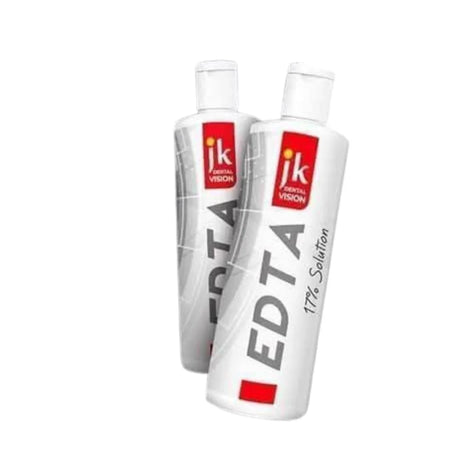
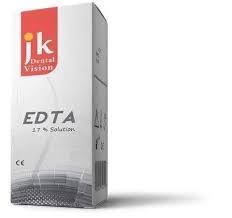


How to Choose EDTA for Endodontic Irrigation
- Concentration — 17% is standard — The clinically validated EDTA concentration for root canal smear layer removal is 17% (w/v). Lower concentrations (<10%) are ineffective at chelating calcium from dentine within the clinical contact time of 1–3 minutes. Higher concentrations (>20%) offer no additional benefit and increase the risk of dentinal erosion when combined with NaOCl irrigation without a saline rinse in between.
- Solution vs cream formulation — EDTA solution (liquid) is used as an irrigant between NaOCl flushes and as a final rinse to remove the smear layer at the end of canal preparation. EDTA cream (paste/gel) contains the chelating agent in a viscous carrier — it is applied to the file before insertion into the canal to provide lubrication during hand filing and to chelate dentine incrementally during preparation. Both formulations are 17% EDTA by active concentration.
- Contact time and smear layer efficacy — Full smear layer removal with 17% EDTA liquid requires a minimum contact time of 1 minute as a final flush after NaOCl irrigation. Alternating EDTA and NaOCl irrigation (e.g. 5 ml NaOCl → 3 ml EDTA → 5 ml NaOCl) removes both organic (NaOCl) and inorganic smear layer components more completely than NaOCl alone.
- pH and effect on dentine — EDTA chelates calcium ions from dentine by forming stable calcium-EDTA complexes. Its pH of approximately 7.3 makes it tissue-compatible. However, prolonged contact (>10 minutes) causes excessive dentinal erosion and widening of dentinal tubules, reducing the sealer penetration zone. Limit EDTA exposure to 1–3 minutes per application and follow with a NaOCl flush.
- Compatibility with other irrigants — EDTA and NaOCl must NOT be mixed simultaneously in the canal — the combination forms a precipitate and degrades both solutions. Always flush one irrigant out with saline before introducing the other. EDTA is compatible with chlorhexidine as a final rinse when NaOCl use is contraindicated, but this combination provides only organic smear layer dissolution, not full smear layer removal.
EDTA Products at a Glance
| Product | Form | Volume | Best For |
|---|---|---|---|
| JK EDTA Solution 17% | Liquid irrigant | 15 ml | Final smear layer removal, alternating irrigation protocol |
| JK EDTA Cream 17% | Viscous cream/gel | Tube | File lubrication, incremental chelation during hand filing |
| Top EDTA Solution 125 ml | Liquid irrigant | 125 ml bulk | High-volume clinics, cost-efficient bulk irrigation |
Availability & Delivery in Egypt
MedSTA stocks 17% EDTA solution and cream in unit and bulk volumes priced in EGP. Delivery covers Cairo and Giza within 24–48 hours and all other Egyptian governorates within 3–5 working days. Store EDTA solutions at room temperature (15–25°C), away from direct sunlight — prolonged UV exposure degrades the chelating activity. Discard any EDTA that has changed colour (yellowing) or developed particulate matter.
Frequently Asked Questions
What is EDTA used for in root canal treatment?
What is EDTA used for in root canal treatment?
EDTA (ethylenediaminetetraacetic acid) at 17% concentration is used in endodontics primarily to remove the smear layer — the calcium-rich debris generated when files abrade dentine during canal shaping. The smear layer covers dentinal tubule openings and, if not removed, reduces sealer penetration depth by up to 40%. EDTA is also used as a file lubricant (cream formulation) to reduce instrument fracture risk during hand filing of curved or narrow canals. It is applied between NaOCl flushes or as the final irrigant before obturation.
Can EDTA and sodium hypochlorite be mixed or used simultaneously?
Can EDTA and sodium hypochlorite be mixed or used simultaneously?
No — EDTA and NaOCl must never be mixed or used in the canal at the same time. The combination rapidly forms a sodium ethylenediaminetetraacetate precipitate and simultaneously degrades NaOCl's antibacterial activity and EDTA's chelating capacity. Always flush the canal with sterile saline between switching from NaOCl to EDTA and vice versa. A safe and proven alternating protocol is: 5 ml 2.5–5.25% NaOCl → 3 ml saline → 3 ml 17% EDTA for 1 minute → 5 ml NaOCl final flush → sealer application.
How long should EDTA remain in the root canal for effective smear layer removal?
How long should EDTA remain in the root canal for effective smear layer removal?
A minimum contact time of 1 minute with 17% EDTA liquid is sufficient for full smear layer removal in a single-rooted tooth when applied after adequate NaOCl irrigation. Do not extend contact beyond 5 minutes per application, as prolonged EDTA exposure causes progressive dentinal erosion — measurable widening of tubule orifices and reduction in push-out bond strength of resin-based sealers. For multi-rooted teeth, ensure each canal receives a fresh EDTA flush rather than allowing a single volume to flow passively between canals.
What is the difference between EDTA solution and EDTA cream for root canal use?
What is the difference between EDTA solution and EDTA cream for root canal use?
EDTA solution (17% liquid) is used as an intracanal irrigant — it is delivered via an irrigation needle into the prepared canal to flush dentine debris and remove the smear layer as a final step before sealer application. EDTA cream (gel/paste) contains the same 17% chelating agent in a viscous carrier that coats the file before insertion; the cream lubricates the instrument, reduces torque on NiTi files in narrow curved canals, and chelates dentine incrementally during shaping. Both formulations are used in the same treatment but at different stages and via different delivery methods.
Does MedSTA supply 17% EDTA across all of Egypt?
Does MedSTA supply 17% EDTA across all of Egypt?
Yes — MedSTA stocks 17% EDTA solution and cream in multiple volumes (15 ml unit-dose and 125 ml bulk) priced in EGP. Delivery covers Cairo and Giza within 24–48 hours and all other Egyptian governorates within 3–5 working days. EDTA is one of the core endodontic irrigation materials available for individual clinic orders and bulk procurement by Egyptian dental hospitals and universities.