

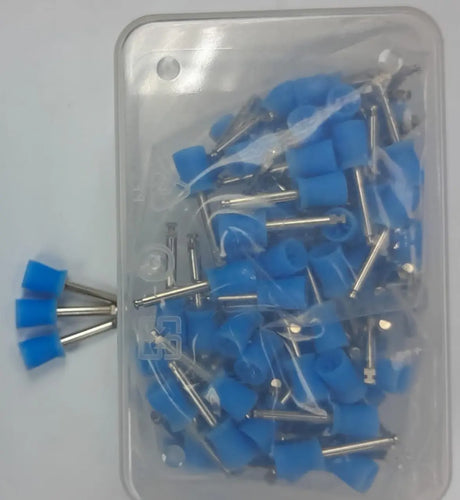
GENERIC
In stock (68 units)Regular price From LE 4.00 EGPUnit price /Unavailable
Shofu
Shofu Brownie Mini-Point CA alloys and amalgam Polisher
Low stock (10 units)Regular price LE 110.00 EGPUnit price /Unavailable
Shofu
Shofu Amalgam and Metal Polishing assorted Set CA
Very low stock (4 units)Regular price LE 1,300.00 EGPUnit price /Unavailable


Essential Guide to Amalgam Polishing Products
- Rubber Cups for Initial Smoothing — Rubber polishing cups remove scratches and refine amalgam surfaces. Use at low speed with light pressure to avoid overheating the restoration and causing mercury release.
- Silicone Points for Fine Polishing — Brownie and similar points deliver intermediate finishing. These impregnated silicone instruments provide consistent abrasive action for pre-polish surface refinement.
- Polishing Pastes for Final Lustre — Diamond or aluminium oxide pastes create mirror-like finishes. Apply with felt wheels or rubber cups at low speed for the final high-shine step in your polishing sequence.
- Complete Polishing Kits — Assorted sets provide all instruments for a full sequence. Kits include graded abrasives from coarse to fine, ensuring systematic progression through polishing stages.
- Contra-Angle Compatibility — Check shank type matches your handpiece system. Most amalgam polishers feature CA (contra-angle) shanks compatible with standard slow-speed handpieces.
- Clinical Technique Considerations — Wait 24-48 hours post-placement before polishing amalgam. Allow adequate setting time for optimal crystal structure development before applying mechanical finishing forces.
Amalgam Polishing Products at a Glance
| Product Type | Primary Use | Abrasive Level | Application Method |
|---|---|---|---|
| Rubber Cups | Initial surface smoothing | Medium | Slow-speed handpiece |
| Silicone Points | Intermediate finishing | Fine to medium | Contra-angle handpiece |
| Polishing Paste | Final high lustre | Ultra-fine | With cup or felt wheel |
| Assorted Kits | Complete polishing sequence | Graded progression | Sequential application |
| Mini-Points | Occlusal grooves and margins | Fine | Precision areas access |
How to Select Amalgam Polishing Supplies
- Assess your case volume to determine whether individual products or kits offer better value.
- Verify CA shank compatibility with your practice's contra-angle slow-speed handpieces.
- Choose graded abrasive systems for systematic coarse-to-fine polishing progression.
- Select appropriate point shapes for accessing occlusal anatomy and marginal areas.
- Stock sufficient polishing paste for the final lustre stage of every amalgam restoration.
Availability & Delivery in Egypt
MedSTA offers amalgam polishing supplies with transparent EGP pricing and nationwide Egyptian delivery. Store pastes in cool, dry conditions away from direct sunlight to maintain optimal consistency.
Frequently Asked Questions
When should I polish amalgam restorations after placement?
When should I polish amalgam restorations after placement?
Wait 24-48 hours to allow adequate setting before polishing.
What speed setting should I use for amalgam polishing?
What speed setting should I use for amalgam polishing?
Use low speed with light pressure to prevent overheating the restoration.
Do I need separate products for finishing and polishing?
Do I need separate products for finishing and polishing?
Yes, use graded abrasives from coarse finishing to fine polishing for best results.
Are these polishing instruments single-use?
Are these polishing instruments single-use?
Rubber cups and silicone points can be sterilised and reused until worn.
Can I use these products on other metal restorations?
Can I use these products on other metal restorations?
Yes, many amalgam polishers also work on base metal alloys and chrome-cobalt.
What is the difference between Brownie and Greenie points?
What is the difference between Brownie and Greenie points?
Brownie is coarser for pre-polishing; Greenie is finer for final polish.
Do polishing pastes require water cooling?
Do polishing pastes require water cooling?
Light intermittent application at low speed typically eliminates the need for water.