
Sun Dental
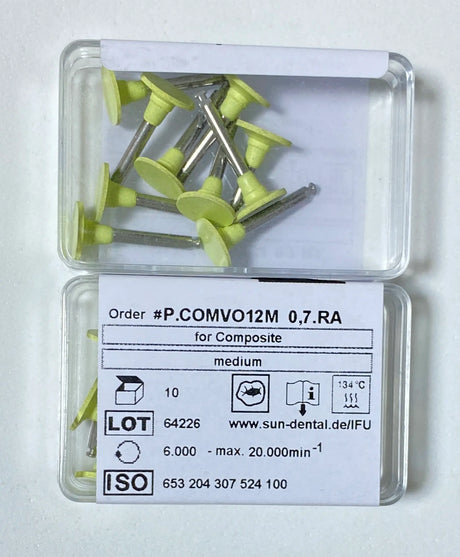
Sun Dental P.COMVO12M 07.RA Polisher for COMPOSITE - WHEEL - Fine
In stock (88 units)Regular price From LE 110.00 EGPUnit price /Unavailable
ENA
Very low stock (2 units)Regular price LE 44.00 EGPUnit price /Unavailable
Eve
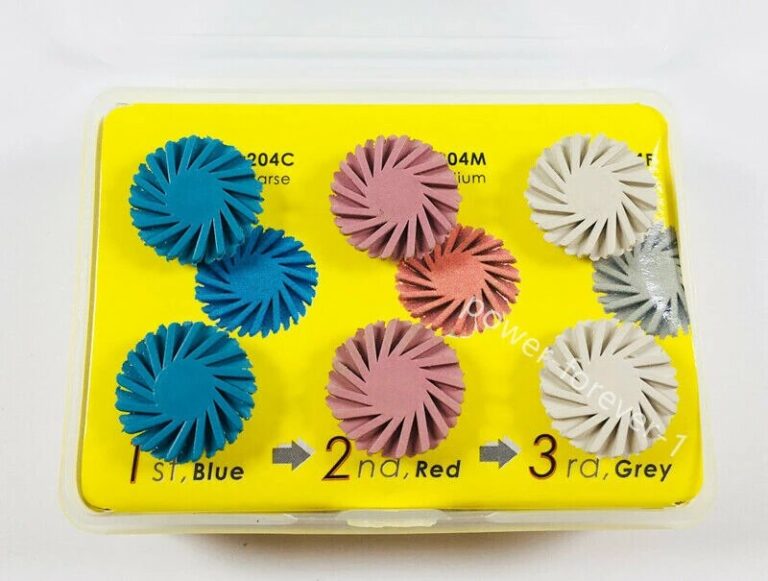
EVE Bracket Kit Orthodontic Polishing and Adhesive Removal System
Low stock (11 units)Regular price LE 850.00 EGPUnit price /Unavailable
Frank Dental
In stock (54 units)Regular price From LE 90.00 EGPUnit price /Unavailable
Intensiv
Very low stock (8 units)Regular price LE 890.00 EGPUnit price /Unavailable
Shofu
Shofu OneGloss Mandrell CA 1 Piece
Very low stock (3 units)Regular price LE 199.00 EGPUnit price /UnavailableENA
Very low stock (5 units)Regular price LE 315.00 EGPUnit price /Unavailable-

Asnanco
Low stock (19 units)Regular price LE 380.00 EGPUnit price /Unavailable
Cotisen
Cotisen Soft Prophy Cups Tapered
Very low stock (5 units)Regular price LE 350.00 EGPUnit price /Unavailable
Eve
EVE DIACOMP PLUS TWIST XT Diamond-Impregnated Polishing System
Low stock (20 units)Regular price LE 3,600.00 EGPUnit price /Unavailable
Eve
EVE DIAPRO / DIASYNT Plus Kit Diamond-Impregnated Polishing System
Low stock (20 units)Regular price LE 3,600.00 EGPUnit price /Unavailable
Eve
EVE DIACERA / DIASYNT Plus Kit Diamond-Impregnated Polishing System
Low stock (20 units)Regular price LE 3,600.00 EGPUnit price /Unavailable
Eve
EVE DIACERA Kit RA 103M diamond-impregnated polishing system
Low stock (20 units)Regular price LE 4,200.00 EGPUnit price /Unavailable
Eve
EVE DIAPRINT 3D TWIST Kit RA 330 diamond-impregnated polishing system
Low stock (20 units)Regular price LE 4,500.00 EGPUnit price /Unavailable
Eve
EVE DIACOMP set RA 102M Composite Polishing Kit
Low stock (20 units)Regular price LE 3,950.00 EGPUnit price /Unavailable
DentsplySirona
Dentsply Enhance Finishing System
Low stock (10 units)Regular price From LE 1,050.00 EGPUnit price /Unavailable


How to Polish Composite Resin Step by Step
- Finishing vs Polishing -- The Difference — Finishing removes excess composite and shapes macro-anatomy using coarse burs and discs; polishing removes micro-scratches to achieve gloss. Never skip the finishing stage -- using fine polishing points on an unfinished surface embeds composite irregularities and increases surface staining susceptibility.
- Coarse to Fine Sequence — Always follow the sequence: coarse (shape) -> medium (smooth) -> fine (pre-polish) -> superfine/ultra-fine (gloss). Skipping grits or jumping straight to fine polishing leaves subsurface scratches that appear as a milky, dull surface under operatory light.
- Sof-Lex Discs — Sof-Lex aluminium oxide discs are the gold standard for posterior composite finishing and anterior labial surface polishing. Use at slow handpiece speed (10,000-15,000 rpm) with light pressure and constant movement -- sustained pressure on one spot creates heat that can debond the restoration.
- Silicone Polishing Points and Cups — Silicone impregnated polishing points, cups and wheels are used for interproximal, sub-gingival and concave composite surfaces. Silicone points embed abrasive particles progressively -- they self-refresh and do not require lubricant, unlike diamond polishing pastes.
- Diamond Composite Burs — Fine and ultra-fine diamond burs shape cuspal anatomy and proximal contours before disc polishing. Use 30-micron fine diamonds for anatomy definition after bulk shaping, then transition to disc and silicone polishing for the final gloss.
- Polishing Pastes — Composite polishing pastes (used with a prophy cup) give the final high-gloss surface after silicone point polishing. Apply polishing paste as the last step -- it is a maintenance and finishing tool, not a substitute for the disc and silicone point sequence.
Composite Polishing Systems at a Glance
| System | Grit Range | Best For | Speed |
|---|---|---|---|
| Sof-Lex Discs | Coarse to superfine | Posterior and anterior labial | Slow HP, 10-15k rpm |
| Silicone Polishing Points | Medium to ultra-fine | Fissures, interproximal, concave | Slow HP, 10k rpm |
| Diamond Composite Burs | Fine to ultra-fine | Cuspal anatomy, proximal shaping | High-speed |
| Composite Polishing Paste + Cup | Ultra-fine | Final gloss step | Slow HP, prophy cup |
| Carbide Finishing Burs (12/30 blade) | Finishing only | Initial composite contouring | High-speed |
How to Finish and Polish Composite Resin
- Check occlusion first with articulation paper -- remove premature contacts with a fine diamond bur.
- Shape anatomy using a 12-blade carbide finishing bur or coarse polishing disc.
- Progress through medium, fine and superfine Sof-Lex discs or silicone points at slow handpiece speed.
- Use silicone cups or points for interproximal and concave surfaces inaccessible to flat discs.
- Finish with a composite polishing paste on a prophy cup for the final high-gloss surface.
Availability & Delivery in Egypt
MedSTA supplies composite polishing burs and disc systems to Egyptian dental clinics with EGP pricing and nationwide delivery. Full Sof-Lex compatible disc systems and silicone polishing points available.
Frequently Asked Questions
What is the difference between composite finishing and polishing?
What is the difference between composite finishing and polishing?
Finishing shapes and removes excess composite; polishing removes micro-scratches to create a high-gloss surface.
What are Sof-Lex discs used for?
What are Sof-Lex discs used for?
Aluminium oxide discs for sequentially finishing and polishing composite resin on posterior and anterior surfaces.
What grit sequence should I use for composite polishing?
What grit sequence should I use for composite polishing?
Coarse to medium (finishing) then fine to superfine (polishing) -- never skip grits in the sequence.
What speed do I polish composite at?
What speed do I polish composite at?
Polishing discs and silicone points are used at slow handpiece speed (10,000-15,000 rpm) with light pressure.
What are silicone polishing points used for?
What are silicone polishing points used for?
Polishing interproximal, sub-gingival and concave composite surfaces inaccessible to flat discs.
Do I need composite polishing paste?
Do I need composite polishing paste?
Yes -- polishing paste with a prophy cup is the final step for maximum gloss after disc and silicone point polishing.
Are composite polishing burs and discs available in Egypt from MedSTA?
Are composite polishing burs and discs available in Egypt from MedSTA?
Yes -- full Sof-Lex compatible systems and silicone polishing points in EGP with nationwide delivery.