

Shop By Category




Asnanco
Optragate latex-free lip and cheek retractor
Very low stock (5 units)Regular price LE 90.00 EGPUnit price /Unavailable
Asnanco
Very low stock (6 units)Regular price LE 700.00 EGPUnit price /Unavailable 25% off
POP
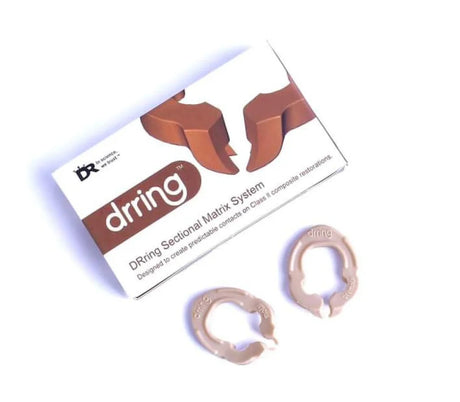
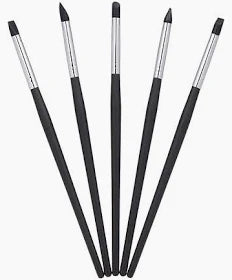
Ringo Offer 2 POP Ringo Rings+ ORCA ACID Etch 37%+POP Composite Brush Kit
Very low stock (3 units)Sale price LE 600.00 EGP Regular price LE 800.00Unit price /Unavailable
Promedica
In stock (35 units)Regular price LE 742.00 EGPUnit price /UnavailableSDI
riva self cure Glass Ionomer Capsule
In stock (60 units)Regular price LE 135.00 EGPUnit price /Unavailable-

KULZER
Kulzer GLUMA Bond5 Bottle Refill 1x4ml
Low stock (9 units)Regular price LE 620.00 EGPUnit price /Unavailable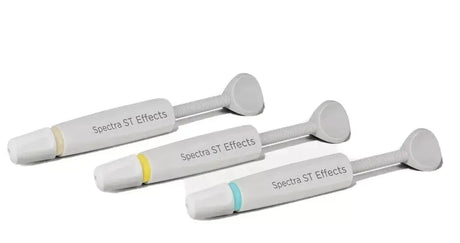
DentsplySirona
DentsplySirona Neo Spectra ST Effects Syringe 3 g
Very low stock (4 units)Regular price LE 1,485.00 EGPUnit price /UnavailableBausch
Bausch Arti-fol metallic Occlusal film 12 micron Roll With plastic dispenser
Low stock (15 units)Regular price LE 675.00 EGPUnit price /Unavailable-
GENERIC
In stock (21 units)Regular price LE 40.00 EGPUnit price /Unavailable
Lascod
LiTARK Temporary Filling JAR 30 GM
Low stock (20 units)Regular price LE 135.00 EGPUnit price /Unavailable
Frank Dental
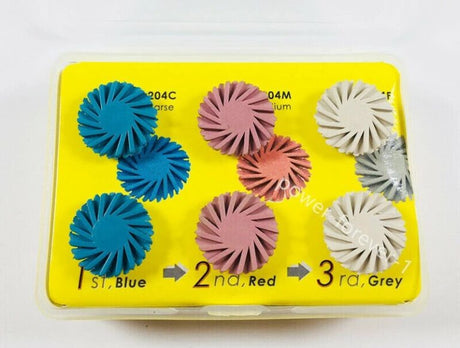
Frank Low speed Polisher for composite polishers wheel brush - 1 pc
Very low stock (6 units)Regular price LE 105.00 EGPUnit price /Unavailable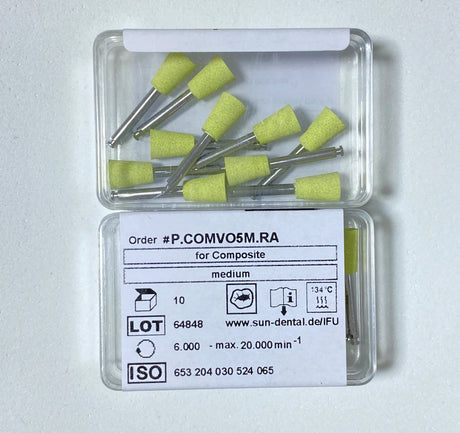
Sun Dental
Sun Dental P.COMVO5M RA Polisher for COMPOSITE - CUP - Fine
In stock (87 units)Regular price From LE 110.00 EGPUnit price /UnavailableAsnanco
Dentoform Composite contouring instrument
Low stock (20 units)Regular price From LE 150.00 EGPUnit price /Unavailable-

Dental Technologies
In stock (25 units)Regular price LE 205.00 EGPUnit price /Unavailable
Bisico
Bisico Nanofill unique One Shade Composite 4g
Very low stock (1 unit)Regular price LE 1,335.00 EGPUnit price /Unavailable Sold out


How to Choose Restorative Dental Materials for Your Practice
- Composite Resin Type (Universal vs Flowable vs Bulk-Fill) — Universal hybrid composites (filler loading 70–85 wt%, particle size 0.4–0.7 µm) are the primary choice for direct Class I–IV restorations. Flowable composites (filler loading 50–65 wt%) are used as cavity liners or for accessible Class V lesions. Bulk-fill composites (depth of cure 4–5 mm) reduce placement steps in deep Class II cavities and are incrementally placed or cured in a single increment depending on formulation.
- Adhesive Generation and Bonding Strategy — 5th generation (one-bottle self-etching, e.g. SE Bond) and 7th generation (all-in-one) adhesives simplify bonding steps but may show lower dentin bond strengths (18–25 MPa) compared to 4th generation three-step total-etch systems (25–35 MPa). MDP monomer-containing adhesives (e.g. Panavia-line, Clearfil) provide superior bond strength to zirconia and metal substrates. Choose adhesive generation based on restoration type, tooth moisture level, and clinical workflow preference.
- Matrix System Selection — Sectional matrix systems (Palodent, V3 Ring) are preferred for Class II proximal restorations, providing tight contact points and correct axial contour. Saddle matrices suit MOD preparations spanning both proximal surfaces. Tofflemire (universal) band matrices remain the most versatile for Class I and simple Class II restorations in Egyptian general practice.
- Finishing Bur Grit Sequence — Composite finishing requires a sequential grit reduction: coarse carbide burs (>100 µm grit) for gross contour, followed by fine diamond burs (25–40 µm), silicone polishing points (medium to fine), and diamond-impregnated finishing discs for final luster. Each step must reduce the surface roughness to below 0.2 µm Ra to minimize biofilm retention.
- Glass Ionomer vs Resin-Modified Glass Ionomer (RMGI) — Conventional glass ionomers (GIC) release fluoride continuously and bond chemically to dentin without primer, making them suitable for high-caries-risk patients and sandwich restorations. RMGIs add a resin phase that improves early strength and moisture sensitivity but reduces fluoride release. Choose GIC for pediatric and geriatric restorations; RMGI for cervical lesions requiring faster set.
- Polishing Paste and Paste Abrasivity (RDA) — Prophy pastes are graded by Relative Dentine Abrasivity (RDA): fine (RDA <50) for composite-surface polishing without scratching; medium (RDA 50–100) for general prophylaxis; coarse (RDA >100) for heavy stain removal. Use paste RDA values published on product datasheets rather than vague “fine/medium/coarse” labelling.
Key Restorative Material Categories at a Glance
| Category | Key Spec | Clinical Use | Typical Brands |
|---|---|---|---|
| Universal Composite | 70–85 wt% filler, 0.4–0.7 µm | Class I–IV direct restorations | Shofu Beautiful, Filtek Z350, Charisma |
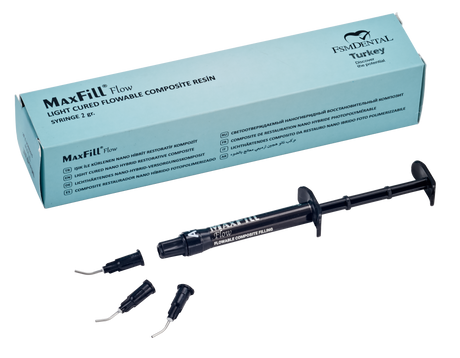
| Flowable Composite | 50–65 wt% filler, low viscosity | Liner, Class V, cervical | MaxFill Flow, Filtek Supreme Flow |
| Bulk-Fill Composite | 4–5 mm depth of cure | Deep Class I&II in one increment | Tetric PowerFill, SonicFill |
| Glass Ionomer | Fluoride release, chemical dentin bond | Pediatric, sandwich, high-caries patients | Fuji IX, Ketac Molar |
| Dental Adhesive | 4th/5th/7th gen; 18–35 MPa bond | Pre-composite bonding to enamel/dentin | Clearfil SE, Optibond, GC G-Premio |
Availability & Delivery in Egypt
All restorative dental materials at MedSTA are priced in EGP with nationwide delivery across Egypt. Light-sensitive composites (syringe and compule formats) should be stored at 2–8°C for maximum shelf life; do not refrigerate methacrylate-based materials in non-temperature-stable environments during Egyptian summer shipping. Verify expiry dates on composite batches before clinical use.
Frequently Asked Questions
What is the difference between bulk-fill and universal composites?
What is the difference between bulk-fill and universal composites?
Universal (conventional) composites are placed and cured in 2 mm increments to ensure complete polymerisation within the light-cure depth. Bulk-fill composites are formulated with optimised photoinitiators and reduced filler scattering to achieve a 4–5 mm depth of cure, allowing the entire posterior box fill in fewer increments. Bulk-fill materials generally have lower filler loading and may require a capping layer of a conventional composite for optimal surface luster in visible areas.
Which adhesive generation gives the best bond strength to dentin?
Which adhesive generation gives the best bond strength to dentin?
Fourth-generation three-step total-etch adhesives (separate etch, primer, and bond application) consistently achieve the highest dentin bond strengths (25–35 MPa) in peer-reviewed studies. Fifth-generation one-bottle self-etching adhesives offer clinically adequate bond strength (18–28 MPa) with fewer steps. Seventh-generation all-in-one adhesives are most technique-friendly but show lower and more variable bond strength to dentin. MDP monomer-containing systems offer the best bond durability under hydrolytic aging.
How do I select the right matrix system for Class II composite restorations?
How do I select the right matrix system for Class II composite restorations?
For single-surface Class II restorations, a sectional matrix (Palodent, V3 Ring) with a separating ring provides the best proximal contact recreation and axial contour. For MOD restorations, a saddle matrix that spans both proximal boxes or a Tofflemire universal band is more practical. Mylar strips (matrix strips) are for anterior Class III and IV restorations only. The correct system depends on preparation geometry: sectional for tight posterior contacts; Tofflemire for broad box access.
How should composite resins be stored in Egyptian clinics during summer?
How should composite resins be stored in Egyptian clinics during summer?
Composite resins should be stored at 2–8°C (refrigerator temperature) to extend shelf life and prevent premature polymerisation from heat. During Egyptian summer (June–September), clinic temperatures can exceed 35°C — sufficient to accelerate composite degradation within a few hours if left on the work surface. Store in a dedicated mini-fridge in the materials cabinet; allow syringes or compules to reach room temperature for 15 minutes before use to restore handling viscosity.
Is glass ionomer cement a reliable restorative material for Egyptian dental practices?
Is glass ionomer cement a reliable restorative material for Egyptian dental practices?
Yes. Conventional glass ionomer cement (GIC) offers chemical bonding to dentin (no separate primer or etch required), continuous fluoride release, and high moisture tolerance — making it reliable in Egyptian clinic environments where perfect isolation is not always achievable. For permanent posterior restorations, resin-modified GIC (RMGI) provides improved early strength and wear resistance. GIC remains the first-choice direct restorative material for primary dentition, high-caries-risk patients, and sandwich base/liner applications under composite.