

Stoddard UK
Stoddard Low Speed Polishing Flame bur for Acrylic – Yellow - 1 pc
In stock (28 units)Regular price LE 85.00 EGPUnit price /Unavailable

COXO
MCS Low speed Inner Coolant B4 Set 3 PCS handpieces
Very low stock (1 unit)Regular price LE 8,000.00 EGPUnit price /Unavailable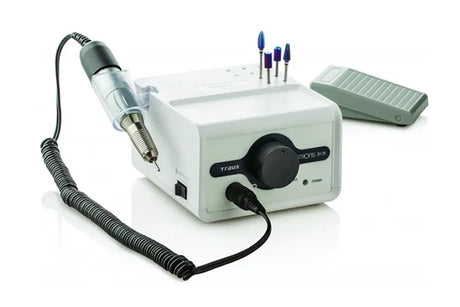
Saeshin
Strong Micromotor + contra B135
Very low stock (4 units)Regular price LE 8,550.00 EGPUnit price /Unavailable
SCHEU
In stock (40 units)Regular price LE 15,000.00 EGPUnit price /Unavailable

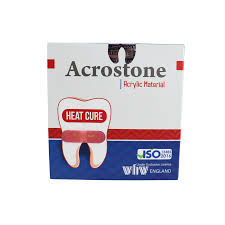
Acrostone
Low stock (9 units)Regular price LE 795.00 EGPUnit price /Unavailable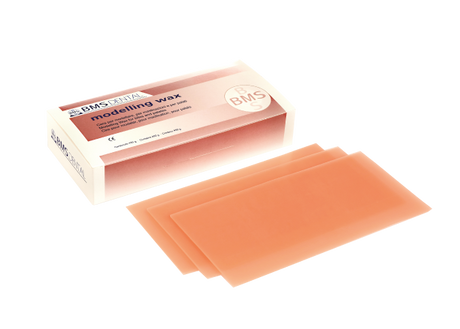
BMS
BMS Modelling Wax for bites and palates 450 g
In stock (500 units)Regular price LE 411.00 EGPUnit price /Unavailable
WILEY Blackwell
An ILLustrated Atlas of Tooth Carving and Wax-Up Techniques 2021
Low stock (10 units)Regular price LE 160.00 EGPUnit price /UnavailableAsnanco
Low stock (10 units)Regular price LE 375.00 EGPUnit price /Unavailable-


Leone
Leone Termoplast 125×125 (1.5 MM)
Low stock (10 units)Regular price LE 1,500.00 EGPUnit price /Unavailable
Kemdent
Low stock (20 units)Regular price LE 420.00 EGPUnit price /Unavailable- 6% off
Elegoo
Low stock (20 units)Sale price LE 68,000.00 EGP Regular price LE 72,000.00Unit price /Unavailable -

Monitex
Monitex Vmax GT370 Alginate Mixer
Low stock (20 units)Regular price LE 42,500.00 EGPUnit price /Unavailable


How to Choose Dental Laboratory Supplies and Materials
- Zirconia type selection — 3Y-TZP vs 4Y-TZP vs 5Y-TZP — 3Y-TZP (3 mol% yttria-stabilised) zirconia discs offer the highest flexural strength (~900–1,200 MPa) and are the standard for posterior single crowns, multi-unit bridge frameworks, and implant-supported structures where mechanical strength is the primary requirement. 4Y-TZP and 5Y-TZP grades sacrifice strength (~700–900 MPa and ~500–700 MPa respectively) for increased translucency, making them appropriate for anterior monolithic crowns and veneers where aesthetics is prioritised. Full-contour monolithic 5Y-TZP is increasingly specified by Egyptian cosmetic dentistry practices for anterior aesthetic cases.
- Dental stone type (I–IV) and application — Type II plaster (β-hemihydrate, expansion 0.6–1.0%) is used for diagnostic models and poured alginate impressions where high accuracy is not required. Type III dental stone (β-hemihydrate, expansion 0.2–0.3%) is the standard for working casts used in PFM fabrication and removable prosthetics. Type IV die stone (α-hemihydrate, expansion ≤0.15%, compressive strength ≥80 MPa) provides the highest accuracy for CAD/CAM scanning models and implant prosthetic cases. In Egyptian labs operating at ambient temperatures above 25°C, use cool water (below 20°C) to extend working time and reduce expansion variability.
- CAD/CAM milling vs 3D printing for indirect restorations — Subtractive milling (CAD/CAM) from ceramic or zirconia discs produces restorations with dense, fully sintered structure suitable for load-bearing applications. Additive 3D printing (DLP/LCD resin printing) offers faster production of multiple units simultaneously for PMMA provisionals, surgical guides, and diagnostic models, but printed ceramic restorations have lower strength than milled equivalents and are not currently cleared for permanent posterior use. Egyptian dental laboratories are increasingly adopting hybrid workflows: 3D-printed provisionals + milled final restorations.
- Metals and alloys — cobalt-chromium vs titanium — Co-Cr alloys (ISO 22674 Type 4 or 5) are the most commonly used framework material for PFM crowns, metal ceramic bridges, and removable partial denture frameworks in Egyptian dental laboratories due to low cost and high stiffness (E-modulus ~220 GPa). Titanium alloy (Grade 5) frameworks are used for implant bars and full-arch screw-retained structures requiring superior biocompatibility and lower specific weight. Noble gold alloys (ISO 22674 Type 3–5) are indicated for high-risk patients or where maximum biocompatibility is required but are less commonly used in Egypt due to cost.
- Porcelain firing furnace temperature calibration — Ceramic firing furnaces must be calibrated to within ±5°C of the manufacturer's specified firing temperature for each porcelain powder to achieve correct crystalline phase transformation and optical properties. Egyptian summer ambient temperatures (35–40°C) in laboratory spaces without air conditioning can affect furnace ramp rates and dwell accuracy. Verify furnace calibration with a calibrated thermocouple quarterly, and increase calibration frequency during summer months in non-air-conditioned Egyptian laboratory environments.
Dental Laboratory Supply Categories
| Category | Key Products | Lab Application |
|---|---|---|
| CAD/CAM Materials | Zirconia discs, e.max blocks, PMMA | Digital milled restorations |
| Lab Materials | Dental stone, investment, wax, ceramics | Conventional and casting workflows |
| Lab Equipment | Vibrators, presses, furnaces, milling machines | Model making, casting, sintering |
| Denture Materials | Heat-cure/cold-cure acrylic, artificial teeth | Complete and partial denture fabrication |
| Instruments | Lab burs, spatulas, brushes, gas torch | Manual and finishing lab work |
Availability & Delivery in Egypt
MedSTA supplies dental laboratory materials and instruments priced in EGP with delivery across all Egyptian governorates. CAD/CAM blocks and zirconia discs are available for case-by-case or bulk procurement. Delivery covers Cairo and Giza within 24–48 hours and other governorates within 3–5 working days.
Frequently Asked Questions
What is the difference between 3Y, 4Y, and 5Y zirconia for dental restorations?
What is the difference between 3Y, 4Y, and 5Y zirconia for dental restorations?
3Y-TZP (3 mol% yttria-stabilised tetragonal zirconia polycrystal) has the highest flexural strength (~900–1,200 MPa) but lowest translucency — ideal for posterior single crowns, bridges, and implant frameworks where mechanical strength is the primary requirement. 4Y-TZP (~700–900 MPa, moderate translucency) represents a middle balance, suitable for anterior-to-premolar single crowns and short-span bridges. 5Y-TZP (~500–700 MPa, highest translucency) is used for anterior monolithic crowns and veneers where aesthetic translucency approximating natural enamel is prioritised over peak mechanical strength. Egyptian dental laboratories use primarily 3Y-TZP for posterior work and 5Y-TZP for anterior cosmetic cases.
What type of dental stone should be used for CAD/CAM scanning models?
What type of dental stone should be used for CAD/CAM scanning models?
Type IV die stone (alpha-hemihydrate, ISO 6873 Type 4) is the minimum specification for CAD/CAM scanning models — it provides a compressive strength ≥80 MPa and setting expansion ≤0.15%, ensuring the model surface is hard enough to resist scanner contact forces without abrasion and dimensionally accurate enough for digital impression scanning. Type III stone is insufficient for scanning models as its lower hardness produces surface abrasion during digital contact scanning, introducing dimensional errors. In Egyptian labs operating above 25°C, always use cold water (below 20°C) when mixing Type IV stone to slow the exothermic reaction and reduce expansion variability during the summer months.
What is the difference between heat-cure and cold-cure acrylic resin for dentures?
What is the difference between heat-cure and cold-cure acrylic resin for dentures?
Heat-cure acrylic resin (polymethyl methacrylate, PMMA) is polymerised under controlled heat and pressure in a flask (water bath 70°C for 90 minutes + terminal 100°C boil), producing a denser polymer with residual monomer content below 0.5% (ISO 20795-1 limit 2.2%), superior mechanical properties (flexural strength ~65–80 MPa), and better stain resistance. Cold-cure (autopolymerising) acrylic resin initiates at room temperature with a chemical activator, achieving full cure in 20–40 minutes but retaining higher residual monomer (typically 1–5%), lower flexural strength (~45–60 MPa), and greater susceptibility to discolouration. Egyptian laboratory technicians use heat-cure resin for complete and partial denture bases; cold-cure is reserved for repairs, additions, and chairside relines.
How should dental porcelain firing furnaces be maintained in Egyptian laboratory conditions?
How should dental porcelain firing furnaces be maintained in Egyptian laboratory conditions?
Porcelain firing furnaces must be calibrated quarterly — or monthly during Egyptian summer when ambient temperature fluctuations in non-air-conditioned laboratory spaces affect thermocouple accuracy — using a calibrated reference thermocouple inserted into the firing chamber. Acceptable deviation is ±5°C from the manufacturer's specified firing temperature for each ceramic system; deviations above this threshold cause colour, translucency, and surface texture errors in the final restoration. Clean the muffle (firing chamber) of ceramic debris after every 20–30 firings to prevent contamination of subsequent firings. Keep the furnace in an air-conditioned room — ambient temperature above 35°C reduces heating element efficiency and extends cycle times beyond manufacturer specifications.
Does MedSTA supply dental laboratory materials to Egyptian dental technicians?
Does MedSTA supply dental laboratory materials to Egyptian dental technicians?
Yes — MedSTA stocks a comprehensive range of dental laboratory supplies including CAD/CAM zirconia discs and e.max blocks, dental stone (Type II, III, and IV), investment materials, dental ceramics, metals and alloys (Co-Cr, precious), denture base acrylics and artificial teeth, lab equipment (vibrators, presses, furnaces), lab burs and polishing kits, wax and wax instruments, gas torches and butane refills, and dental laboratory brushes — all priced in EGP. Delivery covers Cairo and Giza within 24–48 hours and all other Egyptian governorates within 3–5 working days.