FAQs
What factors determine the price of dental loupes in Egypt?
Dental loupes price in Egypt is driven mainly by the optical system (Galilean vs. TTL/prismatic), magnification power, frame material (titanium or carbon fiber versus standard acetate), and whether an integrated LED headlight is included.
Why should I consider ergo loupes over traditional flip-up designs?
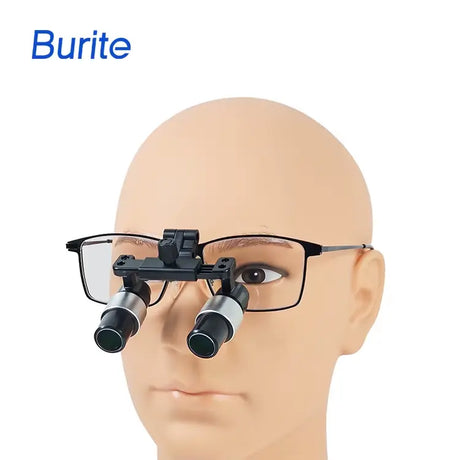
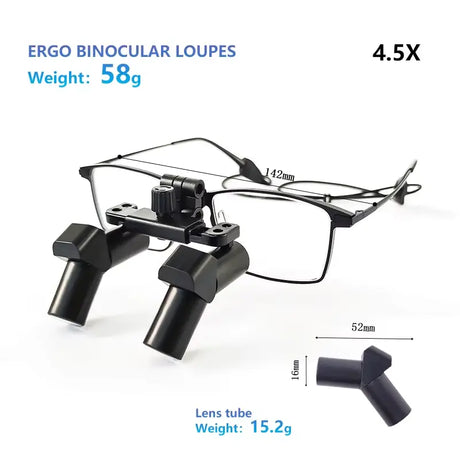
Traditional flip-up loupes often require the clinician to tilt the head forward to view the treatment site. Ergo and ergovision loupes use a steeper declination angle and deflection prisms so the dentist can look downward while keeping the neck upright, which is the recommended approach for preventing chronic cervical and lumbar strain.
What is the difference between Galilean and prismatic (TTL) loupe optics?
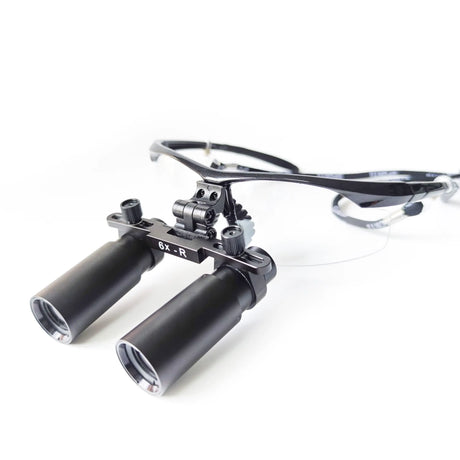
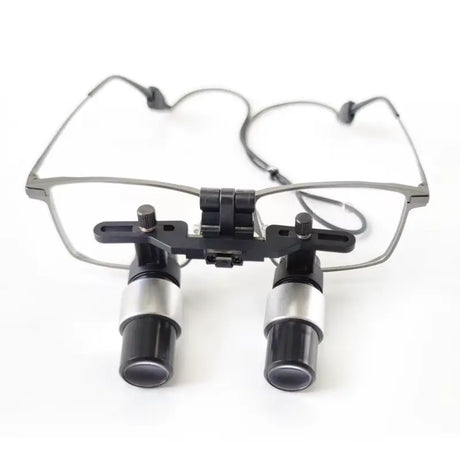
Galilean loupes use a simple lens system mounted on a flip-up frame, offering a lighter, lower-cost option typically limited to around 2.5x to 3.5x magnification. Prismatic, through-the-lens (TTL) loupes such as Bilumix Flex models are custom-built into the frame at the dentist's exact interpupillary distance and declination angle, giving a wider field of view at higher magnifications up to 6.0x.
How can I verify the authenticity of imported dental loupes sold in Egypt?
Genuine Bilumix, Optek, and Zumax loupes ship with a serial number, warranty card, and manufacturer documentation. Buying through an authorized Egyptian distributor such as MedSTA ensures the optics, coatings, and LED components match the manufacturer's specification and that warranty claims are honored locally.
How long does it take to adapt to new dental loupes?
Most clinicians need an acclimatization period of one to two weeks. Start with simple procedures under loupes and progress to more complex treatment as your eyes and posture adjust to the magnified field and narrowed peripheral vision.