

GENERIC
Very low stock (5 units)Regular price LE 48.00 EGPUnit price /Unavailable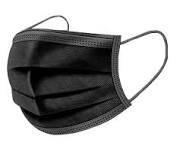
-

Epic
Very low stock (5 units)Regular price LE 300.00 EGPUnit price /Unavailable
Epic
Very low stock (5 units)Regular price LE 500.00 EGPUnit price /Unavailable


How to Choose the Right Dental Face Mask for Your Practice
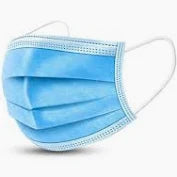
- Type Classification (EN 14683) — Dental face masks are classified under EN 14683: Type I masks offer ≥95% bacterial filtration efficiency (BFE) and are intended for patients and low-risk staff use. Type II masks achieve ≥98% BFE and are the standard for dental clinicians during routine procedures. Type IIR masks add a splash resistance requirement (≥12.1 kPa differential pressure resistance), making them appropriate for procedures generating blood splatter, irrigation spray, or high-speed handpiece aerosol. Type IIR is the recommended choice for all operative and surgical dental procedures in Egypt.
- Bacterial Filtration Efficiency (BFE) — BFE measures the mask’s ability to filter 3µm test aerosol particles. Type II (≥98% BFE) is the minimum standard for dental clinical use. BFE is not the same as respirator filtration against fine aerosols (FFP2 ≥ 94% PM2.5); a surgical face mask is not an FFP respirator and is not rated for aerosol-generating procedure (AGP) respiratory protection in the same way an FFP2 is.
- Layers of Construction — Standard dental face masks use a three-layer construction: outer hydrophobic layer (water-repellent), middle melt-blown polypropylene filter layer (the BFE-determining element), and inner soft comfort layer. Higher-performance 4-ply masks add a second filter layer, increasing BFE above 99% and improving breathability by distributing filtration load across two melt-blown layers. The middle filter layer accounts for 90%+ of the mask’s filtration performance.
- Ear-Loop vs. Tie-On vs. Headband — Ear-loop masks (most common in Egypt) are the fastest to put on and remove and suit routine restorative appointments. Tie-on masks offer a tighter facial seal and are preferred for surgical procedures or clinicians performing 4–6 hour sessions where ear-loop pressure fatigue becomes uncomfortable. Headband designs (duckbill type) provide a structured airspace that reduces heat and moisture build-up around the nose and mouth during long procedures.
- Paediatric Sizing — Standard adult dental masks measure approximately 17.5×9.5 cm, which is too large for paediatric patients and junior dental students. Paediatric masks (e.g. Protecta KIDS) measure 14×7.5 cm, providing adequate facial seal on children aged 3–12 years when fitted correctly. Using adult masks on children produces gaps at the sides, eliminating the protective seal and the infection control benefit.
- Colour and Clinical Use — Mask colour does not affect filtration performance. Black or dark-coloured masks (popular in Egyptian private dental clinics for aesthetic reasons) use the same melt-blown filter layer as standard white masks. Choose colour based on clinic aesthetics; confirm the black/coloured outer layer does not contain azo dyes that migrate to wet skin — a relevant concern in hot Egyptian summer conditions when clinicians perspire under the mask.
Dental Face Mask Types at a Glance
| Type | BFE | Splash Resistance | Dental Use Case |
|---|---|---|---|
| Type I | ≥95% | Not tested | Patient use, non-clinical staff |
| Type II | ≥98% | Not tested | Routine restorative, exam procedures |
| Type IIR | ≥98% | ≥12.1 kPa | Surgery, high-speed handpiece, scaling |
Availability & Delivery in Egypt
MedSTA stocks dental face masks in ear-loop, black/coloured, and paediatric formats, sourced from Elephant, Protecta, and generic manufacturers, all priced in EGP with delivery across Cairo, Giza, Alexandria, and all Egyptian governorates within 1–3 business days. Box quantities of 50 and 100 masks are available for individual clinicians and bulk orders for dental hospitals.
Frequently Asked Questions
What is the difference between Type I, Type II, and Type IIR dental face masks per EN 14683?
What is the difference between Type I, Type II, and Type IIR dental face masks per EN 14683?
Under European standard EN 14683, Type I surgical masks achieve ≥95% bacterial filtration efficiency (BFE) and are appropriate for patients and low-risk non-clinical staff. Type II masks achieve ≥98% BFE and are the standard for dental clinicians during routine examinations and restorative procedures. Type IIR masks meet the same ≥98% BFE requirement AND pass a splash resistance test at ≥12.1 kPa differential pressure, making them appropriate for surgical, scaling, and high-speed handpiece procedures where blood or irrigation splatter is expected. Type IIR is the recommended standard for dental clinical staff performing any operative procedure in Egypt.
Do dental surgical face masks protect against COVID-19 and airborne dental pathogens?
Do dental surgical face masks protect against COVID-19 and airborne dental pathogens?
Dental surgical face masks (Type II/IIR) reduce the transmission of droplet-borne pathogens including SARS-CoV-2, influenza, and oral bacteria through their bacterial filtration efficiency (≥98% BFE for ≥3µm particles). However, surgical masks are not rated as respirators and do not provide the tight facial seal required for fine aerosol (PM2.5) protection against aerosol-generating procedures (AGPs). For true AGP protection (high-speed drilling, ultrasonic scaling, air polishing), an FFP2 or FFP3 respirator in addition to the face mask is the recommended infection control protocol.
How often should a dentist change their face mask during a clinical session?
How often should a dentist change their face mask during a clinical session?
A dental face mask must be changed between each patient contact, regardless of whether the mask appears visually contaminated. The mask’s filtration efficiency decreases progressively as the melt-blown filter layer becomes saturated with moisture from exhaled breath and aerosol — typically after 20–30 minutes of continuous use. Additionally, masks should be changed immediately if the mask becomes visibly soiled with blood or aerosol, if it becomes damp to the touch, or if the seal is broken (e.g. by removing and refitting). Single-use masks must not be reused between sessions.
Are black face masks clinically equivalent to white or standard-coloured Type II masks?
Are black face masks clinically equivalent to white or standard-coloured Type II masks?
Yes, provided the black mask carries a valid EN 14683 Type II or IIR certification. The colour of the outer layer does not affect the performance of the middle melt-blown polypropylene filter layer, which determines BFE. When selecting dark-coloured masks, confirm that the outer layer’s colorant is non-migrating (i.e. the dye does not transfer to wet facial skin under perspiration) — a consideration in Egyptian summer conditions where clinicians may perspire significantly under the mask during extended sessions.
How should dental face masks be stored correctly in Egyptian summer humidity?
How should dental face masks be stored correctly in Egyptian summer humidity?
Store dental face masks in sealed, unopened boxes in a dry, cool location away from direct sunlight. Egyptian summer humidity in coastal cities (Alexandria, Suez Canal region) reaches 70–80%, which can cause the melt-blown filter layer to absorb atmospheric moisture over time if individual masks are stored unwrapped. Do not pre-open a box of masks and leave them loose on a clinic shelf — each mask should remain in its individual sealed wrapper or in a fully closed box until immediately before use. Boxes stored in humid conditions should be discarded if the filter layer appears compressed or damp when opened.