


GENERIC
FACE SHIELD POLYCARBONATE - TRANSPARAN HALF
Very low stock (5 units)Regular price LE 65.00 EGPUnit price /Unavailable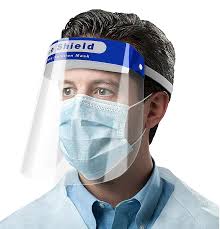
GENERIC
Low stock (9 units)Regular price LE 75.00 EGPUnit price /Unavailable

How to Choose the Right Dental Face Shield for Your Practice
- Visor Material: Polycarbonate vs. Acetate — Polycarbonate visors are impact-resistant, scratch-resistant, and suitable for repeated chemical disinfection cycles. They conform to EN 166 optical impact requirements and maintain optical clarity after multiple cleaning cycles. Acetate visors are lighter and less expensive but more prone to surface scratching, which reduces visual clarity over repeated use. For clinical dental use where the shield is disinfected and reused between patients, polycarbonate is the preferred material for durability and optical performance.
- Full-Frame vs. Half-Frame Coverage — Full-frame face shields extend from above the forehead to below the chin and cover the full lateral field to the ears, providing complete protection against aerosol contamination during high-speed drilling and ultrasonic scaling. Half-frame (transparent front only) designs protect the anterior face but may leave lateral aerosol pathways open. For aerosol-generating procedures, full-wrap coverage is the recommended standard — half-frame designs are adequate for lower-risk activities such as examination and impression taking.
- Anti-Fog Coating — Fogging on the inner visor surface is the primary usability complaint with dental face shields, particularly in Egyptian winter conditions when warm exhaled breath from both the clinician’s mask and from the patient’s oral cavity contacts the cool visor. Anti-fog-coated visors (hydrophilic coating that spreads moisture into a thin film rather than droplets) significantly reduce fogging. Confirm anti-fog coating is present on the inner surface — not just the outer face — as the fogging problem originates internally.
- Headband Adjustability — Adjustable ratchet headbands allow the visor to be fitted to different head sizes without removing gloves. Fixed-size headbands are common on single-use shields. For a reusable clinical shield used by a single clinician, fixed sizing is acceptable if the fit is confirmed correct. For shared shields across multiple team members, adjustable headbands with clear size markings reduce transfer time between clinicians.
- Compatibility With Underlying Face Mask — The face shield must sit comfortably over an underlying Type II or IIR surgical mask without pushing the mask down from the nose or creating pressure points. Visors with deep forehead brims may rest on the bridge of the nose, displacing the underlying mask seal. Test the combined fit of the specific face shield and face mask combination before clinical use.
- Single-Use vs. Reusable with Disinfection — Reusable polycarbonate shields require disinfection between patients with an alcohol wipe or surface spray. Confirm that the disinfectant used is compatible with polycarbonate (concentrated bleach above 1000 ppm can yellow PC over repeated use). Single-use acetate shields eliminate the disinfection step but generate plastic waste and have higher per-procedure cost. Egyptian clinics conducting high volumes of aerosol-generating procedures may favour reusable PC shields on cost grounds, with single-use reserved for surgical procedures.
Dental Face Shield Types at a Glance
| Feature | Polycarbonate (Reusable) | Acetate (Disposable/Short-term) |
|---|---|---|
| Impact resistance | High (EN 166 rated) | Moderate |
| Scratch resistance | High | Low |
| Anti-fog coating | Common | Variable |
| Chemical disinfection | Compatible (alcohol) | Limited (bleach degrades) |
| Service life | Months to years | 1 day to 1 week |
| Best for | Routine clinical use, high-volume | Single procedures, low-budget |
Availability & Delivery in Egypt
MedSTA stocks dental face shields in polycarbonate full-frame and half-frame formats, priced in EGP with delivery across Cairo, Giza, Alexandria, and all Egyptian governorates within 1–3 business days. Single-unit and bulk orders for dental hospitals, university clinics, and multi-operator practices are available.
Frequently Asked Questions
Must a dental face shield be worn with a surgical mask, or can it replace it?
Must a dental face shield be worn with a surgical mask, or can it replace it?
A dental face shield cannot replace a surgical face mask. The face shield protects the eyes and face from splash, aerosol, and droplet contamination, but it does not filter inhaled or exhaled air and does not provide the bacterial filtration function of a face mask. The two are complementary devices: the surgical mask (Type II or IIR per EN 14683) filters respiratory droplets at the point of exhalation; the face shield provides physical barrier protection for the face and eyes from external aerosol and splash. Both must be worn together during aerosol-generating dental procedures (high-speed drilling, ultrasonic scaling, air polishing).
What is the difference between polycarbonate and acetate dental face shields?
What is the difference between polycarbonate and acetate dental face shields?
Polycarbonate visors are impact-resistant and scratch-resistant, meeting EN 166 occupational eye protection standards, and can withstand repeated alcohol-based disinfection over months to years of clinical use. Acetate visors are lighter and less expensive but scratch more easily, losing optical clarity after repeated cleaning cycles, and cannot withstand concentrated disinfectant exposure. For routine dental clinical reuse (disinfected between every patient), polycarbonate is the correct material choice. Acetate shields are appropriate only as single-use or very short-term disposable use where cost is a primary constraint.
How do I prevent fogging on a dental face shield during clinical procedures?
How do I prevent fogging on a dental face shield during clinical procedures?
Fogging occurs when warm exhaled air from the mask or warm dental unit light heat contacts the cooler inner visor surface. Prevention strategies: (1) choose a face shield with an anti-fog coating on the inner visor surface, (2) ensure the mask is fitted tightly over the nose bridge to direct exhaled air downward rather than upward toward the visor, (3) apply a small amount of anti-fog wipe or spray to the inner visor before putting on the shield, and (4) ensure adequate room ventilation and climate control in the Egyptian dental clinic. In Egyptian summer conditions, cooling the visor before use is counterproductive.
Can dental face shields be disinfected and reused between patients?
Can dental face shields be disinfected and reused between patients?
Polycarbonate face shields can be disinfected and reused between patients. After each patient contact, wipe the outer visor and headband with an alcohol wipe (70% isopropanol) and allow to air-dry for 30 seconds before reuse. For more thorough between-session decontamination, spray with an EN 14885-compliant surface disinfectant and wipe clean. Do not submerge the headband ratchet mechanism in liquid disinfectant as this can degrade the spring mechanism. Confirm the disinfectant is polycarbonate-compatible — concentrated bleach (>1000 ppm) causes yellowing over multiple cycles and should be avoided on PC shields.
What is the difference between a half-frame and a full-frame dental face shield?
What is the difference between a half-frame and a full-frame dental face shield?
A full-frame dental face shield wraps around from above the forehead to below the chin and extends to the lateral face near the ears, providing complete circumferential protection against aerosols approaching from the front and sides. A half-frame shield covers only the anterior face from forehead to chin, leaving lateral pathways open. For aerosol-generating procedures (high-speed handpiece, ultrasonic scaler, air-water syringe), full-frame coverage is the correct standard as aerosols generated from the oral cavity disperse laterally as well as forward. Half-frame designs are appropriate for lower-risk procedures and patient interviews.