

AtriumCare
Very low stock (4 units)Regular price LE 250.00 EGPUnit price /Unavailable-
Ultradent
Low stock (19 units)Regular price LE 990.00 EGPUnit price /Unavailable-
Ultradent
In stock (30 units)Regular price From LE 750.00 EGPUnit price /Unavailable-
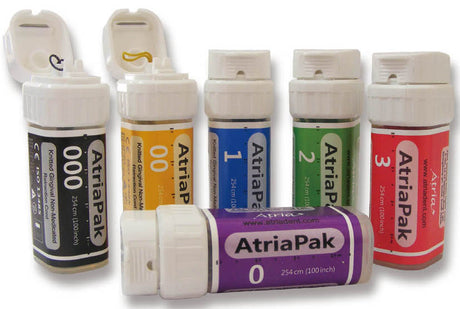


Cord packing remains the most widely used displacement method precisely because it is simple, inexpensive and effective at both lateral retraction and hemostasis. For prosthodontic and restorative practices across Egypt, MedSTA supplies knitted gingival retraction cords across the full diameter range, with plain and pre-impregnated options to suit single-cord and double-cord techniques on every biotype.
At MedSTA, our tissue-management range extends beyond cord to hemostatic agents, cord-packing instruments, impression materials and bite registration — everything needed to capture a precise margin — supplied locally in EGP with fast delivery anywhere in Egypt.
How to Choose Gingival Retraction Cord
- Knitted vs Twisted vs Braided — Knitted cords interlock in a chain-like loop structure that resists fraying, packs without unravelling and gently re-expands inside the sulcus for sustained lateral retraction.
- Diameter / Size (000–3) — Cord is graded from ultra-fine #000 for thin sulci and lower anteriors up to #3 for wide spaces and second cords.
- Plain vs Impregnated — Plain cord is inert and lets you pair it with any hemostatic solution you prefer.
- Material & Absorbency — Cords are spun from cotton or synthetic fibres; absorbency governs how much hemostatic solution the cord carries and how effectively it manages crevicular fluid.
- Colour & Visibility — A cord that contrasts with tissue and blood is easier to place at a consistent depth and, critically, easier to see and fully remove before the impression.
- Single- vs Double-Cord Technique — For deeper or subgingival margins, a thin first cord left in place plus a thicker second cord gives superior, sustained retraction; the second cord is removed just before impression-taking.
Retraction Cord Size Selector
| Size | Diameter | Typical indication |
|---|---|---|
| #000 | Ultra-fine | Thin biotype, lower anteriors, narrow sulci |
| #00 | Fine | Anterior teeth, shallow sulci |
| #0 | Small | Premolars, average anterior sulci |
| #1 | Medium | Molars and teeth with an average sulcus |
| #2 | Large | Wide sulci; second cord in the double-cord technique |
| #3 | Extra-large | Very wide spaces and pronounced retraction needs |
How to Pack Retraction Cord (Single-Cord Technique)
- Select a cord diameter matched to the sulcus depth and biotype.
- Cut a length and loop it loosely around the prepared tooth.
- Pack the cord apically into the sulcus with a cord packer, working around the full margin.
- Tuck the ends so the cord sits below the gingival crest, not over the preparation.
- Leave in place about 8–10 minutes for displacement and hemostasis.
- Re-wet if dry, then remove gently just before the impression or scan.
- Capture the impression while the sulcus is open, dry and the margin is clearly exposed.
Availability & Delivery in Egypt
Every retraction cord on this page is priced in EGP and delivered to clinics nationwide, so restocking plain and impregnated cords between cases is straightforward. Store cords sealed and dry to protect impregnated agents, and keep both a fine and a medium diameter on hand so the double-cord technique is always an option for deep margins.
References
- Gingival Retraction Methods for Fabrication of Fixed Partial Dentures (review) — PMC / National Library of Medicine
- A review and clinical tips on gingival retraction methods — Dental Update
Frequently Asked Questions
What is a gingival retraction cord?
What is a gingival retraction cord?
It is a thin textile cord, knitted or twisted from cotton or synthetic fibres, packed gently into the gingival sulcus to temporarily displace gum tissue from the tooth. This exposes the preparation margin and controls fluid so an accurate impression or restoration can be completed.
Is a retraction cord necessary?
Is a retraction cord necessary?
In most fixed-prosthodontic cases, yes. Displacing the gingiva and managing moisture is what lets you capture an accurate finish line so the crown or bridge seats precisely. Cordless displacement pastes are an alternative in selected, low-bleeding situations.
What size retraction cord should I use?
What size retraction cord should I use?
Match the diameter to the sulcus: ultra-fine #000–#00 for thin anterior sulci, #0–#1 for premolars and molars, and #2–#3 for wide spaces or as the second cord in a double-cord technique. Correct sizing avoids both tissue trauma and inadequate displacement.
Can retraction cord damage the gums?
Can retraction cord damage the gums?
Packed gently and removed on time, cord is safe. Aggressive packing, an oversized cord, or leaving it in too long can cause transient bleeding or epithelial injury at the attachment. Correct diameter, atraumatic technique and timely removal minimise this risk.
How long should retraction cord stay in place?
How long should retraction cord stay in place?
Around 8–10 minutes on average provides effective tissue displacement and hemostasis before the cord is removed and the impression is taken. Removing it too early reduces retraction; leaving it far too long risks tissue irritation. Re-wetting the cord with water just before removal helps it lift away cleanly without disturbing the clot and re-starting bleeding.
Should I choose plain or pre-impregnated cord?
Should I choose plain or pre-impregnated cord?
Impregnated cord adds hemostasis as you pack and speeds up bleeding-prone cases, while plain cord lets you control the hemostatic agent yourself. Many clinics keep both, reserving impregnated cord for inflamed or haemorrhagic tissue.
What is the double-cord technique?
What is the double-cord technique?
A thin first cord is packed and left in the depth of the sulcus, then a thicker second cord is placed above it. The second cord is removed just before impression-taking, leaving the sulcus open and dry while the first cord continues to protect the attachment.