

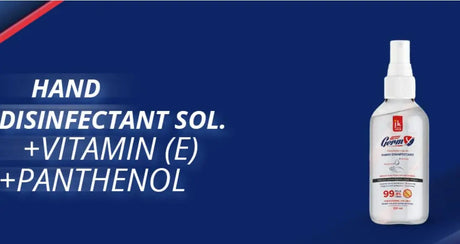
JK Dental Vision
In stock (24 units)Regular price LE 30.00 EGPUnit price /Unavailable 18% off
UNS
In stock (46 units)Sale price LE 33.00 EGP Regular price LE 40.00Unit price /Unavailable

How to Choose the Right Dental Hand Disinfectant for Your Practice
- Alcohol Concentration — Effective hand disinfectants require a minimum of 60% ethanol or 70% isopropanol to achieve bactericidal and virucidal activity per EN 1500 (hygienic) and EN 12791 (surgical). WHO Formula 1 uses 80% ethanol + 1.45% glycerol; WHO Formula 2 uses 75% isopropanol + 1.45% glycerol. Products below 60% alcohol provide insufficient antimicrobial activity and are not appropriate for clinical dental use.
- Hygienic vs. Surgical Hand Disinfection — Hygienic hand rub (EN 1500) is a 30-second application between routine patient contacts and replaces soap-and-water handwashing when hands are visibly clean. Surgical hand disinfection (EN 12791) requires a 3–5 minute application protocol covering the full hand and forearm before surgical procedures. Choose a product validated and labelled for the intended use level.
- Gel vs. Liquid Formulation — Gel-based hand disinfectants (e.g. Protecta Gel) remain on the skin longer, reducing drip and wastage, and are preferred for glove-donning surfaces. Liquid hand rubs spread more evenly across the full hand surface and are generally preferred for surgical preparation when full coverage is critical. Both achieve equivalent antimicrobial effect when used at the correct volume (3 ml per application).
- Skin Conditioning Agents — Repeated alcohol application dries skin, increasing the risk of contact dermatitis and skin barrier breakdown, which itself becomes an infection risk. High-quality hand disinfectants incorporate humectants (glycerol 1–3%, propylene glycol, or aloe vera) to maintain skin hydration. For Egyptian dental clinics where clinicians use hand rub 50–100 times daily, skin tolerability is a clinically significant selection criterion.
- Volume per Application — A minimum of 3 ml per application is required to wet the entire hand surface. Under-dispensing is the most common compliance failure. Pump dispensers delivering a fixed 1.5–3 ml per press are preferred over open bottles poured into the palm. Wall-mounted dispensers at the chairside reduce cross-contamination compared to bottle sharing between clinicians.
- EN Certification — Verify EN 1500 (hygienic hand disinfection) and, if surgical use is intended, EN 12791. For virucidal claims, check EN 14476 test data. Generic hand gels with no declared alcohol percentage or EN certification provide uncertain protection.
Dental Hand Disinfectant Formats at a Glance
| Format | Volume | Alcohol Type | Best Use |
|---|---|---|---|
| Pocket hand rub | 80ml | Ethanol/Isopropanol | Chairside, portable |
| Pump bottle hand rub | 120ml, 500ml | Ethanol-based | Dispensed per patient |
| Gel formulation | Various | Ethanol + glycerol | Prolonged skin contact, glove prep |
| 1L refill bottle | 1L | Ethanol-based | Wall-mount dispenser refill |
Availability & Delivery in Egypt
MedSTA supplies dental hand disinfectant brands including UNS, Protecta, and JK Dental Vision, all priced in EGP with delivery across Cairo, Giza, Alexandria, and all Egyptian governorates. Available in pocket-size 80ml for individual clinician carry, and 1-litre refill formats for wall-mounted dispensers in busy Egyptian dental centres.
Frequently Asked Questions
What is the difference between hygienic and surgical hand disinfection in dentistry?
What is the difference between hygienic and surgical hand disinfection in dentistry?
Hygienic hand disinfection (EN 1500) is a 30-second hand rub with 3 ml of alcohol-based product applied between routine patient contacts to reduce transient hand flora to a safe level. Surgical hand disinfection (EN 12791) involves a 3–5 minute application covering the full hand and forearm, aiming to reduce both transient and resident flora before invasive or surgical procedures. Dentists performing implant placement, periodontal surgery, or oral surgery should use a surgical hand disinfection protocol; routine restorative and examination sessions require hygienic hand rub.
How many seconds does the WHO-compliant hand rub technique take to complete correctly?
How many seconds does the WHO-compliant hand rub technique take to complete correctly?
The WHO six-step hand rub technique requires a minimum of 20–30 seconds of active rubbing after dispensing 3 ml of hand disinfectant. The six steps cover: palm to palm, right palm over left dorsum and vice versa, palm to palm with fingers interlaced, backs of fingers to opposing palms, rotational rubbing of thumbs, and rotational rubbing of fingertips in palms. The technique must continue until the hands are completely dry — any step abbreviated to save time reduces efficacy at the critical fingertip and thumb web areas most likely to contact patient mucosa.
Can alcohol hand rub replace handwashing between all patients in a dental clinic?
Can alcohol hand rub replace handwashing between all patients in a dental clinic?
Alcohol-based hand rub (ABHR) is the WHO-preferred hand hygiene method when hands are visibly clean and not contaminated with blood or bodily fluids. It is faster, gentler on skin, and more effective than soap-and-water washing against most dental pathogens including SARS-CoV-2, hepatitis B, and common oral bacteria. However, handwashing with soap and water is required when hands are visibly soiled or contaminated with blood, after contact with spore-forming organisms (Clostridium difficile), and after using the toilet. ABHR alone is not sporicidal.
Does alcohol concentration matter in dental hand disinfectant products sold in Egypt?
Does alcohol concentration matter in dental hand disinfectant products sold in Egypt?
Yes — alcohol concentration is the single most important determinant of efficacy. Products below 60% ethanol or 70% isopropanol fail EN 1500 and provide insufficient bactericidal and virucidal protection. Some products marketed in Egypt as ‘hand sanitiser’ contain 50–55% alcohol, which is inadequate for clinical use. Always verify the declared ethanol or isopropanol percentage on the label, and confirm EN 1500 compliance is stated. WHO-formula products are internationally standardised at 80% ethanol (Formula 1) or 75% isopropanol (Formula 2).
How should dental hand disinfectants be stored safely in an Egyptian dental clinic?
How should dental hand disinfectants be stored safely in an Egyptian dental clinic?
Alcohol-based hand rubs are flammable and should be stored away from heat sources, open flames, dental unit lights, and autoclave heat venting. In Egyptian summer conditions where ambient temperatures exceed 35°C, store in a cool, shaded cupboard below 25°C. Do not leave alcohol hand rub bottles in direct sunlight or on windowsills. Keep caps closed to prevent alcohol evaporation, which reduces concentration over time. Shelf life after opening is typically 6–12 months as declared on the label; record the opening date.