

AtriumCare
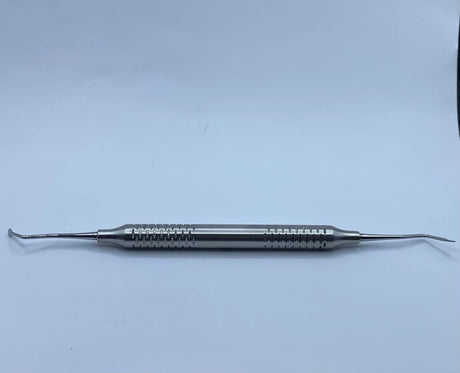
Atria Inc Retraction Cord Applicator
Low stock (10 units)Regular price LE 470.00 EGPUnit price /Unavailable
Sedra dent
Sedra Retraction Cord Applicator
Very low stock (8 units)Regular price LE 360.00 EGPUnit price /UnavailableUltradent
Ultradent Fischer’s UltraPak Packer Regular
Low stock (14 units)Regular price LE 1,750.00 EGPUnit price /Unavailable-


How to Choose the Right Retraction Cord Applicator for Gingival Displacement
- Tip Design — Serrated vs Smooth — Serrated (knurled or grooved) applicator tips grip the retraction cord during packing, preventing slippage in the sulcus as the tip is advanced apically. Smooth tips allow more gentle tissue displacement and are preferred in cases of thin, fragile gingival biotype where serrated engagement risks laceration of the sulcular epithelium.
- Tip Angle — 90° perpendicular tips are standard for most posterior packing; 45° angled tips provide access to the lingual and palatal sulcus in confined spaces where a straight perpendicular approach would create an awkward wrist position for the operator.
- Single-Ended vs Double-Ended — Single-ended applicators carry one tip geometry; double-ended designs combine two different tip widths or angles, reducing tray instrument count. Double-ended instruments are more efficient for practices placing high volumes of impressions.
- Handle Diameter and Ergonomics — A handle diameter of 8–10 mm provides adequate finger grip for controlled packing pressure without fatigue. Knurled stainless steel handles offer better grip than polished instruments, which can be slippery under glove contact or in the presence of moisture.
- Sterilisation — Stainless steel retraction cord applicators withstand autoclave sterilisation at 134°C, 3 bar, 18-minute cycles without distortion or loss of tip sharpness. Confirm instrument composition (solid stainless steel vs chrome-plated carbon steel) before autoclaving to avoid rust formation in Egyptian humid storage conditions between sterilisation cycles.
- Cord Applicator vs Plastic Instrument — Metal cord applicators are preferred over plastic instruments for precise apical cord placement and controlled packing pressure; plastic instruments lack rigidity and flex during packing, making consistent apical cord depth difficult to achieve across all gingival sites of the preparation.
Retraction Cord Applicator Types at a Glance
| Type | Tip Design | Best Use | Example Brand |
|---|---|---|---|
| Single-ended, 90° serrated | Knurled, perpendicular | Standard posterior packing | Sedra dent, AtriumCare |
| Single-ended, 45° smooth | Smooth, angled | Lingual/palatal access, thin biotype | Various |
| Double-ended (two tip sizes) | Mixed | High-volume practices, efficiency | Ultradent Fischer UltraPak |
Availability & Delivery in Egypt
MedSTA supplies retraction cord applicators from AtriumCare, Sedra dent, and Ultradent (Fischer UltraPak Packer), priced in EGP from 375 EGP. Cairo and Giza delivery within 1–3 business days; nationwide Egypt within 3–5 business days.
Frequently Asked Questions
How is a retraction cord applicator correctly used for gingival retraction?
How is a retraction cord applicator correctly used for gingival retraction?
Begin by selecting the appropriate cord size for the sulcus depth (size 000 or 00 for shallow sulci; size 0 or 1 for standard sulcus depths; size 2 for deep sulci or heavily inflamed tissue). Cut an appropriate cord length (slightly longer than the circumference of the preparation). Use the applicator's tip to tuck the cord into the sulcus in a circular motion, beginning at the line angle and advancing apically with controlled pressure. Avoid packing the same site twice without repositioning the cord, as this traps air and prevents full sulcular displacement.
Serrated versus smooth tip cord applicators — which should I use?
Serrated versus smooth tip cord applicators — which should I use?
Serrated (knurled) tips grip the retraction cord and prevent it from slipping back out of the sulcus during packing — ideal for standard sulcus depths with normal gingival tissue consistency. Smooth tips displace cord more gently and are preferred in cases of thin, fragile gingival biotype where serrated engagement risks tearing the sulcular epithelium, or for patients with sensitive gingival tissue. Many experienced practitioners use a serrated tip for initial cord placement and a smooth instrument to refine final cord position.
Can retraction cord applicators be autoclaved and reused between patients?
Can retraction cord applicators be autoclaved and reused between patients?
Yes — solid stainless steel retraction cord applicators (Sedra dent, AtriumCare, Ultradent) withstand autoclave sterilisation at 134°C, 3 bar, 18-minute cycles without dimensional change or tip degradation. Confirm the instrument is solid stainless steel rather than chrome-plated carbon steel before autoclaving; chrome-plated instruments may corrode after repeated autoclave cycles, particularly in Egyptian humidity conditions during storage between sessions. Inspect tips for deformation after each sterilisation cycle.
What is the Fischer UltraPak Packer and when should I use it?
What is the Fischer UltraPak Packer and when should I use it?
The Ultradent Fischer UltraPak Packer is a double-ended retraction cord applicator with a distinctive angled tip design that facilitates single-hand cord packing technique. Its 90°-to-handle angle provides excellent visibility of the packing site and reduces operator wrist strain during full-arch impression preparation. It is particularly popular for high-volume prosthetic practices because its ergonomic design reduces the physical effort required to pack cord consistently across all gingival sites of complex multi-unit preparations.
Does MedSTA supply retraction cord applicators in Egypt?
Does MedSTA supply retraction cord applicators in Egypt?
Yes — MedSTA supplies retraction cord applicators from AtriumCare (470 EGP), Sedra dent (375 EGP), and Ultradent Fischer UltraPak Packer (1820 EGP), all priced in EGP. All are autoclavable stainless steel instruments suitable for standard clinical use in Egyptian dental practices. Cairo and Giza delivery within 1–3 business days; nationwide Egypt within 3–5 business days.