
Vector
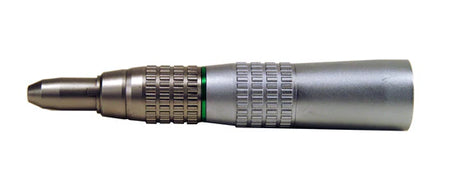
Alpha Aire Low speed straight handpiece
Very low stock (1 unit)Regular price LE 950.00 EGPUnit price /Unavailable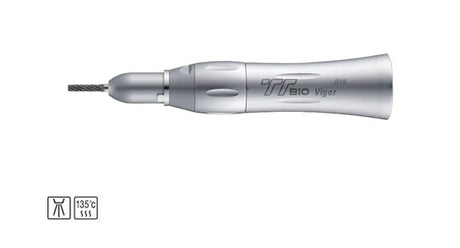
Vigor dental
VIGOR Low speed straight hand piece
Very low stock (4 units)Regular price LE 950.00 EGPUnit price /Unavailable
COXO
MCS Low speed Inner Coolant B4 Set 3 PCS handpieces
Very low stock (1 unit)Regular price LE 8,000.00 EGPUnit price /Unavailable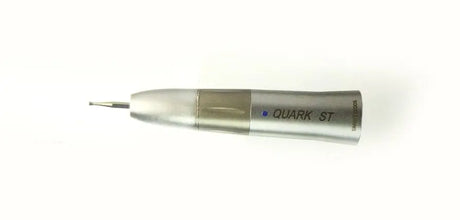
TKD TeKne Dental
TKD QUARK ST straight handpiece
Very low stock (1 unit)Regular price LE 13,999.00 EGPUnit price /Unavailable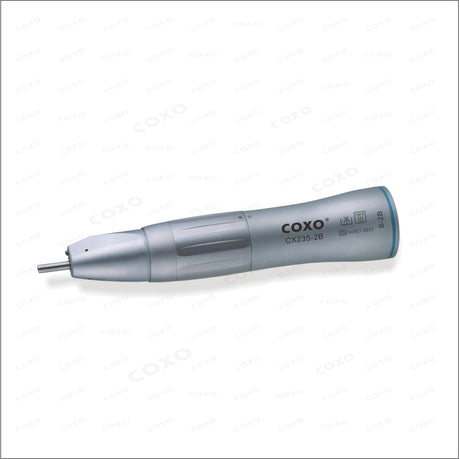
COXO
MCS Coxo Low Speed Straight Inner coolant chanel handpiece
Very low stock (3 units)Regular price LE 3,330.00 EGPUnit price /Unavailable

How to Choose the Right Straight Handpiece for Lab and Clinic Use
- Chuck Type (HP-Shank 2.35 mm) — Straight handpieces accept HP (handpiece) shank burs only, with a standard ISO 2.35 mm diameter. Confirm chuck internal tolerance is within ±0.01 mm to prevent bur wobble during high-speed grinding or finishing operations.
- Maximum Speed Rating — Laboratory straight handpieces are rated to 10,000–35,000 RPM depending on motor type. Higher speed (35,000 RPM) is appropriate for carbide and tungsten carbide grinding; lower speed (8,000–12,000 RPM) is preferred for acrylic polishing to avoid heat-induced surface smearing.
- Nose Geometry (Short vs Extended Nose) — Short-nosed heads provide maximum control for bench grinding on dental models; extended-nose heads improve reach for second molar areas and deep cavity access when used clinically for anterior finishing.
- Motor Compatibility (Screw-Thread vs Quick-Connect) — Most straight handpieces use a universal screw-thread motor connection; confirm the thread pitch matches your control unit. Quick-connect systems (e.g. TKD Quark) allow faster handpiece switching during multi-step laboratory procedures.
- Autoclave Rating (Clinical vs Lab Use) — Straight handpieces used clinically for intraoral procedures must withstand Class B autoclave cycles (134°C, 3 bar). Lab-only straight handpieces are not required to be autoclavable but should tolerate surface disinfection with alcohol-based wipes.
Straight Handpieces Available in Egypt
| Model | Speed Range | Use Type | Price (EGP) |
|---|---|---|---|
| Vigor Low Speed Straight | Up to 20,000 RPM | Lab & clinical | 950 |
| Alpha Aire Low Speed Straight (Vector) | Up to 20,000 RPM | Lab & clinical | 950 |
| TKD Quark ST Straight Handpiece | Up to 35,000 RPM | Lab precision | 13,999 |
Availability & Delivery in Egypt
MedSTA supplies straight handpieces from Vigor, Alpha Aire (Vector), and TKD TeKne Dental, all priced in EGP. Same-day dispatch from Cairo; Cairo and Giza delivery within 1–3 business days and all other Egyptian governorates within 3–5 business days.
Frequently Asked Questions
What is the difference between a straight handpiece and a contra-angle handpiece?
What is the difference between a straight handpiece and a contra-angle handpiece?
A straight handpiece holds HP-shank burs in a direct in-line chuck with no angular offset, providing straight-line access for laboratory model work, acrylic trimming, and anterior clinical finishing. A contra-angle handpiece has a head angled at approximately 90° from the body, allowing intraoral access to all posterior teeth and interproximal surfaces where straight-line approach is mechanically impossible. Most dental procedures require both types in the low speed kit.
What types of burs are compatible with a dental straight handpiece?
What types of burs are compatible with a dental straight handpiece?
Straight handpieces accept HP (handpiece) shank burs with a 2.35 mm diameter shaft conforming to ISO 1797-1. Compatible bur types include tungsten carbide HP burs for acrylic and metal grinding, diamond HP burs for ceramic adjustment, mounted polishing stones and wheels, silicone polishing points, and HP-shank finishing burs. FG (friction-grip) burs and RA (latch-type) burs are NOT compatible with straight handpieces; these are for turbine and contra-angle handpieces respectively.
At what speed should a straight handpiece be operated for acrylic trimming versus metal grinding?
At what speed should a straight handpiece be operated for acrylic trimming versus metal grinding?
Acrylic resin trimming and polishing: 8,000–15,000 RPM to avoid frictional heat causing surface melting and whitening. Metal alloy grinding and adjustment: 20,000–35,000 RPM with a tungsten carbide or diamond HP bur to achieve efficient material removal. For fine finishing of ceramic surfaces, 15,000–20,000 RPM with a fine-grit diamond HP bur under water spray where available provides the best surface outcome.
Can a straight handpiece be used clinically intraorally, or is it lab-use only?
Can a straight handpiece be used clinically intraorally, or is it lab-use only?
Straight handpieces can be used intraorally for anterior tooth finishing and polishing, cervical restoration access, and implant abutment adjustment — areas where the head can approach in a straight line from the labial or buccal aspect. They cannot reach posterior regions effectively due to the patient’s cheek and teeth obstructing straight-line access. Clinically used straight handpieces must be autoclavable (Class B, 134°C) — confirm the rating before clinical use.
Does MedSTA supply straight handpieces from Vigor, Vector, and TKD across Egypt?
Does MedSTA supply straight handpieces from Vigor, Vector, and TKD across Egypt?
Yes — MedSTA supplies straight handpieces from Vigor, Alpha Aire (Vector), and TKD TeKne Dental in EGP with same-day dispatch from Cairo. Cairo and Giza delivery within 1–3 business days; all other Egyptian governorates within 3–5 business days.