

UNS
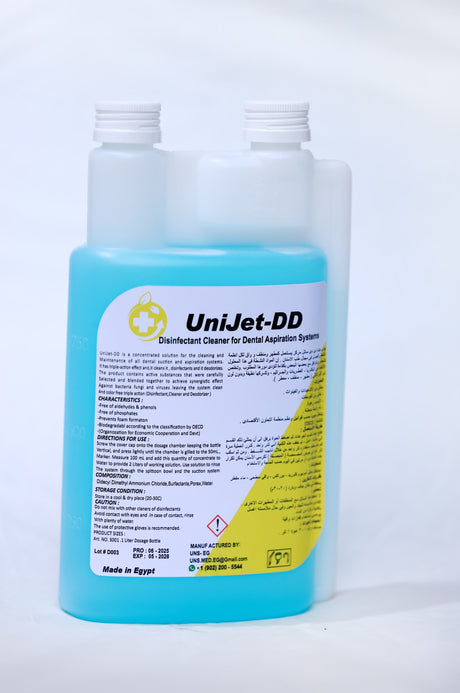
UniJet DD 1 L Disinfectant cleaner for dental Aspiration Systems Non-Foaming
Very low stock (4 units)Regular price LE 275.00 EGPUnit price /Unavailable
How to Choose the Right Dental Suction System Disinfectant for Your Unit
- Non-Foaming Formula (Essential) — Suction system disinfectants must be non-foaming. Foaming products generate bubbles inside suction tubing that reduce flow rate, trigger suction pump overload sensors, and can cause back-pressure that reverses contaminated fluid toward the patient zone. All purpose-designed suction disinfectants (e.g. UniJet DD) are formulated specifically as non-foaming concentrates; do not use surface disinfectant sprays or general-purpose cleaners in suction lines.
- Enzymatic vs. Chemical Disinfection — Enzymatic concentrates break down organic material (blood, saliva, biofilm matrix) through enzymatic hydrolysis before the chemical disinfectant component acts on residual microorganisms. Enzyme-plus-chemical combination products (protease + aldehyde or QAC) deliver more thorough biofilm removal than chemical-only products in established suction lines with heavy organic load. For new dental units or recently cleaned lines, chemical-only products are adequate.
- Dilution Ratio — Suction disinfectants are typically diluted 1:50 to 1:100 with cold water, yielding a working solution of 10–20 ml concentrate per litre. Follow the exact manufacturer dilution: under-dilution increases chemical residue in tubing; over-dilution reduces antimicrobial efficacy. Use a graduated measuring cylinder, not estimation.
- Application Frequency — WHO and EU dental infection control guidelines recommend suction line disinfection at the end of each clinical day as a minimum, and after each patient when blood-contaminated material has been aspirated. High-volume Egyptian dental clinics treating 20+ patients daily should run a flushing cycle between each operator session.
- Amalgam Separator Compatibility — Verify that the selected suction disinfectant is compatible with your amalgam separator model. Some aldehyde-based products can corrode the amalgam separator membrane or alter mercury amalgam binding chemistry. Enzyme-based concentrates are generally amalgam-separator compatible; confirm with the separator manufacturer if using non-standard disinfectants.
- Dental Unit Water Line (DUWL) Impact — Suction system disinfectants are flushed through the aspiration system, not the pressurised water supply lines. Do not confuse suction disinfection with DUWL treatment. The two systems are separate, and each requires its own decontamination protocol.
Suction System Disinfectant Protocols at a Glance
| Protocol | Frequency | Dilution | Contact Time |
|---|---|---|---|
| End-of-day line flush | Daily | 1:50 (20 ml / L water) | 10–15 min soak |
| Weekly deep clean | Weekly | 1:20 (50 ml / L water) | 30–60 min overnight soak |
| After blood aspiration | After session | 1:50 | Immediate flush, 5 min |
Availability & Delivery in Egypt
MedSTA stocks UniJet DD dental aspiration system disinfectant from UNS in 1-litre concentrate format, sufficient for approximately 50–100 end-of-day cycles at standard dilution. Priced in EGP with delivery across Cairo, Giza, Alexandria, and all Egyptian governorates. Volume orders for dental hospitals and multi-chair centres are accommodated.
Frequently Asked Questions
Why does the dental suction system require a dedicated disinfectant rather than surface spray?
Why does the dental suction system require a dedicated disinfectant rather than surface spray?
Dental suction tubing presents a completely different contamination profile from external chair surfaces: it accumulates a biofilm layer of saliva proteins, blood, and oral microorganisms on the internal tubing wall that a surface spray cannot reach. Suction system disinfectants are formulated as low-viscosity, non-foaming concentrates that flow freely through the entire aspiration system under suction power, penetrating and dissolving internal biofilm. Surface sprays are typically foaming or high-viscosity and would either block tubing or fail to reach the contaminated interior walls.
How often should suction line disinfection be performed in a dental clinic?
How often should suction line disinfection be performed in a dental clinic?
As a minimum, dental suction lines should be disinfected at the end of every clinical day. After any session involving blood aspiration (extractions, periodontal surgery, implant placement), an additional flush immediately following the session is recommended. High-volume Egyptian dental clinics (20+ patients per day, multiple operators sharing chairs) should run a disinfection cycle between each operator’s session block. Weekly deep-cleaning at higher concentration (1:20) overnight is recommended in addition to daily end-of-day flushes.
What is the difference between non-foaming and foaming suction disinfectants?
What is the difference between non-foaming and foaming suction disinfectants?
Non-foaming suction disinfectants (such as UniJet DD) are specifically formulated to prevent bubble formation inside the aspiration system. Foaming disinfectants generate bubbles that reduce flow rate, trigger suction pump overload protection sensors, and can cause partial reverse-pressure that may push contaminated fluid back toward the patient circuit. All purpose-made dental aspiration disinfectants are non-foaming by design; never substitute a general-purpose foaming cleaner or surface spray in a suction line.
Can suction system disinfectant damage the amalgam separator inside the dental unit?
Can suction system disinfectant damage the amalgam separator inside the dental unit?
Compatibility depends on the specific product formulation. Aldehyde-based suction disinfectants can corrode certain amalgam separator membranes or amalgam retention cartridges over prolonged use. Enzyme-based and QAC-based non-foaming concentrates (including most standard products such as UniJet DD) are generally amalgam-separator safe, but always check the separator manufacturer’s approved chemical list. If your unit uses an amalgam separator mandated by Egyptian waste management regulations, confirm compatibility before purchasing a new suction disinfectant brand.
How do I use UniJet DD correctly for dental suction line cleaning in an Egyptian dental clinic?
How do I use UniJet DD correctly for dental suction line cleaning in an Egyptian dental clinic?
Dilute UniJet DD at 1:50 with cold water (20 ml concentrate per 1 litre), preparing enough solution to fill the suction lines completely. At the end of the clinical day, aspirate the full volume of working solution through the suction system with the suction pump running, then allow it to soak in the tubing for 10–15 minutes before draining. For weekly deep cleaning, use a 1:20 dilution and allow overnight soaking. Flush with clean water before the first patient of the following day to remove any residual disinfectant.