

JK Dental Vision
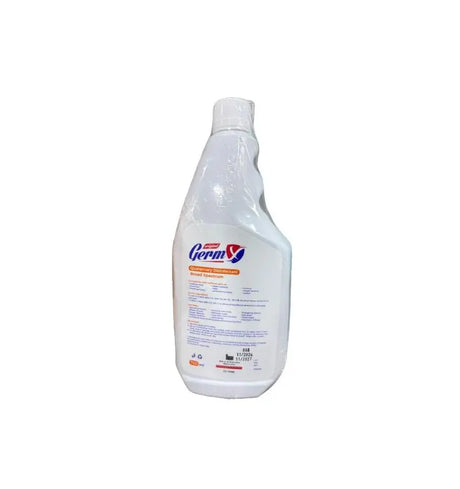
GERM SURFACE DISINFECTANT 700ml
In stock (30 units)Regular price LE 105.00 EGPUnit price /Unavailable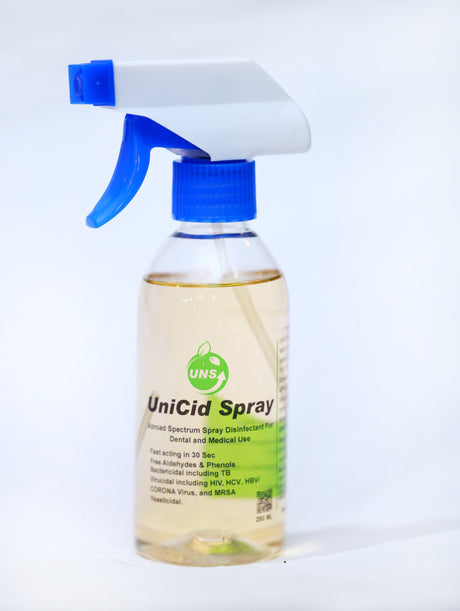
UNS
Unicid Spray 250 ml Surface Disinfectant
Low stock (15 units)Regular price LE 79.00 EGPUnit price /Unavailable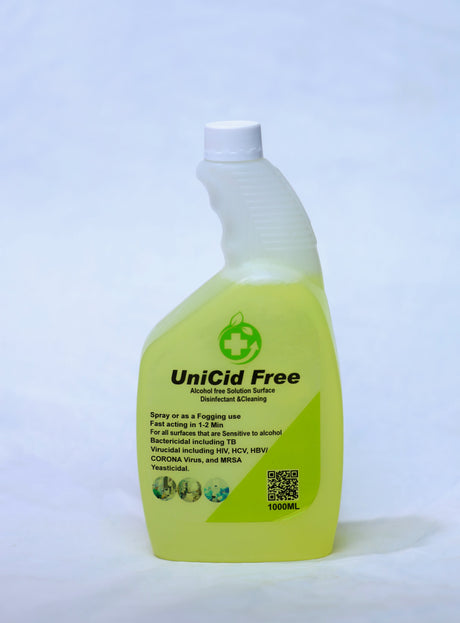
UNS
Unicid Free 1 L Surface Disinfectant
Very low stock (5 units)Regular price LE 250.00 EGPUnit price /Unavailable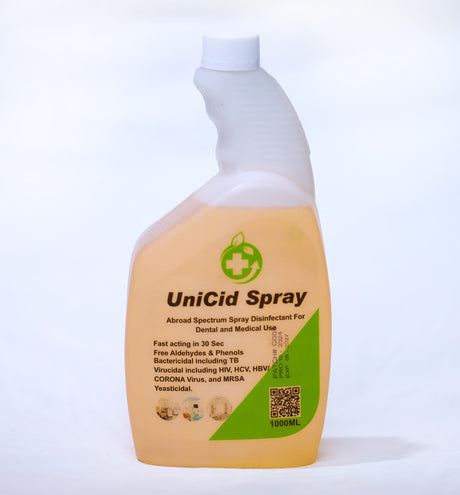
UNS
Unicid Spray 1 L Surface Disinfectant
Very low stock (4 units)Regular price LE 250.00 EGPUnit price /Unavailable
How to Choose the Right Dental Surface Disinfectant for Your Clinic
- Active Ingredient Class — Dental surface disinfectants contain either quaternary ammonium compounds (QACs, e.g. benzalkonium chloride), alcohols (ethanol 60–80%, isopropanol 70%), aldehydes (glutaraldehyde 0.5–2%), or combination formulations. Alcohol-QAC combinations are most common in dental settings, offering rapid bactericidal and virucidal action within 30–60 seconds without leaving residue on metal or plastic surfaces.
- Contact Time (Kill Time) — The product's declared contact time must be observed to achieve its claimed microbial kill. Most ready-to-use sprays require 30–60 seconds contact for standard bacteria and viruses; 1–5 minutes for mycobacteria. Read the EN 13727 (bactericidal), EN 14476 (virucidal), and EN 13624 (fungicidal) certification data — not just marketing claims.
- Material Compatibility — Confirm compatibility with your chair upholstery, metal bracket arms, and plastic handpiece hoses before selecting a product. Aldehyde-based sprays can discolour or harden rubber tubing over repeated use. Alcohol-based sprays may cause surface cracking on certain polyurethane chair coverings. Check the product's compatibility chart, particularly relevant for Egyptian clinics operating older dental unit equipment.
- Ready-to-Use vs. Concentrate — Ready-to-use sprays (250ml, 700ml) are pre-diluted and require no preparation, reducing the risk of incorrect dilution. Concentrate forms offer lower per-litre cost for high-volume clinics or hospital dental departments in Egypt, but require accurate measurement at the specified dilution ratio (typically 1:10 to 1:50).
- Spray Mechanism — Trigger spray bottles deliver a controlled volume (0.15–0.25 ml per pump) that reduces aerosol generation and active ingredient wastage. Avoid dispensing surface disinfectant directly onto surfaces while aerosol-generating procedures are running — spray onto a lint-free wipe first, then wipe the surface.
- EN 14885 Compliance — This umbrella standard references all European test norms for chemical disinfectants used in medical areas. Products meeting EN 14885 Phase 2/Step 2 tests are validated for use in clinical and dental settings. Verify this certification for any product used in a regulated Egyptian dental practice.
Surface Disinfectant Formats at a Glance
| Format | Volume | Best For | Cost per Use |
|---|---|---|---|
| Trigger spray (RTU) | 250ml, 700ml | Single-operator clinic, chairside use | Low (fixed price) |
| Pump bottle (RTU) | 1L | High-volume clinic, multiple chairs | Lower per litre |
| Alcohol-free (RTU) | 1L | Sensitive surfaces, rubber/vinyl | Comparable |
Availability & Delivery in Egypt
MedSTA stocks dental surface disinfectants from UNS and JK Dental Vision, priced in EGP with delivery across Cairo, Giza, Alexandria, and all Egyptian governorates. Products are shipped in sealed, upright packaging to prevent spillage. Bulk orders for dental hospitals and multi-chair centres are accommodated with volume pricing in Egyptian pounds.
Frequently Asked Questions
What is the difference between surface disinfectants and surface sterilants in dentistry?
What is the difference between surface disinfectants and surface sterilants in dentistry?
Surface disinfectants reduce the microbial burden on clinical surfaces (dental chairs, worktops, handpiece hoses) to a safe level but do not achieve sterility. Sterilisation requires heat or high-level chemical processing in an enclosed environment (autoclave, chemical sterilant). For dental chair surfaces and bracket arms that cannot be autoclaved, a validated surface disinfectant achieving EN 13727 bactericidal, EN 14476 virucidal, and EN 13624 fungicidal performance at the stated contact time is the appropriate infection control tool.
Can I use the same disinfectant spray on metal dental chair surfaces and fabric or vinyl upholstery?
Can I use the same disinfectant spray on metal dental chair surfaces and fabric or vinyl upholstery?
Not always. Alcohol-based sprays may degrade certain polyurethane or PVC chair coverings over repeated use, causing surface cracking and creating areas where biofilm can accumulate. Check the product’s compatibility table before use on upholstered surfaces. Alcohol-free quaternary ammonium-based sprays (such as Unicid Free) are generally safer for sensitive materials. For impervious plastic and metal surfaces, standard alcohol-QAC combination sprays are appropriate.
What contact time is required for effective surface disinfection in a dental clinic?
What contact time is required for effective surface disinfection in a dental clinic?
Contact time varies by product formulation and target pathogen. For standard bacteria and enveloped viruses (influenza, hepatitis B, SARS-CoV-2), most alcohol-based sprays require 30–60 seconds of wet contact. For mycobacteria (tuberculosis) and non-enveloped viruses, 1–5 minutes may be required — check the manufacturer’s EN 14476 test result. Always keep the surface visibly wet for the full contact time; do not wipe dry prematurely.
How do I select between quaternary ammonium-based and alcohol-based surface sprays for my dental clinic?
How do I select between quaternary ammonium-based and alcohol-based surface sprays for my dental clinic?
Alcohol-based sprays (ethanol 70–80% with QAC) dry rapidly (30–60 seconds), leave no residue on metal and glass, and offer broad-spectrum virucidal activity. They are suitable for most dental surface applications but may affect certain rubber tubing and plastics with prolonged use. Quaternary ammonium-based alcohol-free sprays (Unicid Free) are better for sensitive materials and surfaces near food or children, and are non-flammable. Many Egyptian dental clinics use an alcohol-based spray for chairside surfaces and an alcohol-free product for chair upholstery.
How should dental surface disinfectant sprays be stored in Egyptian summer conditions?
How should dental surface disinfectant sprays be stored in Egyptian summer conditions?
Store alcohol-based surface sprays away from heat sources, open flames, and direct sunlight in a cool cupboard below 25°C. Egyptian summer ambient temperatures of 35–40°C can increase internal pressure in pressurised containers and may alter the concentration of volatile alcohol formulations if bottles are left open. Keep bottles tightly closed, store in a shaded cupboard, and do not expose to temperatures exceeding 40°C. Do not store in the dental unit's light beam or near autoclave heat venting.